
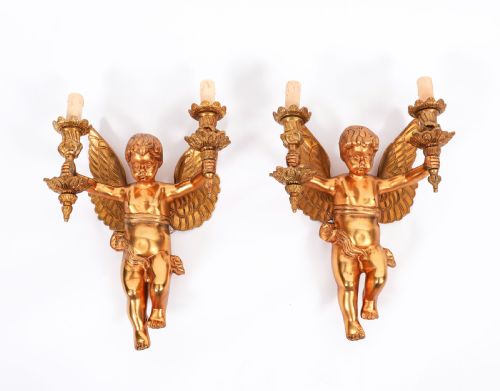

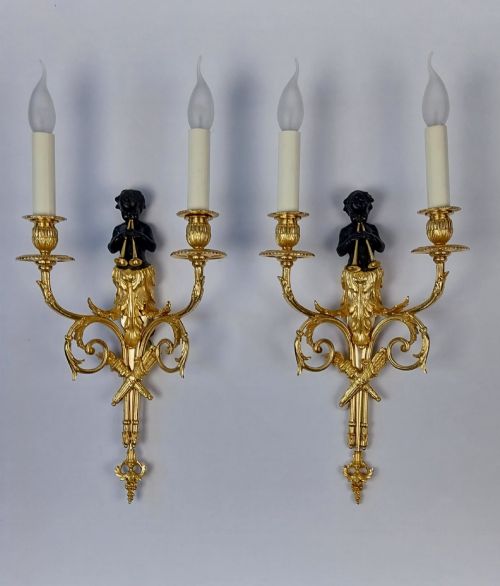

Gilt Bronze Cherub Lights
Gilt bronze cherub lights combine figural charm with illumination, offering ornate illumination shaped by nineteenth-century French revivalism.
Gilt Bronze Cherub Lights
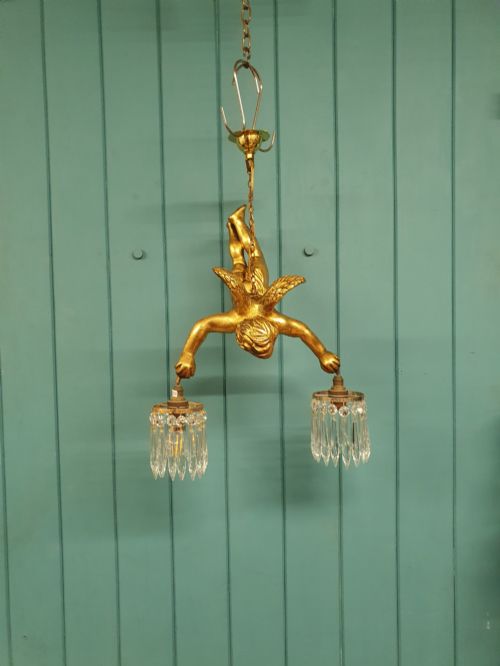
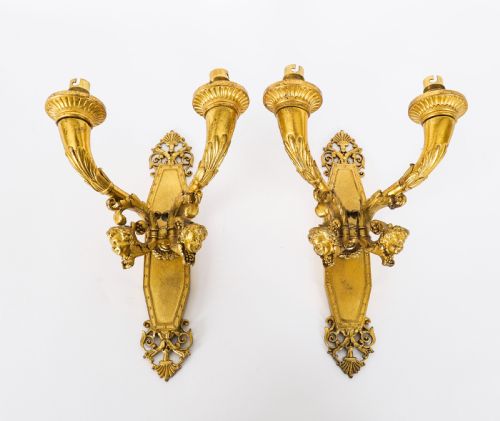
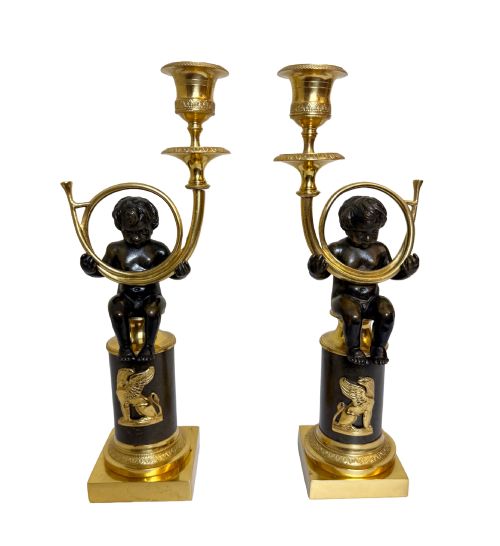
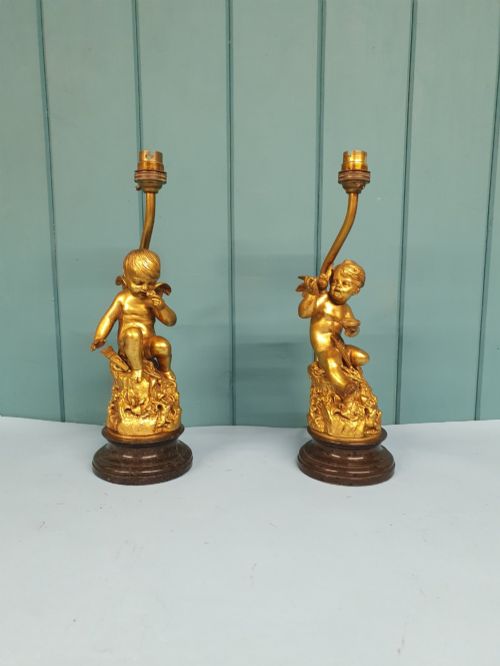
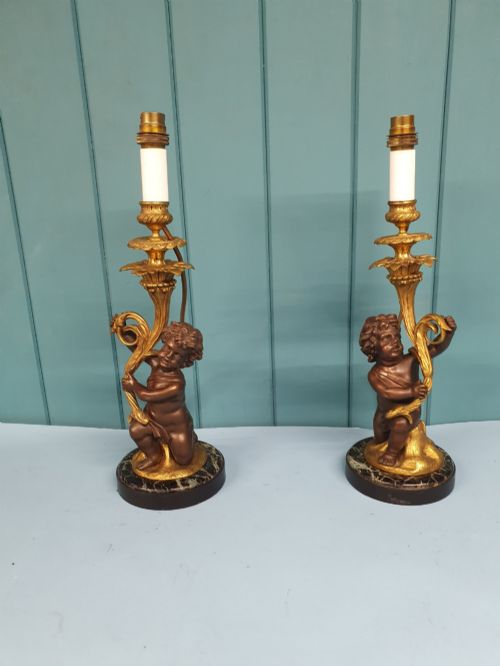
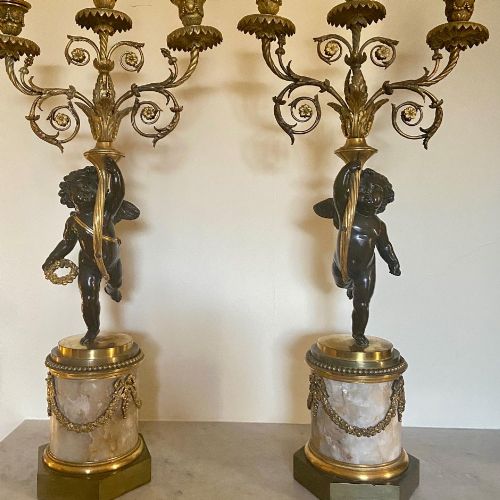
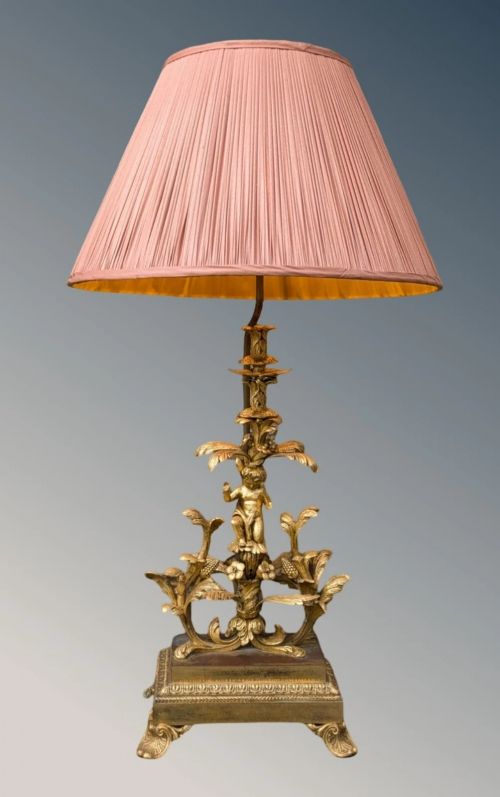
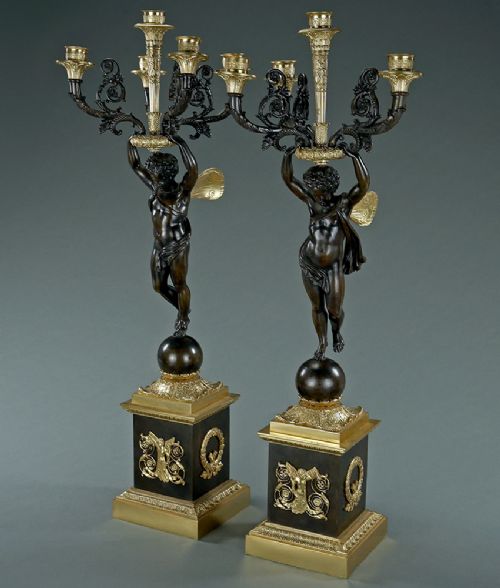
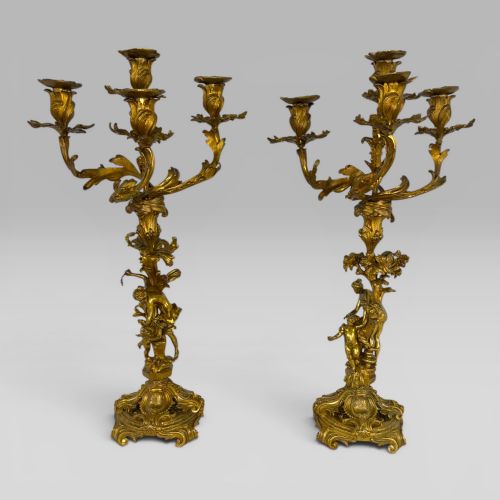
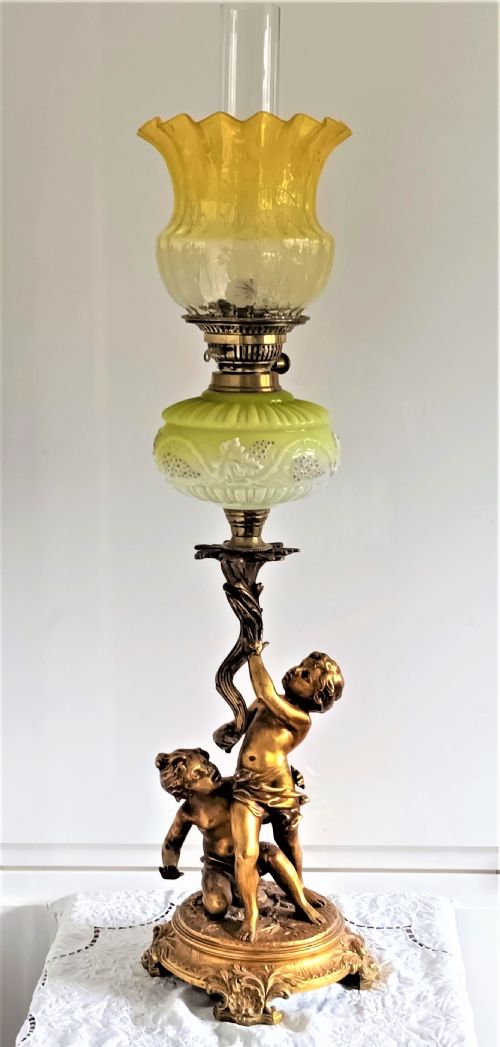
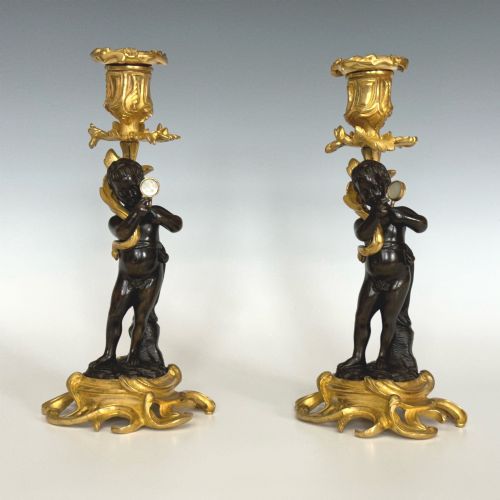
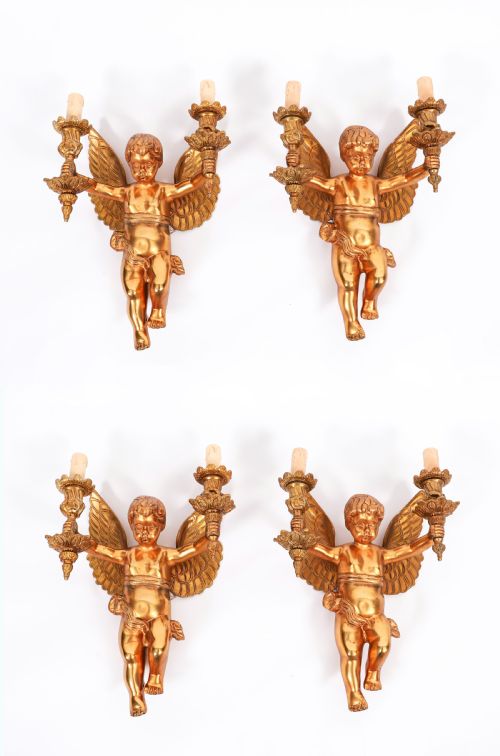
When you search for gilt bronze cherub lights, you encounter figural light fittings and stands drawing on nineteenth-century French designs. These pieces predominantly take the form of paired candelabra, wall sconces, and converted table lamps featuring winged putti.
The selection ranges from elaborate multi-branch candelabra mounted on marble bases to single candlesticks and chandeliers. French Rococo and Louis XVI styles dominate the designs, reflecting nineteenth-century manufacturing output.
Makers utilised various metals alongside bronze, creating varied lighting configurations from two-branch wall lights to large multi-light chandeliers. The figures appear either as supporting putti holding branches or as standalone decorative elements integrated into the lighting fixture.
Materials and construction
The primary materials recorded in the evidence are gilt bronze, ormolu, and patinated bronze, frequently paired with marble bases or porcelain elements. Artisans cast these components in sections before assembling the figural bodies and arms.
Surface treatments involved applying gold leaf or mercury gilding to bronze substrates, creating the characteristic bright finish alongside darker patinated bronze details. Bases often incorporate contrasting materials like white or coloured marble to anchor the heavy metal components.
Winged cherubs occasionally double as structural support, bravely balancing heavy bronze branches as if lighting requires divine intervention.
Assessing quality in figural bronzes
The integration of the various components determines the structural integrity of heavier multi-branch pieces. Better examples demonstrate secure mounting of the bronze figures to their marble bases and precise alignment of the lighting branches.
Francois Redmond·Claude Clodion
The Gilt Bronze Cherub Lights Glossary
- Ormolu
- Gilded bronze produced through mercury amalgamation or modern electroplating techniques. This finish provides a bright golden surface popular in French decorative arts.
- Putto
- A plump, naked child figure, frequently winged, appearing in classical and revival art. These figures form the central motif of figural light fittings.
- Candelabra
- A branched lighting fixture designed to hold multiple candles. These objects often feature removable branches or central figural supports.
- Patinated bronze
- Bronze treated with chemical solutions to produce a darkened surface colour. This technique creates contrast against gilded or polished metal elements.
Gilt Bronze Cherub Lights: Frequently Asked Questions
How do I clean gilt bronze?
Dust surfaces gently with a soft dry brush to prevent accumulation in the detailed recesses of the casting. Avoid abrasive commercial cleaners that can strip the delicate surface gilding.
Maintain the metal by handling it minimally to transfer fewer oils from skin to the gilt surface. Professional conservation is advisable for deeply tarnished or structurally unstable pieces.
Are these lights wired for electricity?
Many items originate as candelabra or oil lamps that underwent later conversion into table lamps or fitted electric sconces. Wiring methods vary according to when the adaptation took place.
Inspect the internal cord path and lamp holders to determine if rewiring is necessary for modern safety standards. Original bronze components often conceal modern electrical fittings within the central column.
How do I date these lights?
Dating relies on stylistic indicators such as the heavy influence of Louis XVI or Rococo revival periods prevalent during the nineteenth century. Examining the construction of screws, threading, and base materials helps narrow the manufacturing window.
Compare the casting technique and patination style against documented examples from the mid to late nineteenth century. Most surviving pieces date from this period of intense revival manufacturing in France.
What is the difference between ormolu and gilt bronze?
Ormolu specifically describes high-status mercury-gilded bronze objects produced in France during the eighteenth and nineteenth centuries. The term is often used interchangeably with gilt bronze in marketplace listings.
Both materials involve applying a gold layer to a bronze base, though older mercury gilding yields a distinct warm lustre. Modern equivalents generally utilise electroplating methods over brass or bronze substrates.