


Vintage Putti Table Lamps
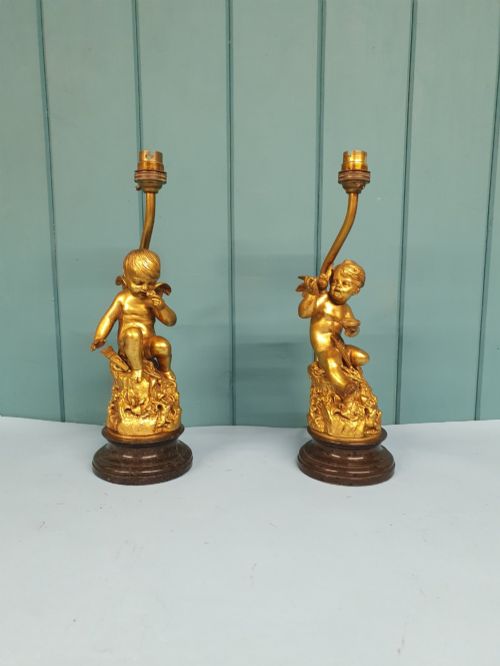
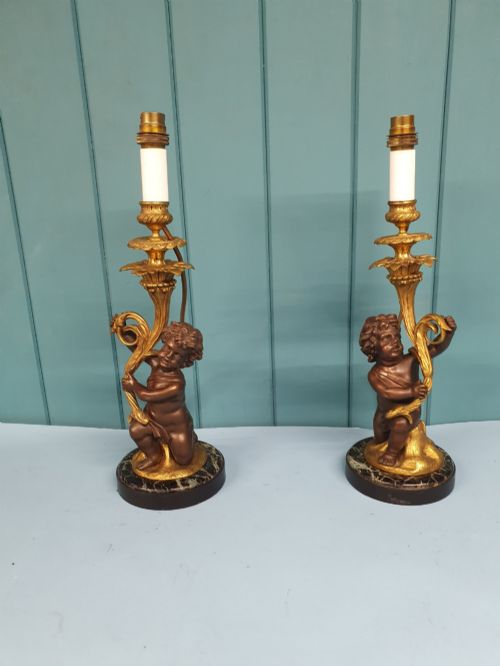
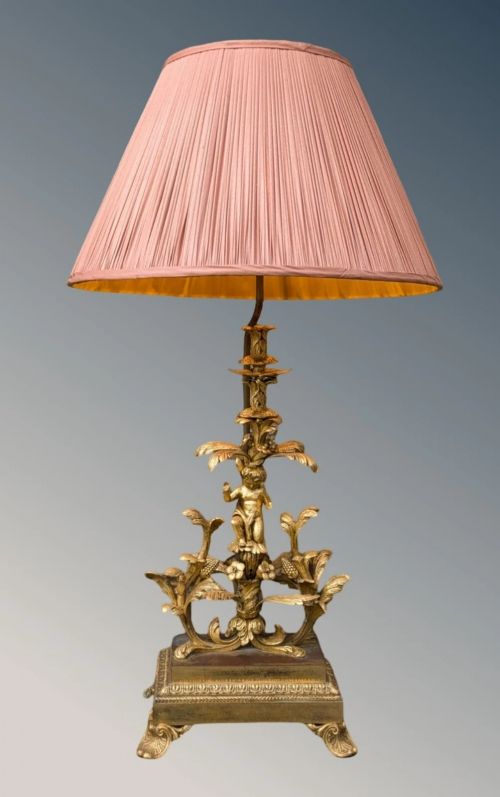
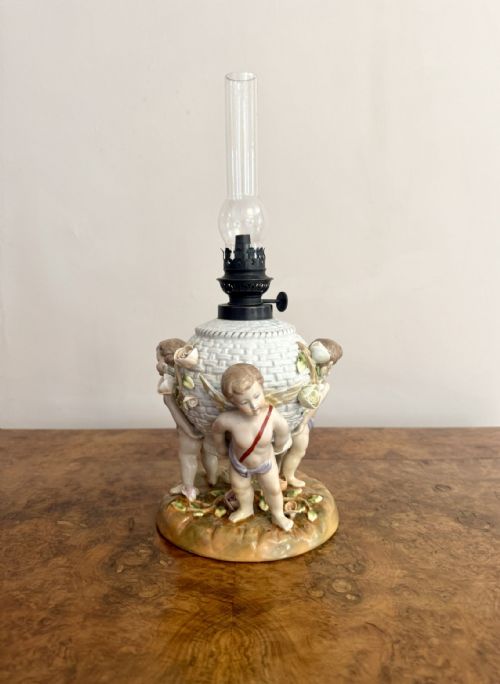
These vintage putti table lamps bring sculptural charm to a room, cast in bronze, brass and porcelain with winged figures.
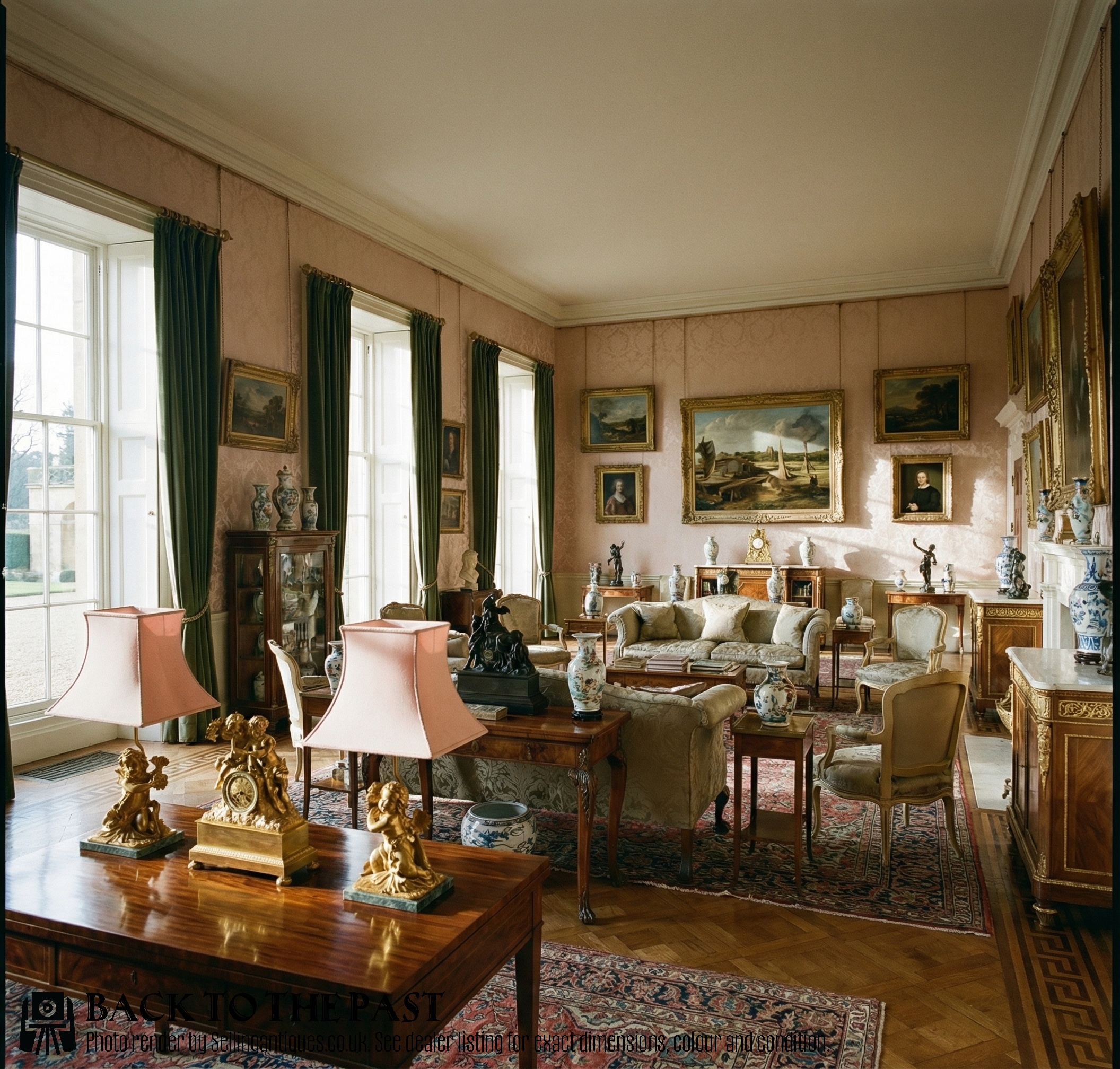
Vintage Putti Table Lamps
When you search for vintage putti table lamps, you find lighting fixtures decorated with winged cherubic figures derived from classical motifs. The pieces available here span periods from the Victorian era through the early twentieth century, incorporating styles such as Rococo Revival, Neoclassical Revival and Continental Baroque.
Pairs dominate the selection, often taking the form of torchères or converted oil lamps standing on marble, brass or carved wooden bases. These forms range from modest boudoir lighting to monumental sculptural pieces utilising bronze, spelter, porcelain and gilt metal.
Materials and construction
The construction relies heavily on metal casting, with bronze, brass, ormolu and gilt metal shaped into detailed figures and mounting hardware. Foundry work from the nineteenth and early twentieth centuries produced crisp chased details on these metallic components.
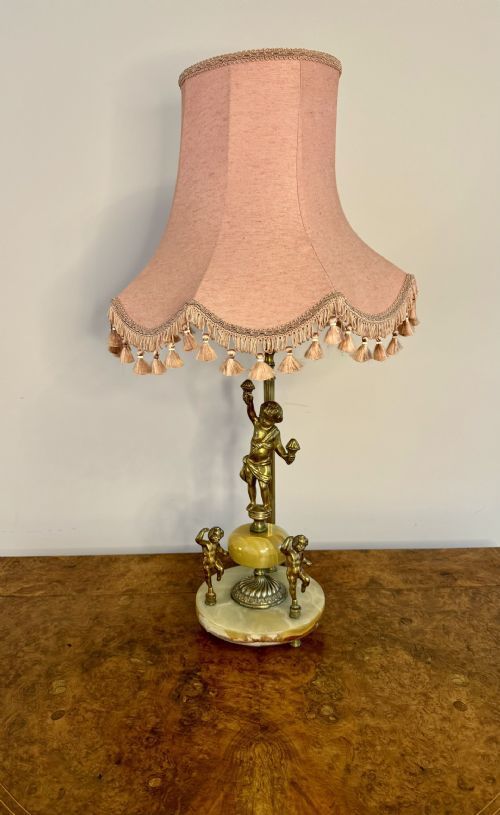
Ceramic elements utilise porcelain, majolica and glazed earthenware, frequently paired with fabric or beaded shades and gilt toleware accents. Heavier bases integrate natural materials such as marble, onyx, alabaster, oak and carved wood to anchor the sculptural weight above.
Listings feature table lamps incorporating materials like brass, bronze, marble, porcelain, gilt metal, glass, oak and alabaster across multiple periods.
Assessing quality and execution
The choice and integrity of the supporting base material also distinguish the better pieces, with solid marble, heavy cast bronze and fine porcelain elevating an object above simpler plaster or lighter brass versions.
Sitzendorf·Moreau
The Vintage Putti Table Lamps Glossary
- Putti
- Plural of putto, representing a chubby, winged male infant figure often found in classical art. These figures appear frequently as the central sculptural element in lamp bases.
- Ormolu
- Finely ground high-carat gold applied to a bronze base using mercury amalgamation. This technique gives the metal a deep, warm golden lustre characteristic of better period pieces.
- Torchère
- A stand or lamp designed to resemble an ornate torch holder. Several tall pairs in this category adopt this vertical architectural form.
- Toleware
- Enamelled and painted sheet metal used for decorative components and shades. It provides contrasting colour and texture against gilt bronze and porcelain.
- Spelter
- A zinc alloy commonly utilised as a less costly alternative to bronze during the nineteenth and early twentieth centuries. It accepts patination well to mimic heavier metals.
Vintage Putti Table Lamps: Frequently Asked Questions
What periods do these lamps date from?
The pieces span from the nineteenth century through the early twentieth century, encompassing Victorian, Edwardian and later periods.
Stylistic influences lean heavily on French Rococo Revival, Neoclassical Revival and Continental Baroque aesthetics.
Are these lamps usually sold as pairs?
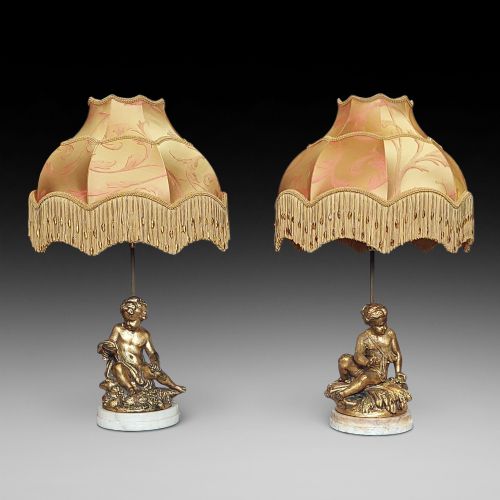
Many of the lighting fixtures in this category appear as matched pairs, making them suitable for flanking a sideboard, mantelpiece or bedside tables.
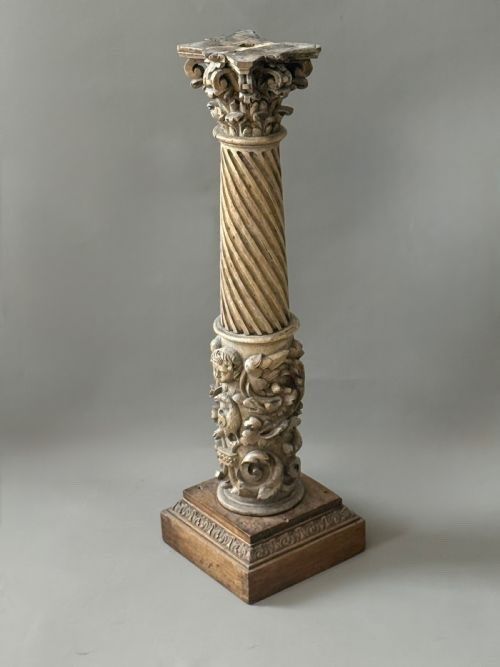
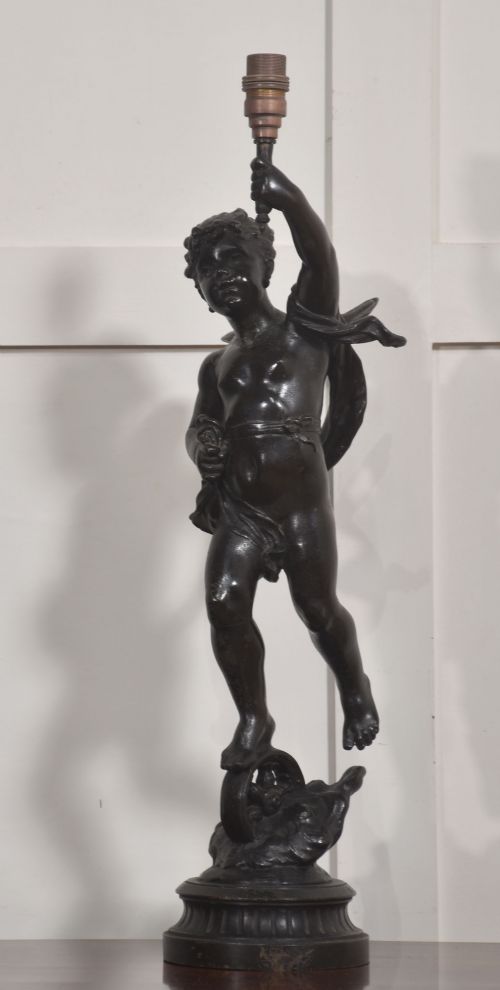
Single statement lamps also occur, often originating as larger bronze statuettes or carved wooden pillars converted for electrical use.
What materials are used for the bases?
Bases incorporate a variety of solid and mounted materials including white and coloured marble, onyx, alabaster, brass, and carved oak.
These dense foundational materials provide necessary stability for the heavier bronze, spelter and porcelain figures mounted above.
How do I identify a converted oil lamp?
Converted pieces typically retain elements from their original nineteenth-century oil-burning apparatus, such as burners, galleries or font reservoirs adapted for electrical wiring.
Porcelain and majolica bodies often show the generous proportions once required to hold lamp oil before electrification became standard.