
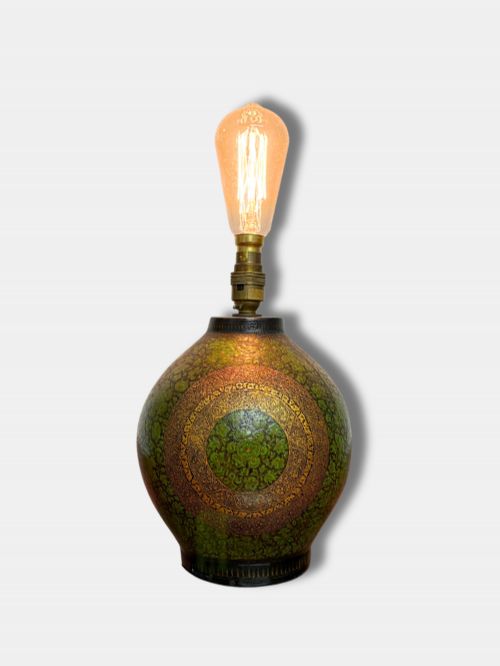


Gold Leaf Desk Lamps
Gold leaf desk lamps bring genuine period warmth and illumination to a workspace, combining historic craftsmanship with functional utility.
Gold Leaf Desk Lamps
When searching for gold leaf desk lamps, buyers encounter table lamps and converted lighting stands spanning the eighteenth century through the twentieth century. These pieces encompass diverse regional traditions, including Kashmiri, Spanish Baroque, and French Rococo styles.
Buyers are most likely to meet carved wooden bases finished with gilding, alongside neoclassical column designs and ornate revival pieces. Each object reflects the lighting technology and decorative tastes of its specific period of origin.
Materials and construction
Carved wood provides the structural foundation for many giltwood pieces, overlaid with metallic leaf to achieve a brilliant reflective surface. Artisans also utilised cast metals, including brass and gilt bronze, creating heavy and durable bases.
Secondary materials such as marble, fabric, and papier-mache appear across various objects to complement the primary gilded framework. Traditional joinery and hand-carving techniques define the older pieces from the eighteenth and nineteenth centuries.
Recorded styles on this page range from Spanish Baroque and French Rococo to Edwardian and Louis XVI Revival.
Evaluating craftsmanship and condition
Quality in these pieces rests upon the precision of the hand-carving and the integrity of the original gilded surface. Finer examples display crisp detail in floral motifs or architectural columns, whereas lesser pieces show softer contours.
The depth and application method of the gold leaf or gilding dictates the richness of the visual finish. Historical patination and the preservation of the original surface significantly influence the character of each lamp.
The Gold Leaf Desk Lamps Glossary
- Giltwood
- Wood that has been covered with a thin layer of gold leaf or gesso. This technique was widely utilised in furniture and lighting to imitate solid gold.
- Ormolu
- Finely chased gilt bronze used extensively in decorative arts. The method involves applying a mercury and gold amalgam to bronze before heating.
- Neoclassical
- A style inspired by classical antiquity, prominent in eighteenth and nineteenth-century design. It emphasises symmetry, straight lines, and classical motifs.
- Altar candlestick
- A tall candle holder originally used in ecclesiastical settings. Many surviving examples are later converted into electric table lamps.
Gold Leaf Desk Lamps: Frequently Asked Questions
How do I wire an old lamp?
Historic lamps often require modern rewiring to meet safety standards while preserving the original structure. A professional electrician can feed modern flex through the existing channel without damaging the antique body.
Care should be taken to retain original brass lampholders and switches where they form an integral part of the piece's history and aesthetic.
How do I clean gilded surfaces?
Dusting these pieces requires only a soft, dry brush to prevent abrasive damage to the delicate gold leaf. Water and chemical cleaning agents must be avoided entirely.
Professional restoration is recommended if the gilding is actively flaking or unstable, as amateur repairs often diminish the historic value.
Are these lamps converted from other objects?
Many period lighting pieces began life as oil lamps, candlesticks, or altar implements before receiving electrical fittings. Such conversions are standard practice for lighting of these ages.
The adaptation process adds another layer to the history of the object, turning functional church or domestic items into desk illumination.
How do I date a gilded lamp?
Dating relies on examining the timber species, carving style, fastening methods, and the type of gilding applied. Stylistic markers such as Rococo curves or Neoclassical columns provide initial chronological clues.
Comparison with documented examples from periods like the Edwardian era or nineteenth-century continental workshops helps confirm the approximate decade of manufacture.