
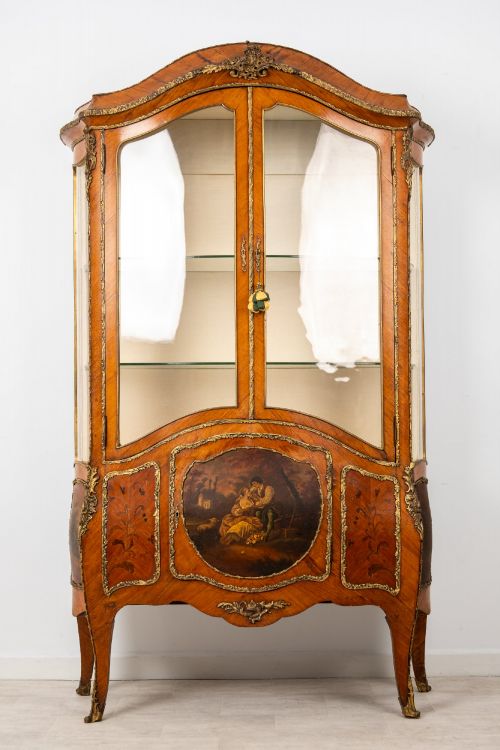
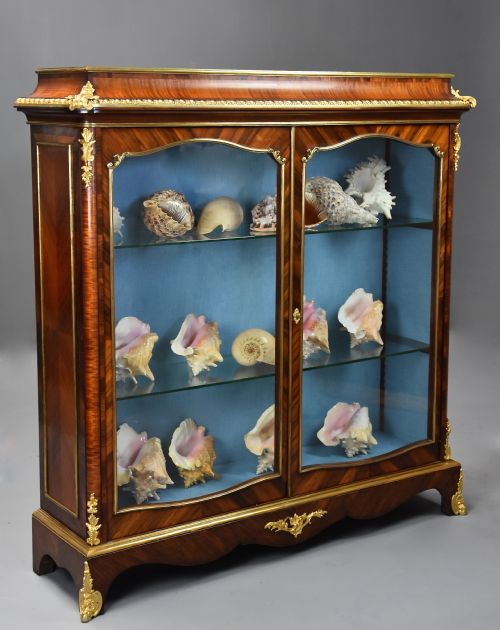


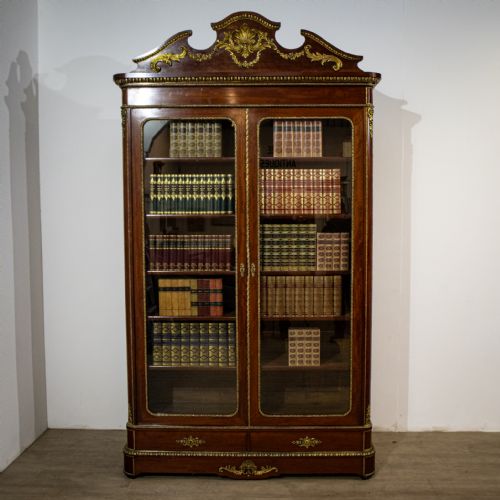
Gilt Bronze Bookcases
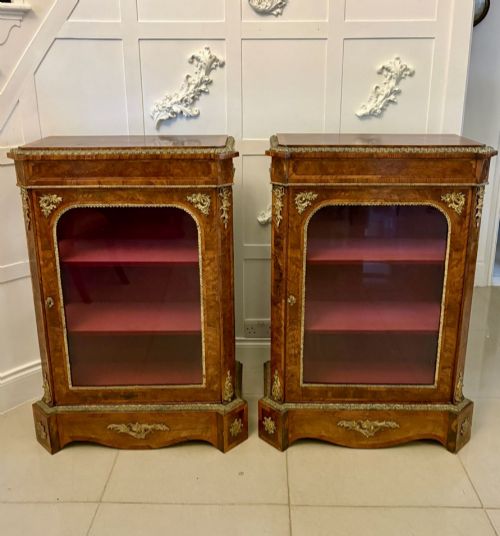
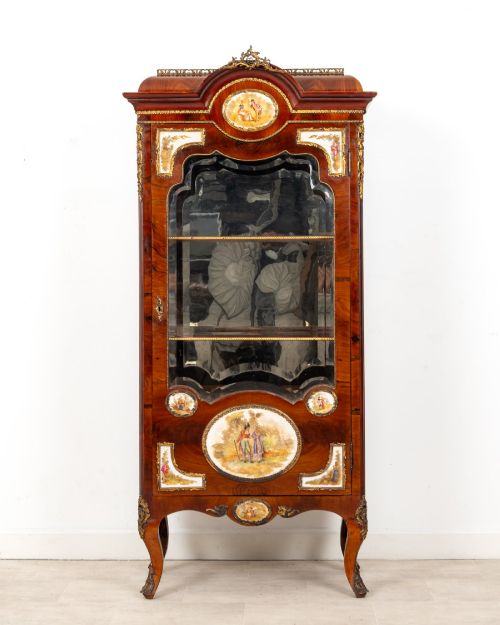
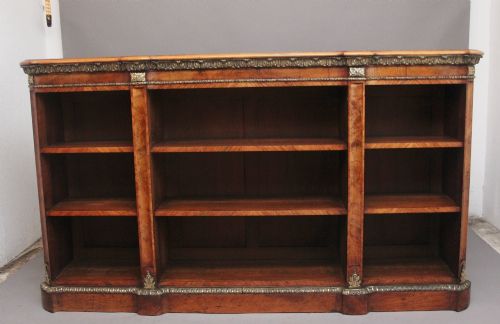
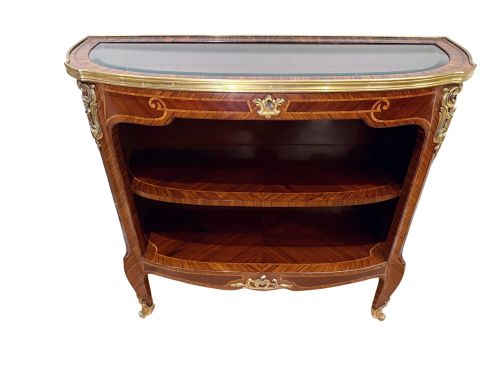
Gilt bronze bookcases combine structural timber with cast and gilded mounts, bringing architectural presence and display space to a room.
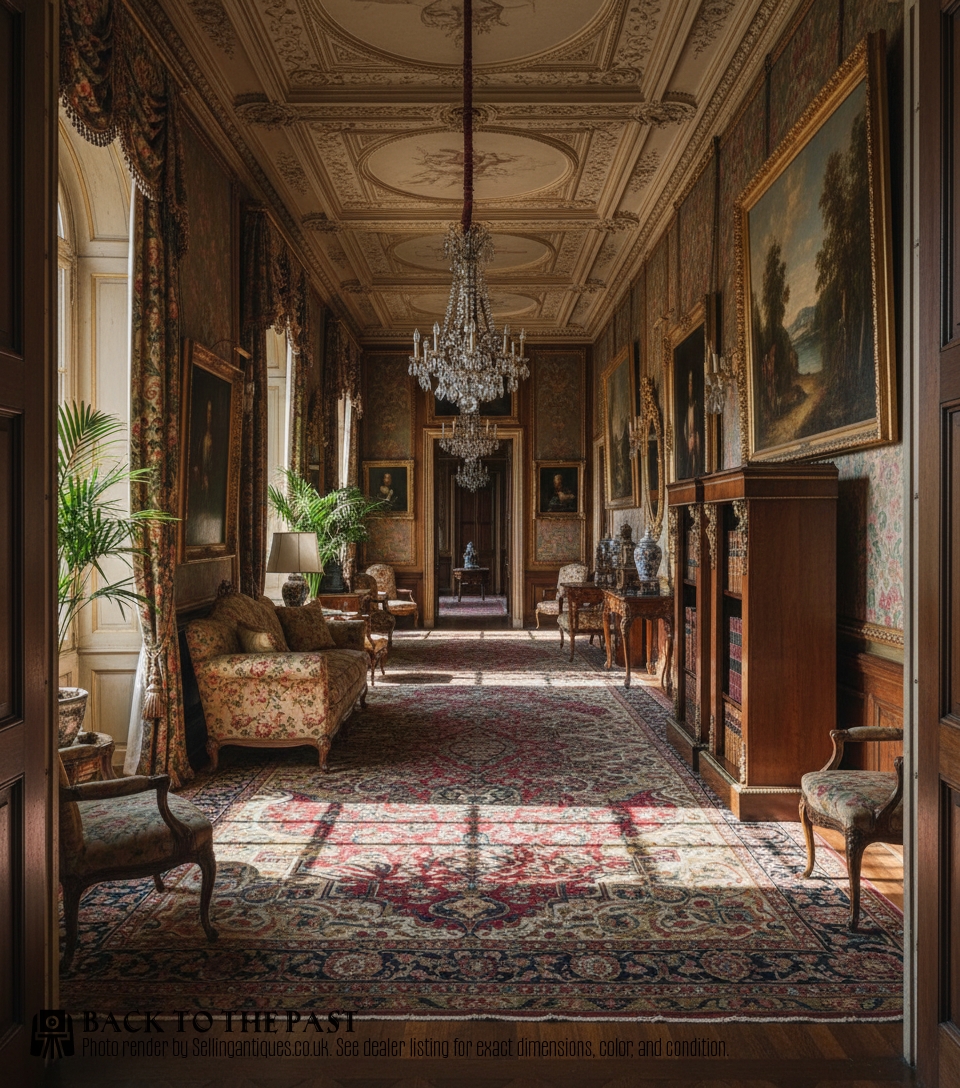
Gilt Bronze Bookcases
When you search for gilt bronze bookcases, you encounter pieces that merge library shelving with decorative cabinet work. Most examples on this page date from the nineteenth century, spanning Victorian Britain and various French revivals.
The forms range from open bookcases and bibliotheques to pier cabinets and glazed vitrines. Many items incorporate glass doors, marble tops or dedicated display sections alongside traditional shelf space.
Materials and Construction
Cabinet makers utilised dense hardwoods including walnut, kingwood, mahogany and satinwood, frequently laying down marquetry or burr veneers across the carcase. These timbers provide the stable structural foundation required to bear heavy glass doors and ceramic plaques.
Mounts of ormolu or gilt bronze are cast, chased and applied to corners, friezes and borders. These metal elements accentuate the architectural lines of the piece and protect vulnerable edges.
Listings feature nineteenth-century pieces spanning the Victorian era, Napoleon III period, and French Louis XVI style revivals.
Quality Variations
The standard of a piece rests on the crispness of the bronze chasing and the selection of the timber grain. Finer examples display deeply detailed metalwork where hand-finishing is evident under close inspection.
Cabinetwork quality appears in the precision of the veneer matching, the weight of the doors and the integration of secondary woods. Maker attribution and workshop stamps also separate standard production from exceptional salon pieces.
Johnstone and Jeanes·Paul Sormani·Victor Raulin·Gillows·Linke·Maison Krieger
The Gilt Bronze Bookcases Glossary
- Ormolu
- Gilded bronze used for decorative mounts on furniture. The technique involves applying an amalgam of gold and mercury to copper alloy.
- Vitrine
- A glass-fronted cabinet designed for displaying porcelain, books or small objects. These pieces often feature glazed sides to maximise light.
- Bibliotheque
- A large freestanding bookcase or cabinet for housing libraries. French examples frequently incorporate ormolu framing.
- Vernis Martin
- A simulated Japanese lacquer developed in eighteenth-century France and revived later. It uses translucent varnish layers over painted scenes.
- Cartonnier
- A piece of furniture fitted with compartments for holding papers or documents. They occasionally appear integrated into larger cabinet bookcases.
Gilt Bronze Bookcases: Frequently Asked Questions
What is a gilt bronze bookcase?
A gilt bronze bookcase is a piece of wooden library furniture decorated with cast metal mounts finished in gold. These items combine book storage with decorative display.
They emerged strongly during the nineteenth century in both English and French workshops. The metal mounts serve to highlight the architectural proportions of the cabinet.
How do I identify French revival styles?
French revival styles utilise specific decorative vocabularies drawn from earlier royal courts. Louis XV styles feature serpentine curves and asymmetrical ormolu mounts.
Louis XVI and Empire styles favour symmetrical geometry, classical columns and neoclassical gilt bronze ornaments. Walnut and kingwood are typical primary timbers for these works.
Where were these bookcases used?
These bookcases were placed in formal libraries, drawing rooms and private studies of nineteenth-century residences. Glazed versions protected valuable leather-bound volumes and delicate collections from dust.
Open shelf variants allowed immediate access to working libraries. Pier cabinets fitted narrow wall spaces between windows or doors.
How do I care for timber and ormolu?
Maintain stable room humidity to protect the underlying cabinet timbers and prevent veneer lifting. Dust ormolu mounts gently with a soft brush without harsh chemical cleaners.
Keep pieces away from direct sunlight to preserve the tone of kingwood, walnut and satinwood surfaces.