

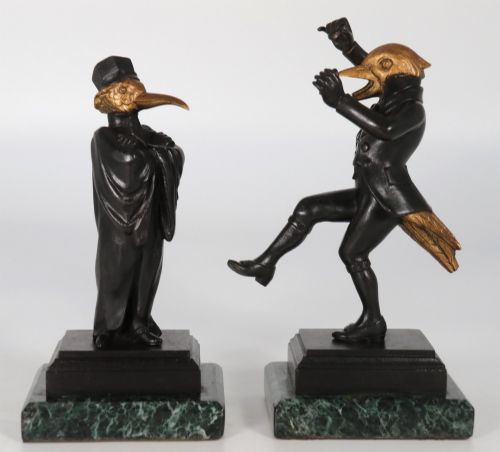


Gilt Bronze Animal Sculpture
A gilt bronze animal sculpture brings both weight and character to a room, capturing the lively spirit of creatures through brilliant metalwork.
Gilt Bronze Animal Sculpture
When you search for a gilt bronze animal sculpture, you are looking at small animal figures cast in bronze and finished with gold gilding or cold-painting. The examples seen here span from the early nineteenth century through the art deco period, taking the form of horses, dogs, lions, rabbits, and whimsical birds or bears.
You are most likely to meet French animalier bronzes, Viennese cold-painted figures, and nineteenth-century novelty desk accessories. These range from realistic studies of German shepherds and golden pheasants to comical theatrical birds and foxes in nightgowns.
Many of these works sit upon integral bases of marble or olive wood, grounding the metal figures in domestic settings like desks and mantelpieces. They function as both sculptures and practical items such as inkwells.
How they were made
Foundries shaped these animals through traditional casting methods, often mounting the completed metal sculptures onto heavy slabs of marble or carved olive wood bases for stability.
Gilt Bronze Animal Sculpture Retail Price Guide 2026
Typical asking prices for gilt bronze animal sculpture among the pieces listed under this phrase on Sellingantiques today, from the lower quarter to the upper quarter. They describe what is for sale here now, not the wider market.
A gilt bronze fox wears a nightgown to serve ink from his desk.
What varies in quality
The finesse of the animal anatomy and the crispness of the chasing separate the standard castings from the exceptional works. Master modellers captured muscle tension and fur texture with high precision before the gilding or paint was applied.
The quality also rests in the preservation of the original surface finish, whether that is the warmth of the gilt bronze or the delicate pigment of cold-painted details on Vienna bronze pieces.
Franz Bergman·Antoine Louis Barye·Louis Riche·Christophe Fratin·Barbedienne·Le Courtier
The Gilt Bronze Animal Sculpture Glossary
- Animalier
- A nineteenth-century artistic movement focused on the realistic depiction of animals. Sculptors in this tradition studied anatomy closely.
- Cold-painted bronze
- A method where paint is applied to a bronze object without heat-firing. This technique is particularly associated with Viennese workshops.
- Ormolu
- Finely ground high-carat gold applied to a bronze base using a mercury amalgamation process. It produces a rich golden lustre.
- Parcel-gilt bronze
- Bronze that is only partially gilded to create contrast between the polished gold areas and the darker patinated metal.
- Vienna Bronze
- Small, highly detailed bronze figures produced in Austrian foundries during the late nineteenth and early twentieth centuries.
Gilt Bronze Animal Sculpture: Frequently Asked Questions
What is a gilt bronze animal sculpture?
It is a metal cast of a creature finished with a gold-coloured surface or gilding. These range from naturalistic depictions of lions and horses to humorous novelty figures.
They capture the texture and movement of animals using durable materials suited for display on desks and tables.
How were these animal figures used?
Many served as decorative desk accessories, such as inkwells featuring foxes or bears engaged in human activities. Others were purely ornamental sculptures placed on mantelpieces or cabinets.
Their substantial weight allowed them to double as paperweights while adding elegance to a room.
How do I care for gilt bronze?
Dust the surface gently with a soft, dry cloth to prevent the accumulation of dirt. Avoid using harsh chemical cleaners or polishes that can strip away the original gilding or cold-paint.
Keep the pieces away from direct sunlight and damp environments to preserve the integrity of the metal and any attached wood or marble bases.
How do I identify the period?
Examine the style of the modelling, the type of base material used, and any signatures or foundry marks stamped into the bronze. Neoclassical and nineteenth-century pieces often feature distinct anatomical detailing compared to later art deco designs.
Materials like olive wood and specific patination styles also offer clues to the era of manufacture.