





Gilt Brass Vases
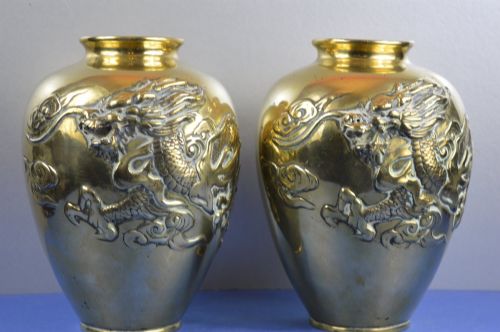
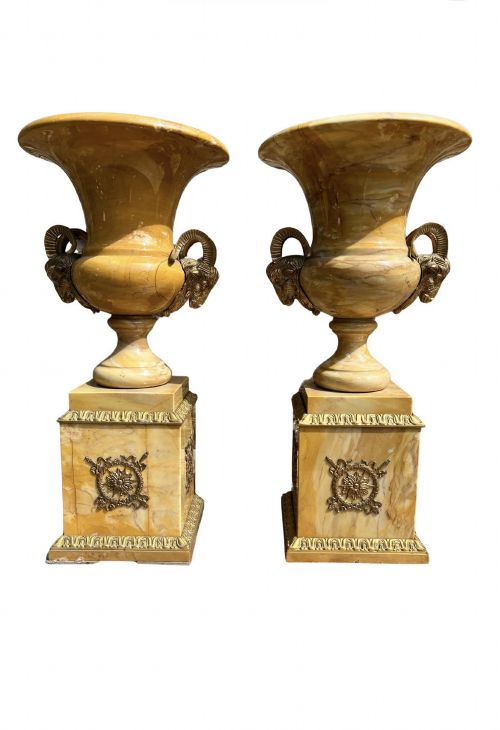
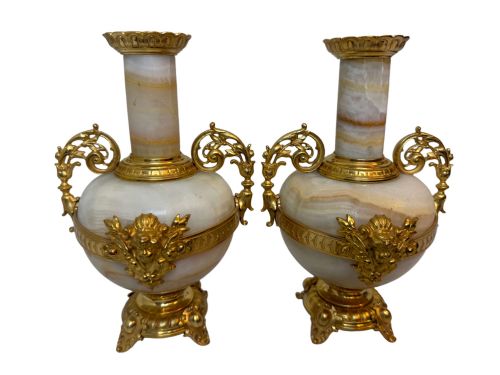
These gilt brass vases bring together heavy cast metalwork and decorative porcelain, offering a decorative focal point for a mantelpiece or side table.
Gilt Brass Vases
When you search for gilt brass vases, you encounter a diverse collection of metal and ceramic vessels spanning the nineteenth and early twentieth centuries. These pieces encompass decorative urns, ewers, and mantel garnitures alongside containers adapted into table lamps.
The selection here draws heavily from French decorative arts and Chinese export traditions, merging cast metal mounts with ceramic bodies. You will frequently find pairs designed for symmetry, often combining gilt bronze or brass with cloisonne enamel, porcelain, or marble.
How they were made
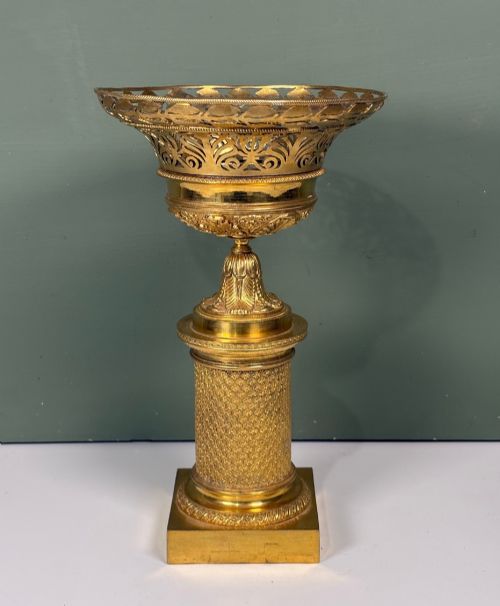
The construction of these items relies on skilled metal casting, producing detailed mounts in ormolu, gilt bronze, and brass. Artisans frequently combined these metal frames with porcelain bodies, crystal, or natural stone such as Sienna marble and white onyx.
Surface decoration often involves intricate cloisonne enamel work, where wire compartments are filled with coloured paste and fired. Other examples employ hand-painted ceramic techniques, including Paris ware, Sevres style porcelain, and Famille Rose or Famille Verte motifs.
Gilt Brass Vases Retail Price Guide 2026
Typical asking prices for gilt brass vases among the pieces listed under this phrase on Sellingantiques today, from the lower quarter to the upper quarter. They describe what is for sale here now, not the wider market.
At least one vase manages to multitask as a clock, proving that nineteenth-century artisans believed timekeeping and flower display made natural bedfellows.
What varies in quality
Quality rests significantly on the crispness of the metal casting and the depth of the gilding applied to the bronze or brass frames. Superior examples display sharply defined ornamentation and secure joints where metal meets stone, porcelain, or crystal.
The artistry of the surface embellishment further separates the standard items from the exceptional pieces. Finely worked enamel cells with vibrant colour gradients or meticulously hand-painted ceramic details indicate a higher standard of craftsmanship.
The Gilt Brass Vases Glossary
- Ormolu
- Gilt bronze ornamentation applied to furniture, clocks, and decorative vessels. This technique involves using a mercury gilding process on cast bronze to achieve a bright golden finish.
- Cloisonne
- An enamelwork technique where metal wire is soldered to a metal base to form compartments filled with paste and fired. The resulting surface shows distinct coloured patterns divided by thin wire lines.
- Garniture
- A set of matching decorative objects, typically vases or urns and candelabra, made to display together on a mantelpiece. These matched sets often feature central clocks flanked by matching vessels.
- Chinoiserie
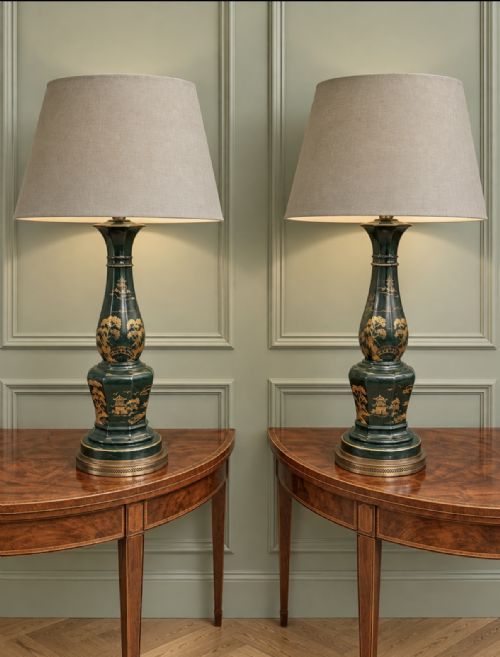
- European artistic style reflecting Chinese aesthetic influences, prominent in decorative arts during various periods. This style appears on ceramics and furniture adapted with western metal mounts.
Gilt Brass Vases: Frequently Asked Questions
How do I clean a gilt brass vase?
Dust metal surfaces gently with a soft, dry cloth to prevent accumulation without disturbing the gilt finish. Avoid using abrasive cleaning agents or chemical polishes that can strip the delicate metallic coating from the bronze or brass.
For ceramic or enamel sections, use a slightly damp cloth followed immediately by a dry one. Take particular care around soldered wire joints on cloisonne pieces to prevent moisture retention.
Were these vases made as lamps?
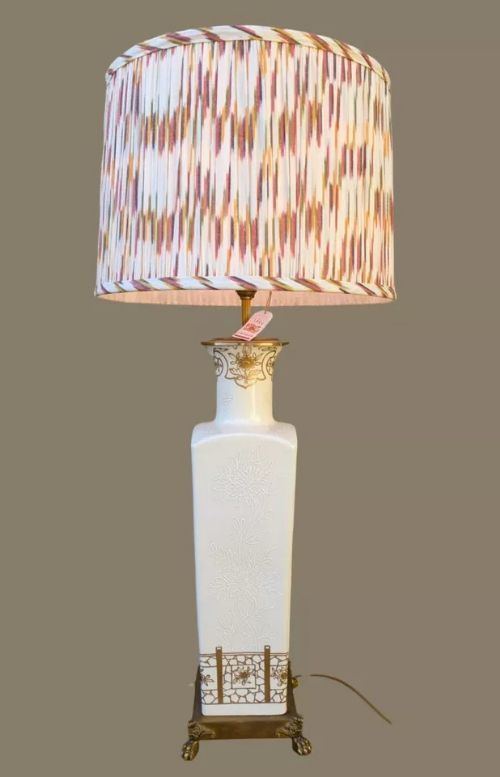
Many items listed under this category began as decorative vases, urns, or ewers before being converted into table lamps at a later date. This adaptation often involved drilling the base or mounting electrical fittings through the centre.
Original factory adaptations do exist, particularly in late nineteenth and early twentieth-century decorative pieces. Checking the wiring and mountings helps determine whether the conversion is period-appropriate or a modern addition.
How do I date a gilt brass vase?
Dating relies on examining the casting quality, the style of the metal mounts, and the characteristics of any ceramic body present. Victorian and Edwardian pieces often exhibit heavier cast frames and specific revival styles such as French Rococo or Chinoiserie.
Maker marks, where present on the porcelain bases or bronze undersides, provide a reliable guide to the manufacturing period. Stylistic cues like Napoleon III or Empire revival motifs further narrow down the decade of production.
What is the difference between ormolu and gilt brass?
Ormolu specifically refers to gilt bronze, where a layer of gold amalgam is applied to a cast bronze base and fired. This technique produces a warm, deep lustre characteristic of fine French decorative arts from the eighteenth and nineteenth centuries.
Gilt brass utilises a brass alloy rather than bronze, often appearing in later nineteenth and twentieth-century items. While both provide a golden appearance, bronze generally allows for sharper cast details and greater durability.