


Gilt Brass Vanity Mirror
These gilt brass vanity mirror pieces bring ornate nineteenth-century French and English dressing furniture into modern rooms.
Gilt Brass Vanity Mirror
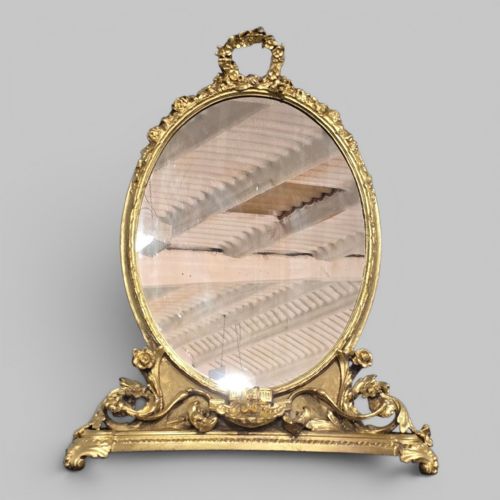
A gilt brass vanity mirror is a dressing table accessory designed for the boudoir or bedroom, featuring a reflective glass plate supported by an ornamental metallic frame. The pieces seen here span from the nineteenth century into the early twentieth century, encompassing Victorian and Edwardian periods.
Most examples encountered on this page originate from France and England, utilising decorative metalwork forms such as table mirrors, dressing mirrors, and small hand mirrors. Makers and artisans applied ornate styling inspired by the Rococo, Empire, and Napoleon III periods to metal frames.
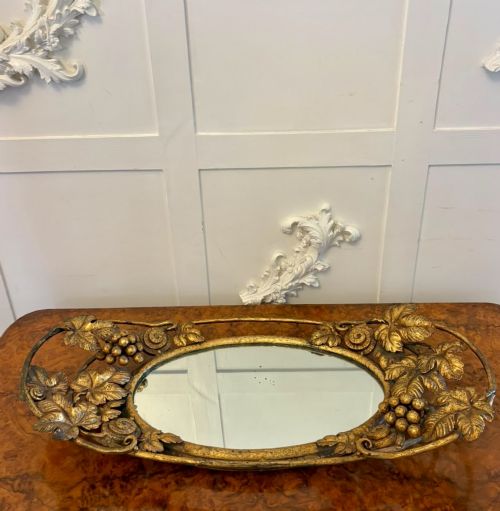
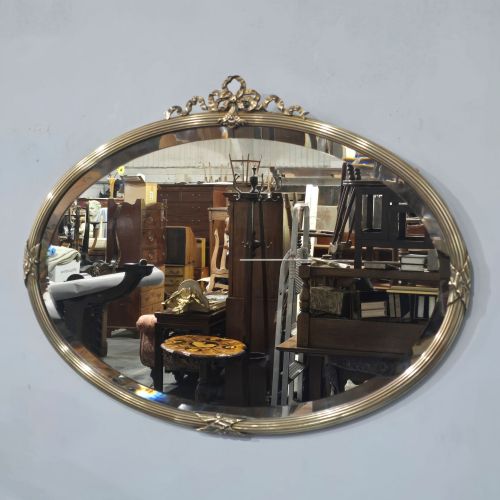
Beyond standard tabletop dressing mirrors, related items such as decorative serving trays and wall mirrors also appear within these listings. Each object employs metal casting and gilding techniques typical of the Victorian era and the years around nineteen hundred.
How they were made
These items rely on cast metals including brass, bronze, ormolu, and gilt metal to form decorative structural frames. Artisans frequently chased and cast the metal components to create intricate relief work, scrolls, and botanical motifs.
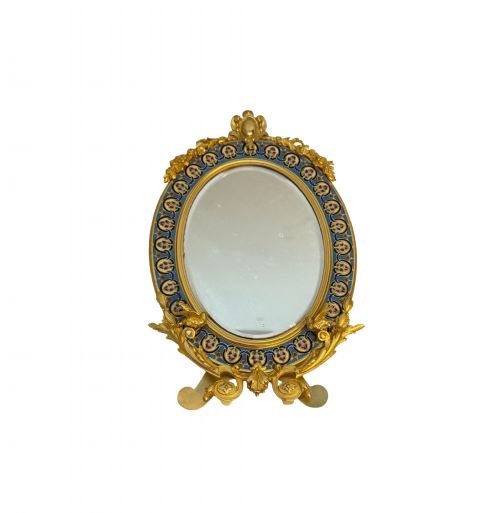
Reflective surfaces utilise heavy glass plates, often with bevelled edges to catch the light. Specialised workshops integrated vitreous enamel panels, such as Limoges enamel, or champleve enamel details directly into the metallic surrounds.
Adjustable pedestals, hinges, and struts allow the table mirrors to tilt at various angles for the user. Ormolu application involves a mercury-gilding or electroplating process applied to bronze or brass bases.
Object forms span table mirrors, dressing table mirrors, wall mirrors, trays, vanity mirrors, and hand mirrors.
What varies in quality
Quality separates objects by the crispness of the cast metal ornamentation and the depth of the chasing work on the frame. Superior examples display sharply defined scrollwork and botanical details rather than soft, blurred casting lines.
The integration of decorative elements like hand-painted Limoges enamel panels or champleve work distinguishes finer pieces from plain metal frames. The clarity and thickness of the bevelled glass mirror plate also indicate the standard of production.
Signature marks from known foundries or makers, such as Thiebaut Freres or specific artisans, elevate the status of an object. The structural integrity of the easel back or adjustable pedestal mechanism completes the assessment.
Thiebaut Freres·Joseph Meissonnier·F.Bienvue
The Gilt Brass Vanity Mirror Glossary
- Ormolu
- Gilded bronze, typically produced by applying a gold amalgam to a bronze base and heating it. This technique creates a rich, durable golden finish found on nineteenth-century French mirrors.
- Champleve
- An enamelling technique where troughs or cells are sunk into the surface of the metal and filled with vitreous enamel powder before firing. These colourful enamel details frequently adorn French table mirrors.
- Bevelled glass
- A mirror plate with edges cut and polished at an angle to create a framed effect within the glass itself. This treatment catches light and adds depth to Victorian dressing mirrors.
- Limoges enamel
- Painted vitreous enamel produced in the French city of Limoges, often featuring portrait miniatures or floral scenes. These panels are set into the metal frames of handheld and table mirrors.
- Rococo style
- An artistic movement characterised by asymmetrical scrollwork, C-scrolls, shell motifs, and natural forms. Many nineteenth-century vanity mirrors adopt this ornate aesthetic.
Gilt Brass Vanity Mirror: Frequently Asked Questions
What periods do these mirrors come from?
The pieces span the nineteenth century and the early twentieth century, capturing Victorian and Edwardian aesthetics alongside continental French periods.
Dates range from the eighteen twenties up to nineteen ten, covering Napoleon III, Empire, and Rococo revival movements.
How were these mirrors used?
They served on dressing tables and boudoir furniture to assist with personal grooming, hair arrangement, and cosmetics.
Hand mirrors were held directly, while table versions utilised adjustable pedestals or easel backs to angle the reflection.
What is the difference between ormolu and gilt brass?
Ormolu specifically refers to gilded bronze, involving a labour-intensive process of applying gold to a bronze substrate.
Gilt brass or gilt metal utilises a brass or mixed metal base with a surface gold coating, representing a slightly different manufacturing tier.
How should I clean a gilt brass mirror?
Dust the metal frame gently with a soft, dry cloth to prevent accumulation without disturbing the gilding.
Avoid harsh chemical cleaners or abrasive polishes that can wear away the gold layer on ormolu or brass.