


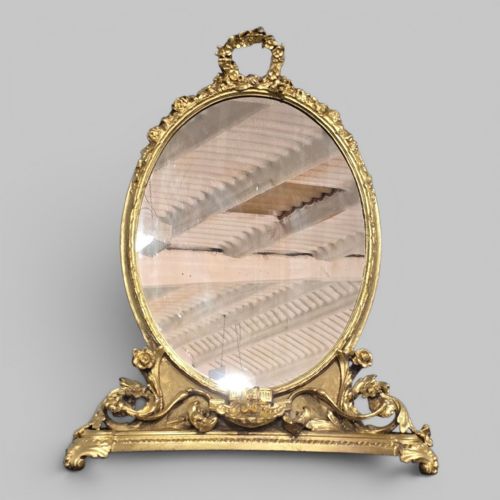


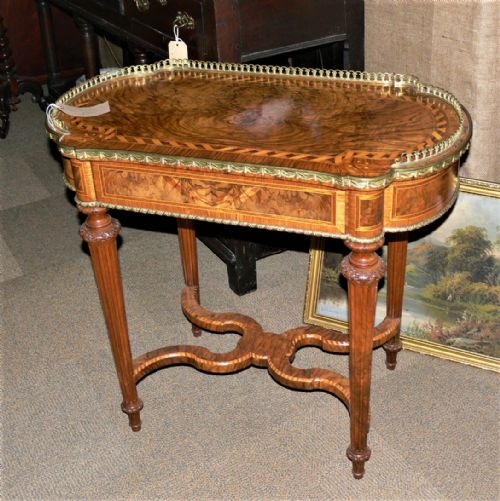


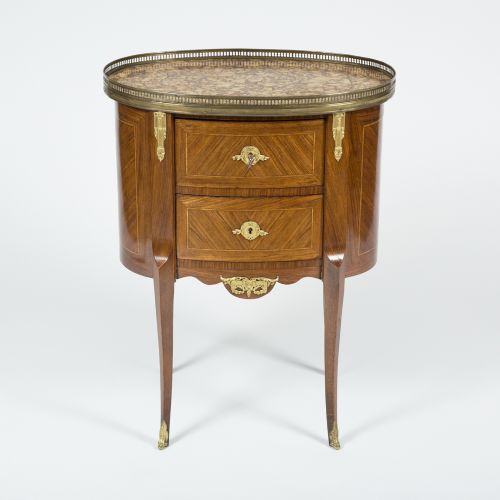

Gilt Brass Oval Table
A gilt brass oval table brings bright metalwork and curved lines into a room, offering a surface that catches the eye and holds small objects.
Gilt Brass Oval Table
When you search for a gilt brass oval table, you enter a field defined by nineteenth and early twentieth-century decorative furnishings, including centre tables, occasional tables, and dressing mirrors framed in polished metal. These items range from simple Victorian walnut tables to French Empire and Louis XVI revival designs.
The most common forms you meet here combine gleaming brass mounts with wooden carcasses or glass tops. They serve as functional display surfaces or decorative accents in sitting rooms and bedrooms.
How they were made
Maker workshops utilised brass, ormolu, and gilt metal alongside timbers such as mahogany, walnut, rosewood, and ebonised wood to build sturdy frames with decorative appeal. Inlaid marquetry and enamel details often complement the metal mounts.
Craftsmen shaped glass and marble for table tops and mirrors, securing them within cast or chased brass surrounds that reflect the styles of the Victorian era and French revival periods.
Gilt Brass Oval Table Retail Price Guide 2026
Typical asking prices for gilt brass oval table among the pieces listed under this phrase on Sellingantiques today, from the lower quarter to the upper quarter. They describe what is for sale here now, not the wider market.
Listings feature pieces spanning the Victorian period through the early twentieth century, incorporating materials like brass, glass, mahogany, and walnut.
What varies in quality
Quality rests in the crispness of the brass casting and the depth of the gilding on the metal components. Finer examples show careful hand-chasing on mounts and precise inlay within the wood veneers.
The choice of secondary materials, such as breche d'alep marble or heavy crystal glass, distinguishes standard production pieces from workshop items bearing maker labels.
Howell & James, London·Haentgos Freres, Paris·Howard & Sons·A. Beurdeley
The Gilt Brass Oval Table Glossary
- Gilt brass
- Metal treated with a gold-coloured finish or gold leaf to give a bright, reflective surface. It provides the signature shine seen across these frames and mounts.
- Ormolu
- Finely chased and gilt bronze or brass used for decorative mounts. This technique creates detailed ornamental highlights on nineteenth-century furniture.
- Marquetry
- Decorative veneer work arranged in patterns using various woods. It adds pictorial or geometric interest to table tops.
- Breche d'alep marble
- A specific type of quarried stone marked by brecciated patterns of various tones. It is often fitted to the tops of commodes and tables.
- Etagere
- A set of open shelves supported by slender pillars. This form provides tiered display space for small decorative objects.
Gilt Brass Oval Table: Frequently Asked Questions
What is a gilt brass oval table?
A gilt brass oval table is a decorative surface featuring curved edges and polished metal framing, produced primarily during the nineteenth and early twentieth centuries.
These pieces function as centre tables, occasional tables, or dressing mirrors, bringing reflective metallic accents and traditional wood veneers into domestic interiors.
How do I clean gilt brass?
Gilt brass requires gentle dusting with a soft, dry cloth to prevent the accumulation of dirt on the metal surface. Harsh metal polishes must be avoided, as abrasive rubbing can strip the gold-coloured finish from the underlying brass.
For stubborn marks, a damp cloth with mild soap can be used sparingly, followed immediately by thorough drying with a soft cloth to protect the finish.
Where should I place an occasional table?
An occasional table suits small spaces, corners, or beside seating where a compact surface is needed for lamps, clocks, or decorative items. Their reflective brass frames help brighten darker corners of a room.
Care should be taken to keep them away from direct heat sources and excessive moisture to protect the timber frames and delicate metal gilding.
How do I identify French revival styles?
French revival styles, such as Louis XVI and Empire, are identified by symmetrical classical motifs, tapered legs, and decorative ormolu mounts. These designs draw inspiration from earlier royal French aesthetics.
Craftsmanship details like marquetry inlay and shaped marble tops often accompany these revival pieces, distinguishing them from simpler Victorian vernacular furniture.