

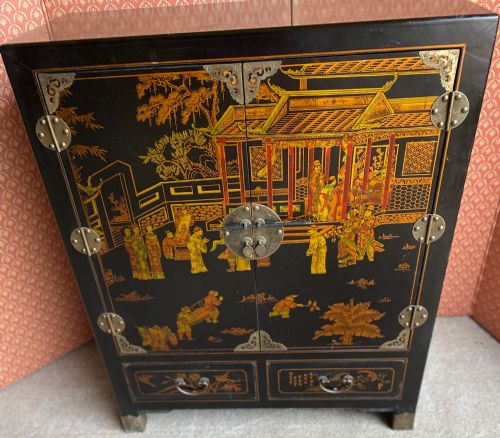
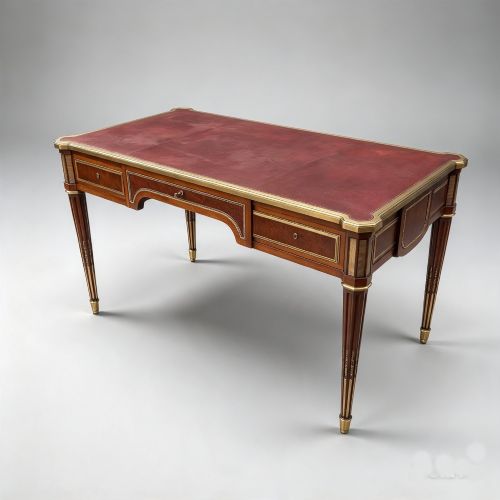
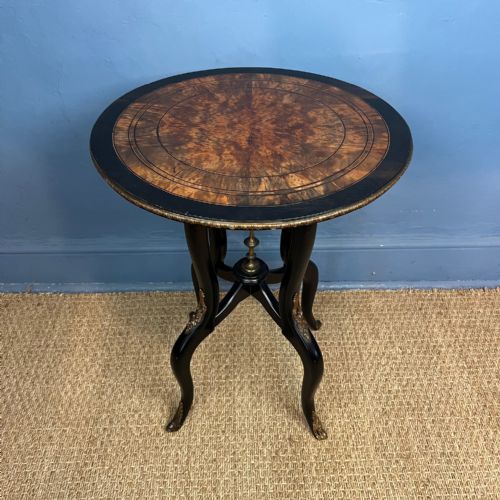
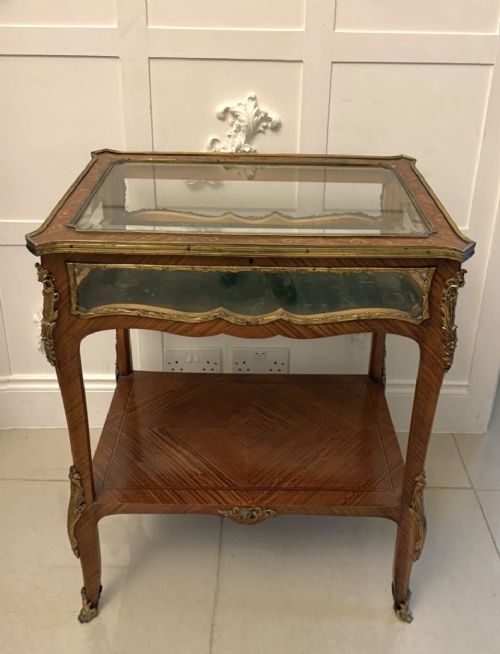



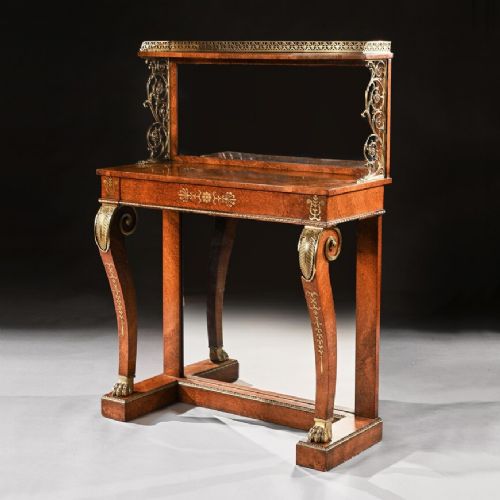
Gilt Brass Mounted Table
A gilt brass mounted table combines rich cabinet timbers and cast metal mounts to create ornamental furniture for the nineteenth-century interior.
Gilt Brass Mounted Table
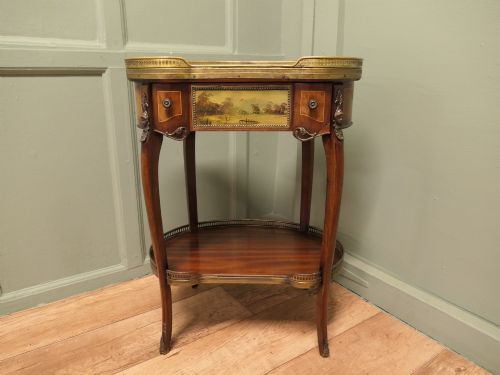
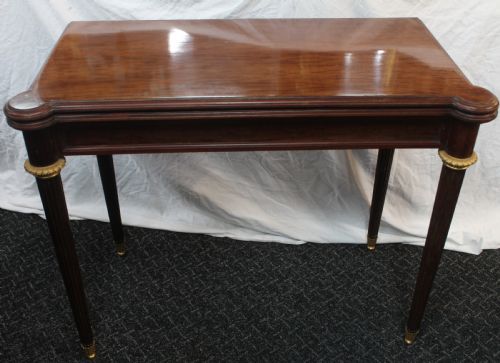
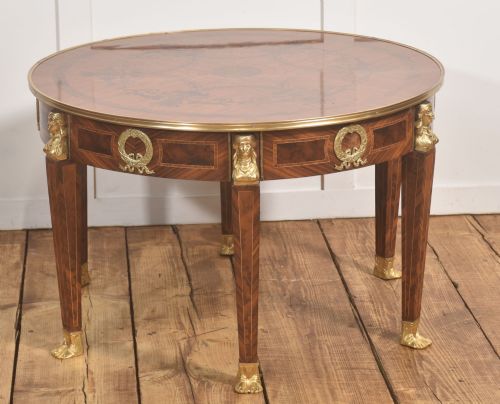
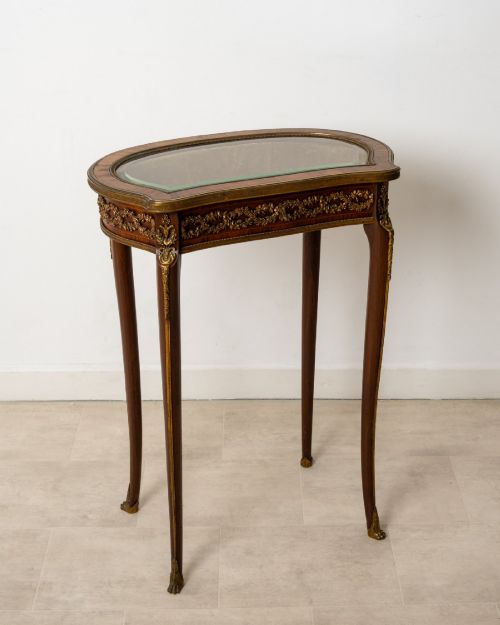
When you search for a gilt brass mounted table, you are looking at nineteenth-century furniture defined by cast metal enrichments fixed to timber frames. These pieces encompass side tables, centre tables, coffee tables, and display tables originating primarily from French and Victorian workshops.
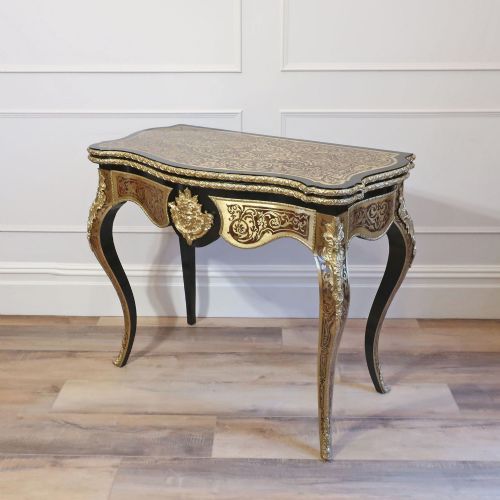
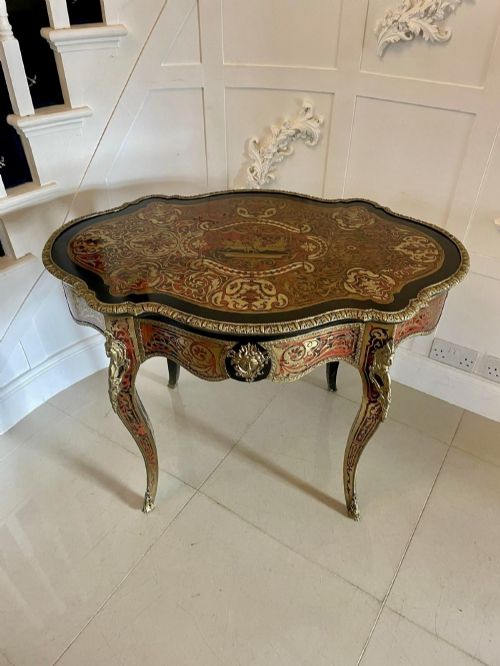
The versions you are most likely to meet on this page span the 1860s to the 1920s, heavily influenced by French Louis XV and Louis XVI revivals, alongside Napoleon III designs. They utilise timbers such as mahogany, kingwood, and ebonised wood, paired with polished marble tops or marquetry surfaces.
Makers and designers from these periods applied gilt brass, ormolu, and bronze mounts to angles, legs, and aprons to accentuate the architectural lines of the furniture. Whether functioning as a card table, a bijouterie stand, or a writing desk, each piece relies on the contrast between dark timber and bright metal.
How they were made
Cabinetmakers constructed the foundational carcases using dense hardwoods like mahogany and exotic veneers such as kingwood, tulipwood, and satinwood, often laid over oak or pine. Surfaces frequently incorporated intricate marquetry, boulle work utilising tortoiseshell and brass, or hand-painted lacquer panels.
The metallic ornamentation was produced by casting brass or bronze, which was then chased by hand to sharpen details before undergoing mercury gilding or electroplating to achieve the characteristic ormolu finish. These mounts were secured to the wooden frames using bespoke brass screws fitted through cast apertures.
Marble tops, particularly rouge marble, were cut, shaped, and polished to fit precisely within the wooden or metal galleries of console and lamp tables. Joinery relied on traditional mortise and tenon joints augmented by internal blocks to support the weight of the stone and metal components.
Gilt Brass Mounted Table Retail Price Guide 2026
Typical asking prices for gilt brass mounted table among the pieces listed under this phrase on Sellingantiques today, from the lower quarter to the upper quarter. They describe what is for sale here now, not the wider market.
Listings feature nineteenth-century French and Victorian forms, predominantly utilising mahogany, kingwood, and ebonised wood paired with ormolu and gilt bronze mounts.
What varies in quality
The distinction between ordinary production and superior craftsmanship lies in the crispness of the metal chasing and the depth of the timber veneers. Finer examples display hand-finished bronze mounts with deeply undercut foliage and figures, whereas lesser pieces rely on shallow, unrefined brass stampings.
Structural integrity and timber selection also divide the range, with top-tier items utilising dense, figured kingwood or amboyna over stable secondary woods, joined with precise dovetailing. The quality of the interior carcase work, drawer linings, and the seamless fit of marble tops further separate standard workshop output from pieces associated with master cabinetmakers.
Maison Millet·François Linke·Etienne Lenoir
The Gilt Brass Mounted Table Glossary
- Ormolu
- Gilded bronze or brass applied to furniture mounts and clock cases. The technique involved mercury amalgamation during the nineteenth century to achieve a durable, warm metallic lustre.
- Marquetry
- The art of applying decorative veneer pieces to a structural carcase to form geometric or pictorial designs. Makers used contrasting timbers like tulipwood, mahogany, and satinwood.
- Boulle work
- A form of marquetry consisting of tortoiseshell and brass inlaid in contrasting patterns. Named after the master cabinetmaker André-Charles Boulle, it saw a major revival during the Napoleon III period.
- Bijouterie table
- A display table featuring a glazed top and velvet-lined interior designed for showing small collectibles, jewellery, and curiosities. These pieces often incorporate hinged lids and slender cabriole legs.
- Bouillotte table
- A small, round occasional table featuring a raised gallery edge designed to prevent items from sliding off. They typically incorporate small pull-out slides and gilt brass mounts.
Gilt Brass Mounted Table: Frequently Asked Questions
What is a gilt brass mounted table?
A gilt brass mounted table is a piece of nineteenth-century furniture featuring cast metal ornaments fixed to timber frames such as mahogany, kingwood, or ebonised wood. These items range from small display and lamp tables to large centre and writing desks.
Craftsmen used the metal mounts to highlight the structural lines and corners of the furniture, drawing inspiration from earlier French court styles. The combination of polished wood, marble, and bright metal creates a decorative surface suited to formal reception rooms.
How do I identify a Napoleon III table?
Napoleon III tables, produced during the Second French Empire, often feature dark ebonised woods, elaborate boulle work, and rich ormolu mounts. They frequently adopt revived Louis XV or Louis XVI serpentine forms.
Look for contrasting exotic veneers, curved cabriole legs, and inset marble slabs framed by cast brass galleries. These pieces emphasise decorative opulence and technical skill in veneer cutting.
Were these tables used daily?
Many of these tables served specific domestic functions in nineteenth-century drawing rooms, boudoirs, and libraries. Games tables accommodated card playing, while bijouterie stands displayed precious trinkets.
Writing desks like the bonheur-du-jour provided a private space for correspondence, combining small drawers and upper cabinets. Their construction balanced decorative appeal with practical utility for the home.
How do I care for marble and gilt surfaces?
Maintaining marble and gilt brass requires gentle dusting with a soft, dry cloth to prevent abrasive particles from scratching the polished surfaces. Avoid using harsh chemical cleaners that can strip the ormolu gilding or etch the stone.
Keep wooden frames and veneered surfaces away from direct sunlight and extreme humidity fluctuations to prevent timber movement. Professional wax polish applied sparingly helps maintain the lustre of the timber without building up residue.