



Gilt Brass Jewellery Box
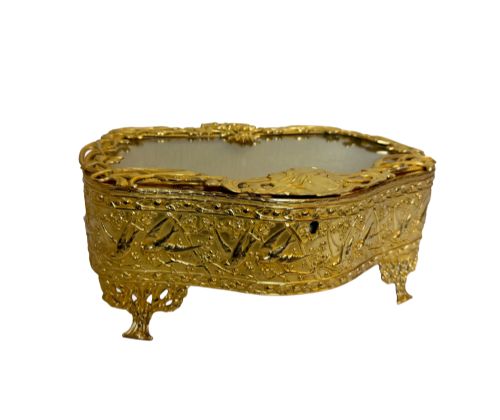
A gilt brass jewellery box holds small treasures while bringing nineteenth-century metalwork and glass to a dressing table.
Gilt Brass Jewellery Box
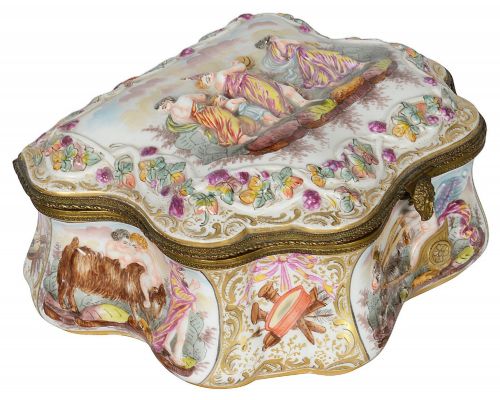
A gilt brass jewellery box combines metal framing with glass, porcelain, marble, or hardstone panels to form ornate caskets for dressing tables. These containers serve as secure receptacles for small valuables, rings, and trinkets.
The pieces appearing on this page span the nineteenth century, encompassing Regency, Victorian, Napoleon III, and Art Nouveau periods. French and Italian workshops predominate, producing items ranging from simple brass boxes to elaborate novelty carriages and portrait caskets.
Materials and construction
Caskets rely on a metal armature of brass, gilt bronze, or ormolu, which provides structural integrity for inset panels of glass, porcelain, or carnelian agate. Gilding techniques include fire gilding and electro-forming to coat the copper alloy base.
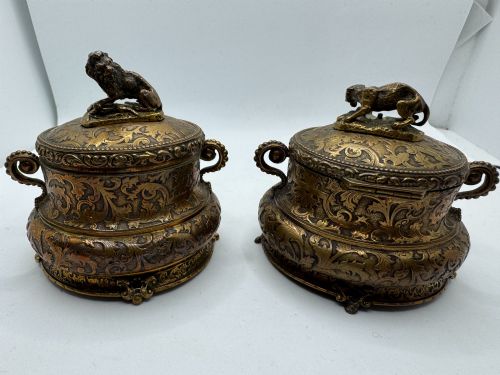
Internal spaces frequently feature linings of silk or leather, while exteriors incorporate painted porcelain, bevelled glass panels, or carved hardstone. Hinges, clasps, and cast finials such as dogs or decorative mounts are applied to complete the metalwork.
Gilt Brass Jewellery Box Retail Price Guide 2026
Typical asking prices for gilt brass jewellery box among the pieces listed under this phrase on Sellingantiques today, from the lower quarter to the upper quarter. They describe what is for sale here now, not the wider market.
Some nineteenth-century makers turned luxury storage into a fantasy by shaping boxes into miniature horse-drawn carriages and opaline eggs.
Judging quality
Quality reveals itself in the crispness of the cast metalwork, the weight of the bronze or brass, and the integration of inset materials such as bevelled glass or hand-painted porcelain. Superior examples display fine chasing on the ormolu and tight joints across the frame.
The Gilt Brass Jewellery Box Glossary
- Ormolu
- Gilt bronze produced by applying a mercury and gold amalgam to a bronze base and heating it. This technique creates a durable, rich golden finish seen on nineteenth-century French caskets.
- Capodimonte
- Italian porcelain produced by factories known for modelled relief figures and decorative panels. These panels often form the sides and lids of nineteenth-century table caskets.
- Palais Royal
- A Paris location associated with luxury shops selling novelty items, miniature carriages, and trinket boxes. Pieces from this origin often feature elaborate gilt brass frames and glass elements.
- Hardstone
- Semi-precious stones such as carnelian or agate cut and polished into thin slabs. These stones are set into gilt metal frames to form decorative box lids.
Gilt Brass Jewellery Box: Frequently Asked Questions
How do I clean a gilt brass jewellery box?
Dust gently with a soft, dry cloth to protect the delicate gilding and any inset glass or porcelain panels. Avoid liquid cleaners or polishes which can strip the thin gilt layer from the brass.
Keep the interior silk or leather linings dry and free from moisture. Professional restoration is recommended if structural hinges require adjustment.
Are these boxes French or English?
Many examples originate from French workshops, particularly Paris and the Palais Royal, alongside Italian makers producing porcelain caskets. English production is represented by nineteenth-century brass and leather work-boxes.
Examining the casting style, motifs, and material combinations helps determine the likely country of origin.
What periods do these boxes come from?
The available pieces primarily date from the nineteenth century, spanning Regency, Victorian, and Napoleon III eras. Styles range from classical Neoclassical designs to organic Art Nouveau curves.
Datings often reference specific decades such as eighteen-eighty or eighteen-ninety based on decorative characteristics.
What materials are used besides brass?
Gilt metal relies on supportive elements including bevelled glass, porcelain, marble, and hardstones like carnelian agate. Interiors commonly feature silk or leather linings.
Frames incorporate ormolu and gilt bronze alongside standard brass to achieve varied decorative textures.