

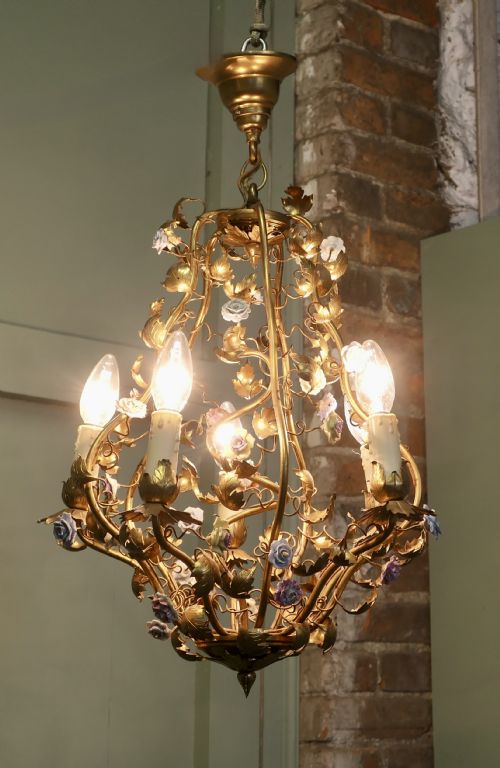
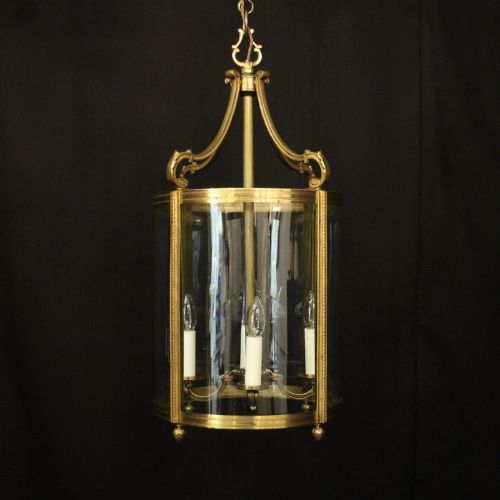
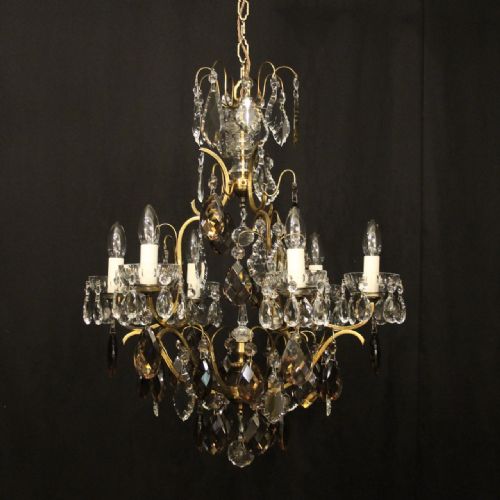


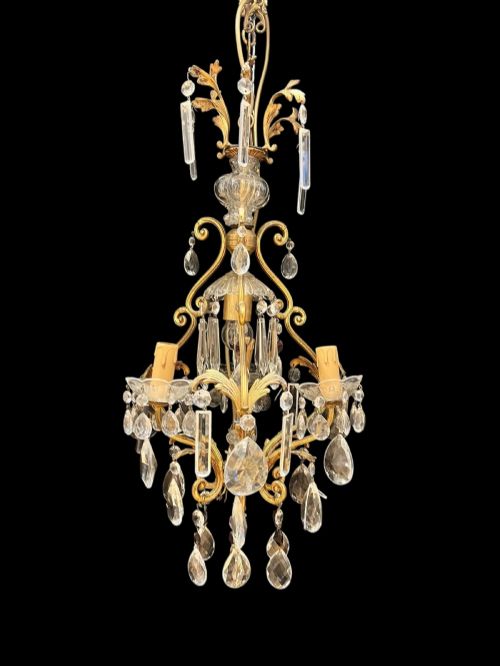
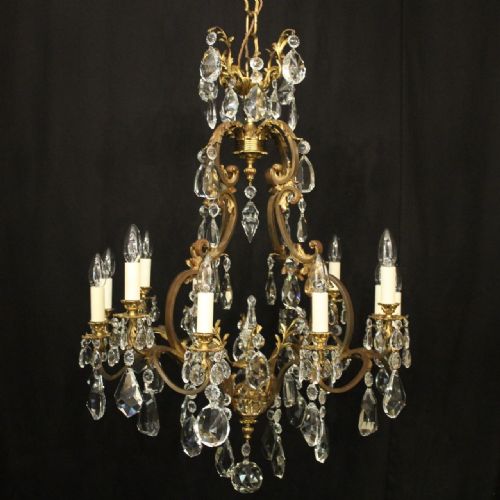


Gilt Brass Cage Chandelier
A gilt brass cage chandelier brings exceptional vertical presence and reflective brilliance to a room, drawing the eye upward with open metal frameworks.
Gilt Brass Cage Chandelier
A gilt brass cage chandelier is a prominent ceiling fixture defined by a skeletal metal framework designed to hold numerous lights and glass dressing. When searching this phrase, buyers encounter striking hanging lanterns and elaborate multi-armed configurations.
The selections span from the nineteenth century through the Edwardian era and the 1930s, reflecting French and Italian aesthetic traditions. French styles predominate, ranging from chateau influences to rococo revival forms.
Most examples utilise a distinct cage or birdcage silhouette constructed from gilded metals, supporting arrays of crystal drops, prisms, and beads. These pieces function as central decorative statements in high-ceilinged spaces.
How they were made
Craftsmen shaped frames from brass, bronze, and gilt metal, employing casting and wire-work techniques to build the signature skeletal cage structure. Gilt finishes were applied to the metal surfaces to enhance light reflection.
Cut crystal, glass drops, and prisms were suspended from the metal frames using wire loops or pins, creating complex cascades of glass. Some iterations incorporated ceramic floral elements or coloured glass fruits alongside the standard crystal drops.
Materials documented across the listings include cut crystal, gilt bronze, toleware, and ceramic flowers.
What varies in quality
The standard of a cage chandelier is determined by the crispness of the metal casting and the depth of the gilding applied to the brass or bronze framework. Heavier gauges of metal provide structural integrity that supports extensive arm configurations.
The quality of the glass components also dictates the character of the piece, with high-grade cut crystal and precision-faceted prisms producing superior light refraction compared to plain moulded glass. The completeness and originality of the crystal drops and hanging chains further distinguish finer examples.
The Gilt Brass Cage Chandelier Glossary
- Cage chandelier
- A lighting fixture featuring a structural metal frame enclosing internal lights, often resembling a birdcage. This open architecture allows light to pass through the central structure.
- Gilt bronze
- Metal alloy coated with a thin layer of gold, providing a durable and luminous finish. This material is frequently found on French antique pieces.
- Prism
- A geometric piece of cut glass designed to refract light into spectral colours. These elements hang from the arms and crowns of the fixtures.
- Ormolu
- Gilt bronze applied to decorative hardware and mounts, popular in neoclassical and revival interior schemes. The technique produces a rich golden appearance.
- Birdcage
- A specific sub-type of cage chandelier characterised by curved vertical metal bands rising to a central crown. The design originated in the eighteenth century and persisted through the Edwardian period.
Gilt Brass Cage Chandelier: Frequently Asked Questions
How do I hang a cage chandelier?
These fixtures require secure ceiling anchor points capable of supporting their substantial weight, which increases with the number of arms and crystal drops.
Professional installation by an electrician ensures that the hanging chain, rose, and internal wiring meet safety standards while positioning the fixture at the correct height for the room.
What periods do these chandeliers come from?
The available pieces originate primarily from the nineteenth century, the Edwardian period, and the early decades of the twentieth century. French and Italian workshops produced the vast majority of these designs.
Stylistic indicators such as rococo curves or neoclassical symmetry help identify the era of manufacture alongside specific material treatments.
How do I clean a crystal chandelier?
Maintenance involves gentle cleaning of the glass drops and metal framework using specialised conservation solutions or mild soapy water. Care must be taken to support each crystal element while wiping.
Leaving the drops attached or removing them individually depends on the fragility of the connecting wire loops and the overall stability of the frame.
Where should I place a hanging lantern?
These fixtures suit hallways, entrance foyers, and high-ceilinged reception rooms where their vertical proportions can be fully appreciated. Their reflective qualities brighten transitional spaces.
Sizing the fixture appropriately relative to the floor area and ceiling height ensures the piece remains in proportion to the room.