
French Cut Crystal Light
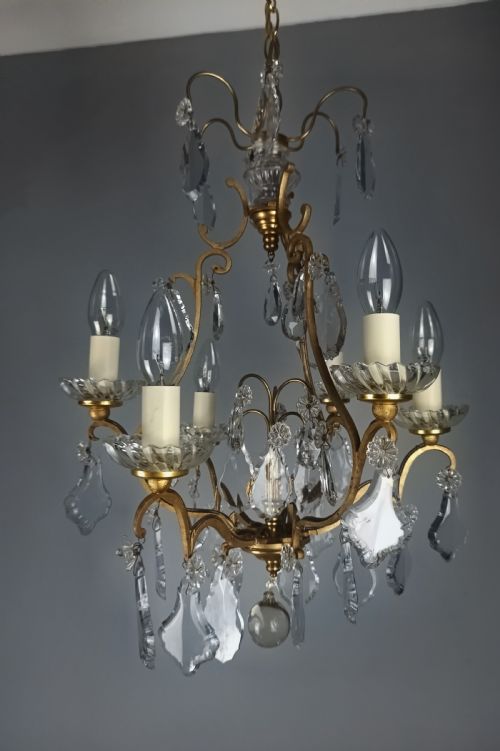
These french cut crystal light fixtures bring sparkle and period elegance to a room through faceted drops and gleaming metal frames.
French Cut Crystal Light
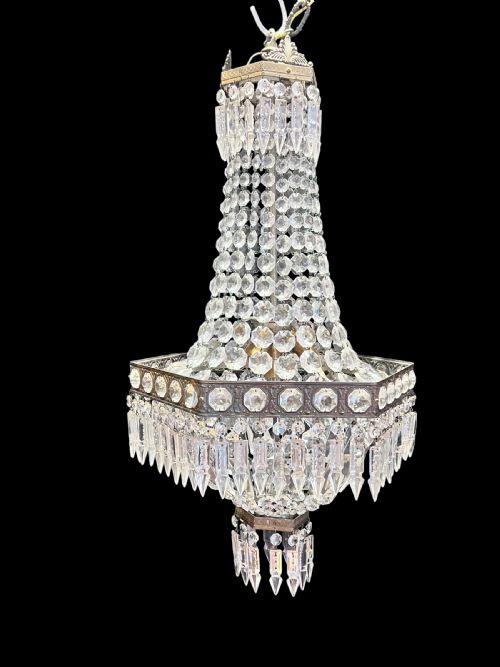
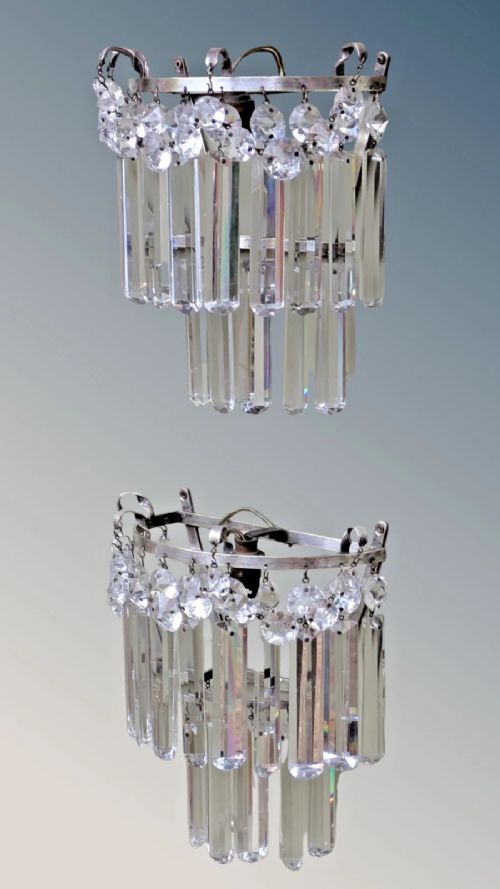
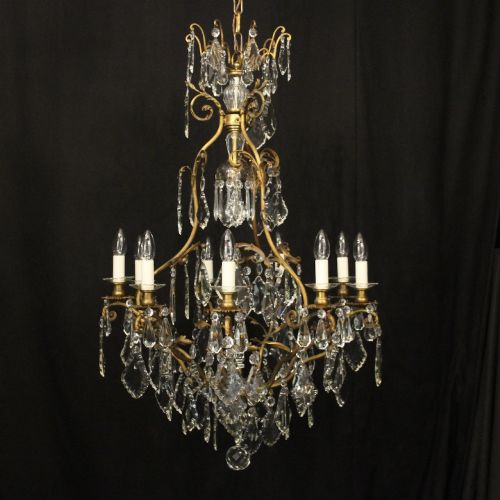
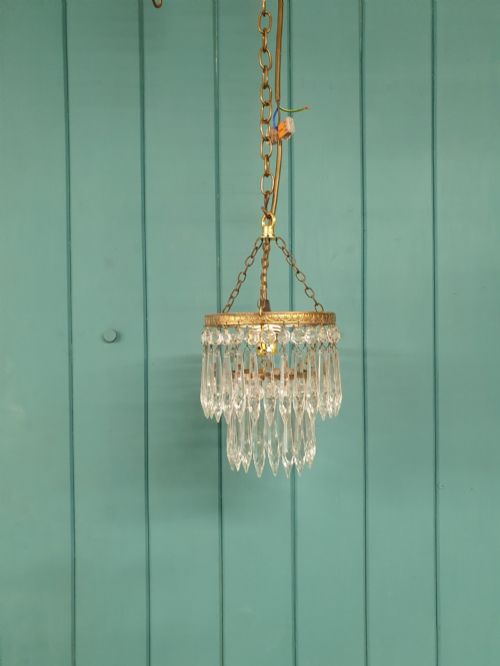
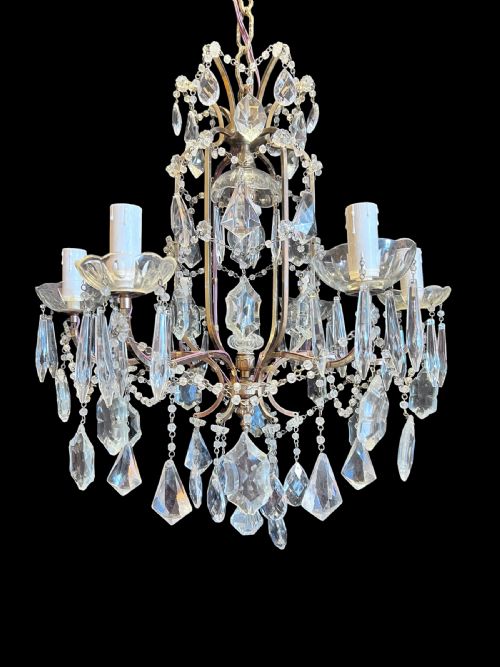
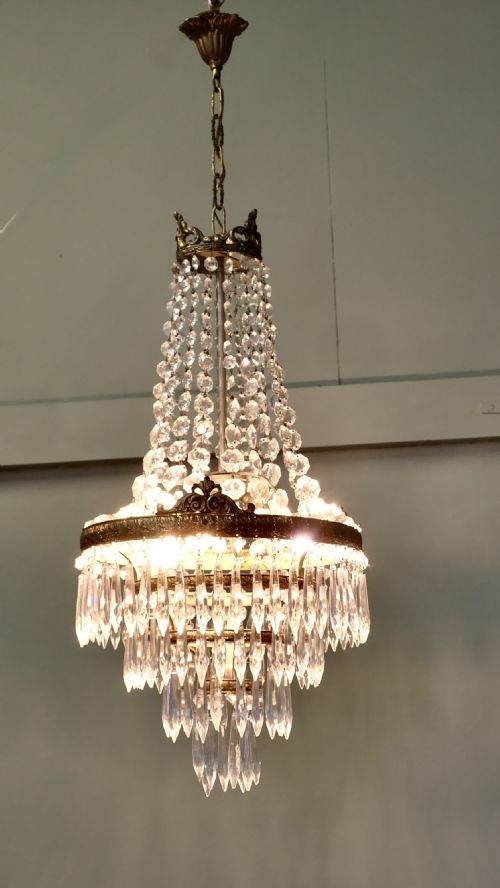
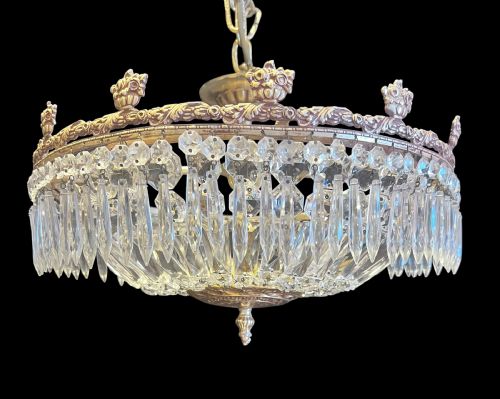
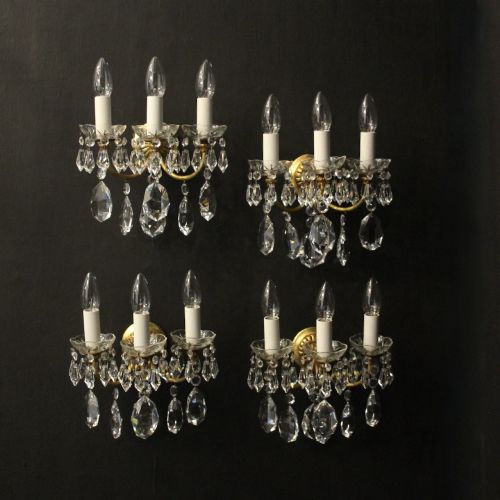
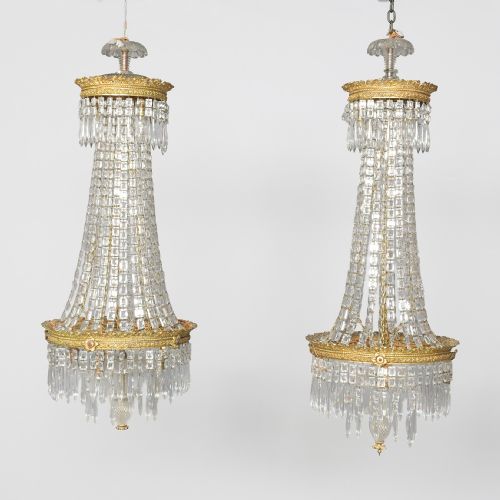
A french cut crystal light takes many shapes across this selection, ranging from large ballroom tent and bag chandeliers to smaller plafonniers and wall lights. Buyers searching for a french cut crystal light typically encounter Edwardian and early twentieth-century examples alongside nineteenth-century designs.
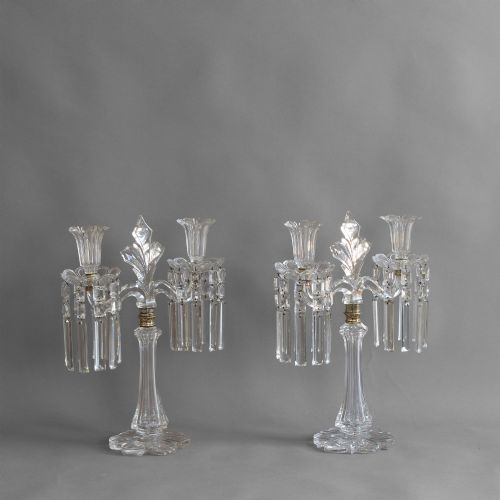
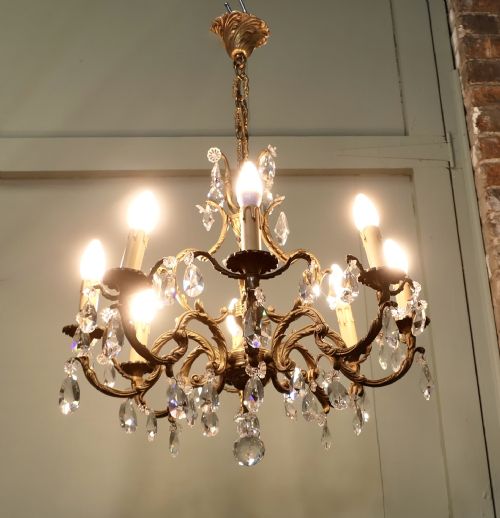
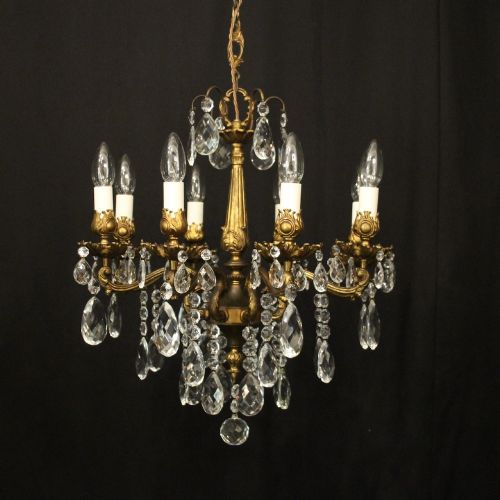
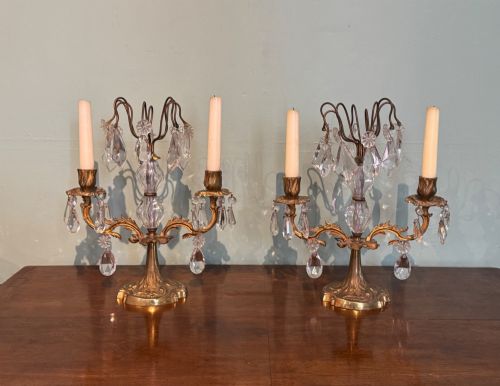
The assortment includes chandeliers, wall lights, and table candelabras styled in French Empire, Rococo, and Louis Revival aesthetics. Smaller dome and spike chandeliers appear frequently alongside multi-armed fixtures hung with crystal lustres.
Distinctions in Standard
Quality separates fixtures by the precision of the glass cutting and the weight of the metal frame. Finer examples display sharp facets on the crystal that refract light cleanly, paired with substantial bronze or brass mounts.
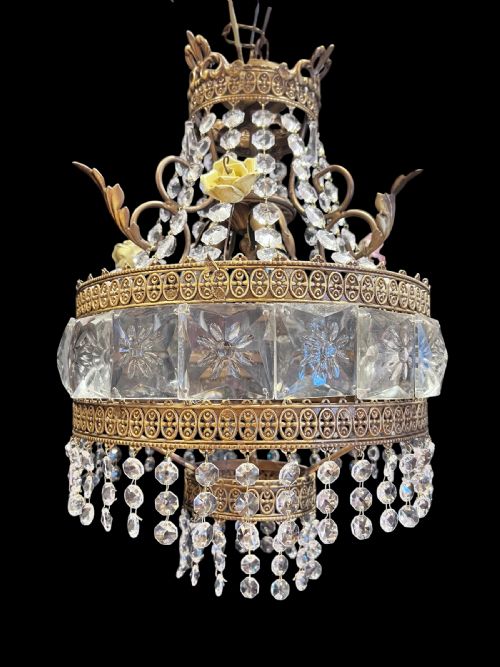
The complexity of the design also defines the tier, moving from simple single-tier dome lights to large multi-armed tent and bag chandeliers featuring elaborate gilt bronze work and dense bead curtains.
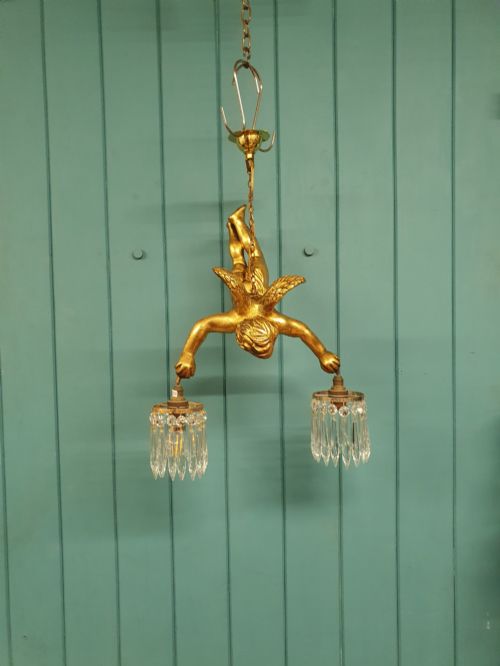
Flying cherubs occasionally share chandelier duties with crystal spikes and gilt metal.
The French Cut Crystal Light Glossary
- Tent chandelier
- A style featuring a conical upper section of strung crystals rising above the main tier of lights. This shape creates a dramatic silhouette often seen in grander rooms.
- Bag chandelier
- A lighting fixture where crystals gather in a rounded, bag-like profile beneath the frame. It confines the sparkle into a compact, glowing cluster.
- Lustre
- A pendant drop of cut glass or crystal hung from the arms or rim of a light. These pieces swing slightly and catch ambient illumination.
- Plafonnier
- A ceiling-mounted light fitting that sits relatively flat against the plaster. This form suits spaces with lower ceiling heights.
- Spelter
- A zinc alloy used as a base metal for cast decorative figures and mounts. It frequently received a gilt finish to mimic richer metals.
French Cut Crystal Light: Frequently Asked Questions
How do I clean a crystal chandelier?
Cleaning requires a gentle touch and a specialist glass cleaner applied with a soft cloth. Take care not to twist or pull the delicate wire fixings that hold the drops in place.
Support each crystal from underneath while wiping to prevent strain on the metal frame. Regular dusting keeps the facets bright without needing full disassembly.
Are these lights compatible with modern wiring?
Many older fixtures require professional rewiring to meet current electrical standards safely. A qualified electrician can adapt the internal fittings while preserving the exterior antique components.
Check the lampholders and ceiling mounts before installation. Professional updates ensure the fixture handles modern bulb wattages securely.
How do I identify a French Empire style light?
French Empire style pieces rely on classical symmetry, clean geometric lines, and military or laurel leaf motifs. They often feature tent-and-bag crystal configurations supported by gilt metal frames.
The aesthetic draws from neoclassical design principles popular during the early nineteenth century and later revivals. Look for disciplined proportions alongside rich brass and bronze casting.
Where should I hang a bag chandelier?
Bag chandeliers suit spaces that need concentrated downward illumination and decorative sparkle without a massive drop. Hallways, smaller bedrooms, and dining areas often accommodate their compact profiles well.
Ensure the ceiling height allows adequate clearance beneath the lowest tier of crystals. Their rounded shape works particularly well in rooms with limited vertical space.