
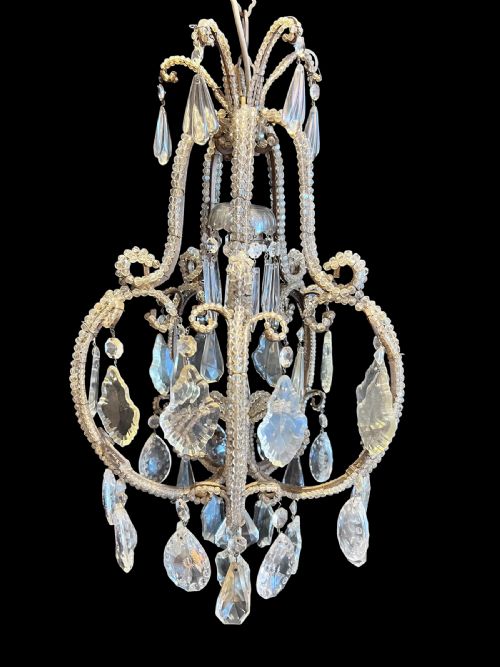
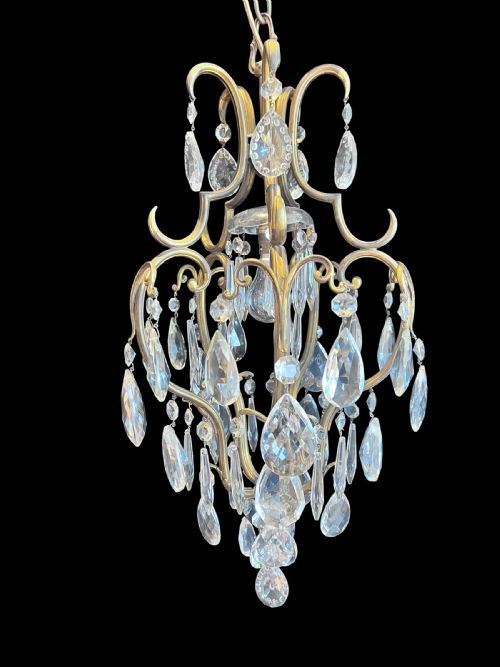
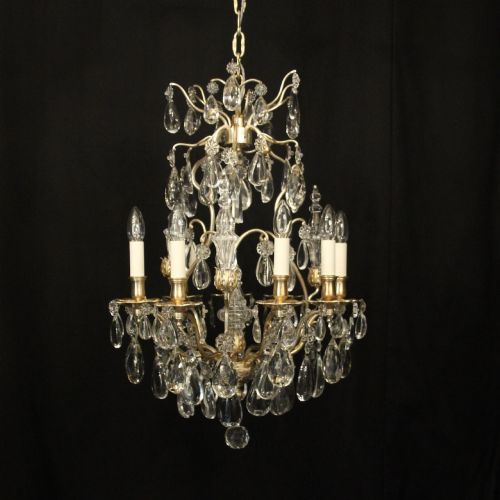
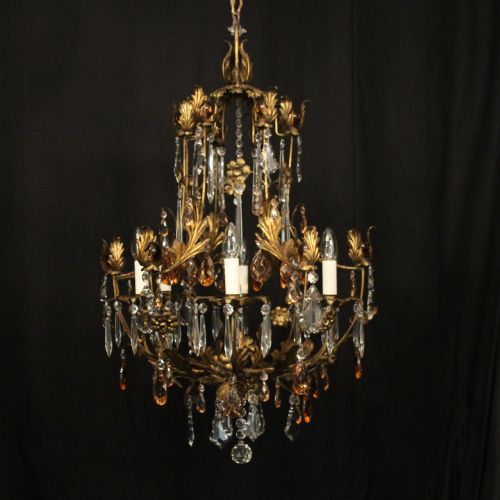
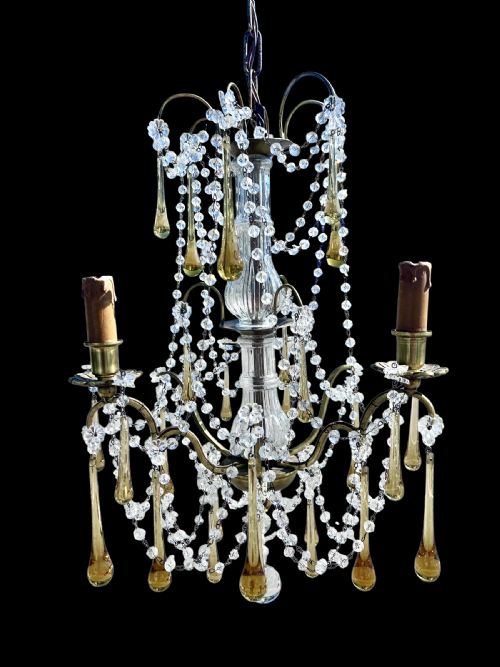


Glass Teardrop Chandelier
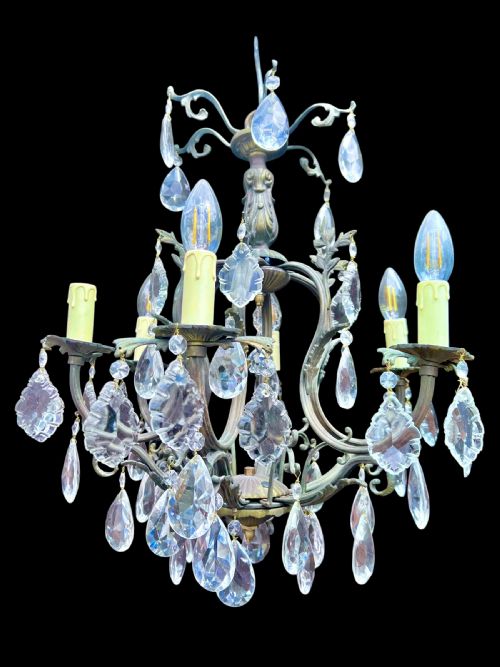
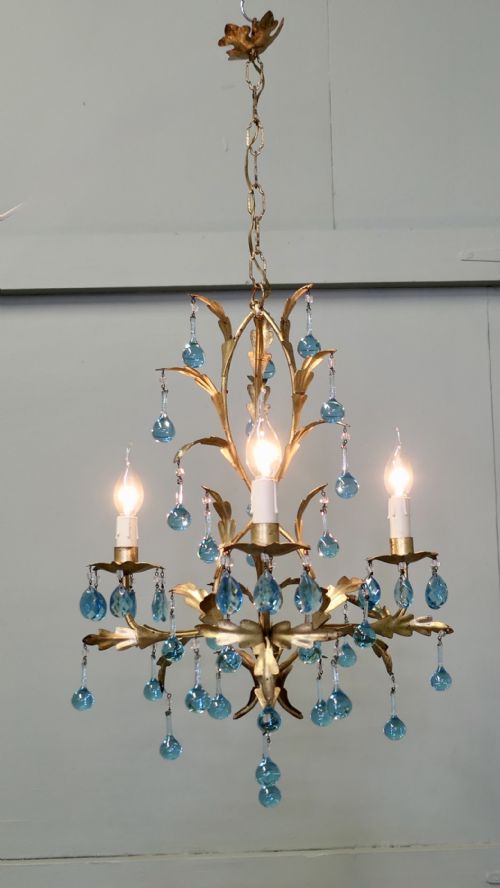
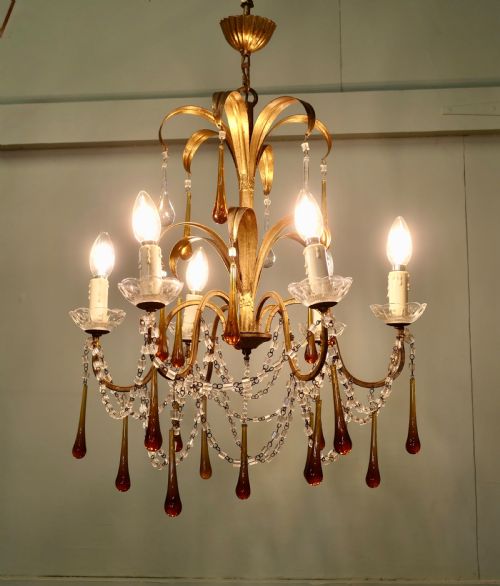
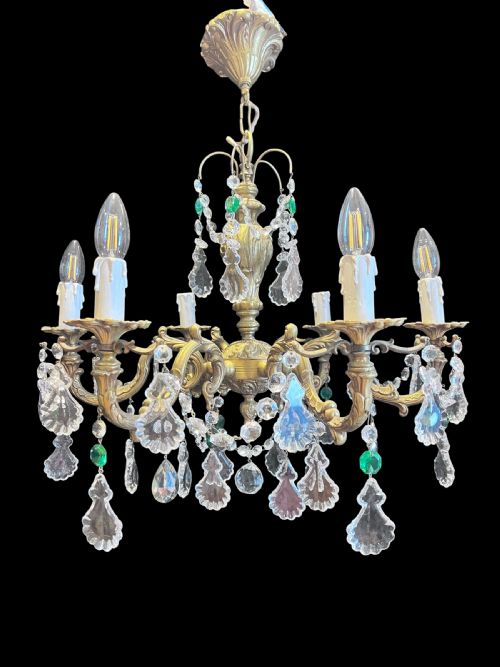
These glass teardrop chandeliers catch the light with hanging crystal, bringing period French and Italian elegance straight to a high ceiling.
Glass Teardrop Chandelier
A glass teardrop chandelier combines metal frames with cascading glass or crystal drops, shaped to diffuse illumination across a room. When hunting for a glass teardrop chandelier, buyers meet pieces spanning the late nineteenth century through to the interwar decades of the twentieth century.
French and Italian workshops dominate the available forms, ranging from single-light pendant lanterns to multi-armed gilt bronze and brass structures. Styles vary from elaborate Rococo Revival and Florentine flourishes down to simpler Edwardian drip chandeliers.
Smaller single-light options and compact multi-armed versions appear alongside grander multi-tier installations. Buyers choose these fixtures to anchor reception spaces or hallways with authentic period atmosphere.
Materials and construction methods
Frames rely on cast brass, gilded bronze, wrought iron, and gilt metal to provide structural support for the electrical or candle-burning components. These metal skeletons take forms such as cage frames, multi-branch arms, or hanging lanterns.
Pendants and drops utilise moulded glass and cut crystal, sometimes tinted in amber, turquoise, or multicoloured hues. Wiring and suspension utilise copper or brass cabling alongside metal chains to secure the weight to the ceiling.
Glass Teardrop Chandelier Retail Price Guide 2026
Typical asking prices for glass teardrop chandelier among the pieces listed under this phrase on Sellingantiques today, from the lower quarter to the upper quarter. They describe what is for sale here now, not the wider market.
Listings feature brass, gilt bronze, and wrought iron supporting glass and crystal components across Edwardian and early twentieth-century periods.
Distinctions in standard and craftsmanship
Quality reveals itself in the crispness of the metal casting and the depth of the gilding on bronze or brass frames. Superior examples show careful hand-finishing on floral motifs, grape decorations, and structural joints rather than mass-produced uniformity.
The clarity and cut of the crystal drops set the finer pieces apart from standard alternatives. Intricately faceted glass refracts light cleanly, while lesser pieces use simpler pressed glass with softer edges.
La Mason Bagues
The Glass Teardrop Chandelier Glossary
- Cage chandelier
- A style where the metal frame encloses the central lights like an open metal birdcage, heavily draped with crystal beads and drops. This form protects the illumination source while maximising light reflection.
- Tolewear
- Painted sheet metal shaped into leaves, floral components, or decorative foliage on antique lighting fixtures. It often introduces painted colour alongside gilt metal elements.
- Florentine style
- An Italian design approach characterised by ornate, scrollwork metal frames often finished in gold leaf. These pieces lean heavily into classical botanical motifs.
- Drip chandelier
- A compact lighting form featuring hanging glass elements that mimic the shape of melting candle wax. They frequently appear in early twentieth-century domestic settings.
- Gilded bronze
- A bronze base covered with a thin layer of gold or gold leaf to give a rich, reflective metallic surface. It provides both durability and lasting lustre on high-end French frames.
Glass Teardrop Chandelier: Frequently Asked Questions
How do I clean an antique glass chandelier?
Remove loose dust gently with a soft feather duster before wiping individual glass drops with a mild solution of warm water and methylated spirit. Take care not to pull wiring or twist delicate metal arms during the process.
Allow all crystal and glass elements to dry completely before turning the power back on. Regular light dusting prevents grime buildup on the metalwork and maintains maximum light refraction.
What rooms suit a multi-tier chandelier best?
Large multi-tier fixtures require high ceilings and ample floor space to let the cascading glass drops hang without obstruction. Dining rooms, entrance halls, and drawing rooms provide the ideal proportions for pieces carrying twelve or more lights.
Smaller single-light or compact multi-arm versions work well in bedrooms or cosy snugs where grand scale is unnecessary.
How can I tell a French chandelier from an Italian one?
French examples often lean towards gilt bronze, formal cage structures, and Rococo Revival symmetry with precise casting. Italian pieces frequently display Florentine floral elements, wrought iron framing, and gilded wooden or brass components with softer, more organic curves.
Colour also plays a role, as Italian workshops sometimes favoured amber or multicoloured crystals alongside clear glass.