


Gilt Accented Armchairs
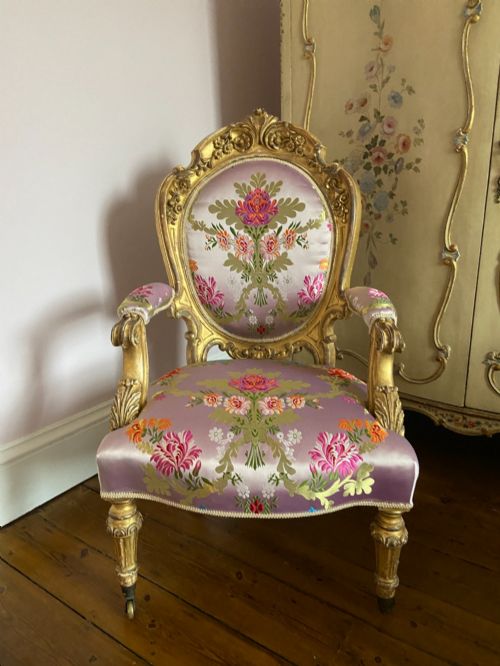
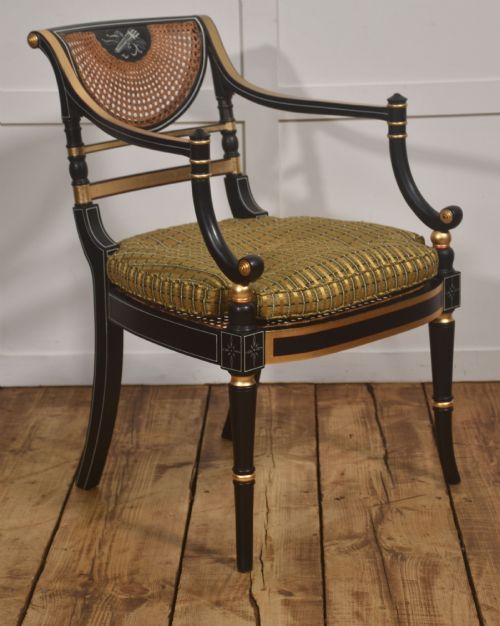
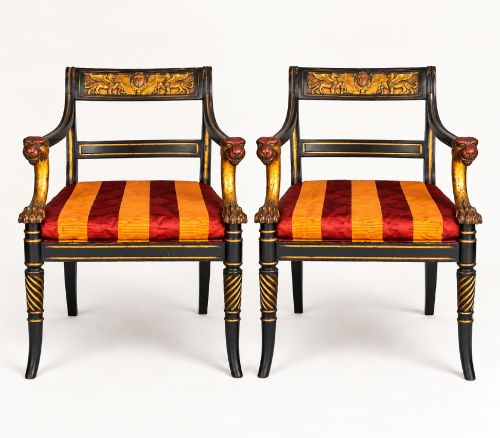
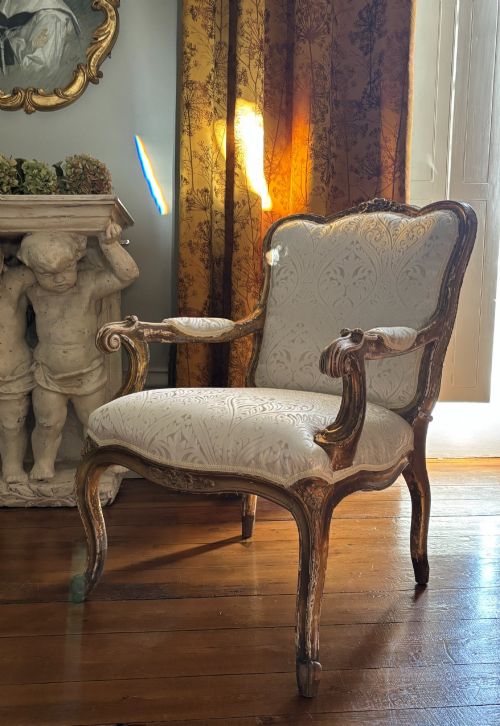
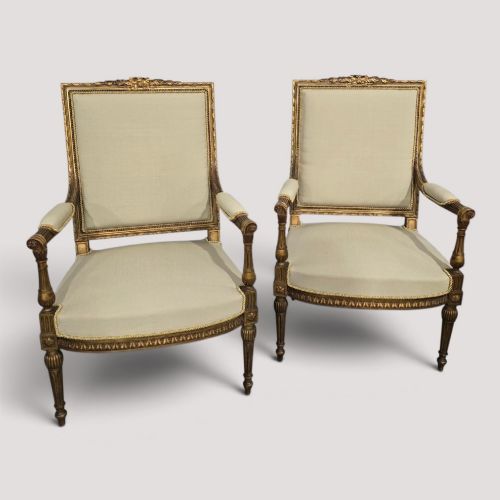
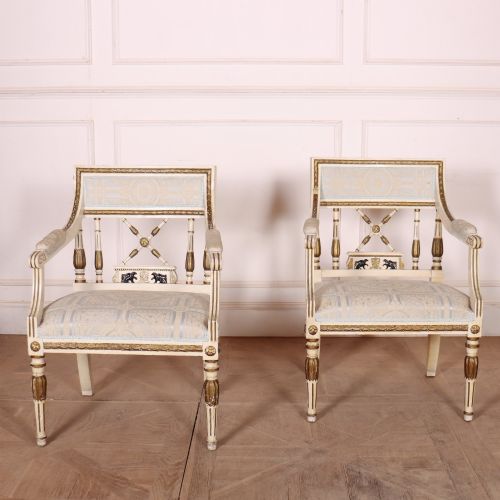
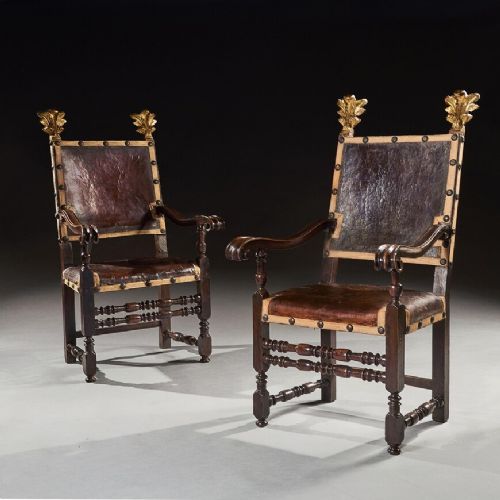
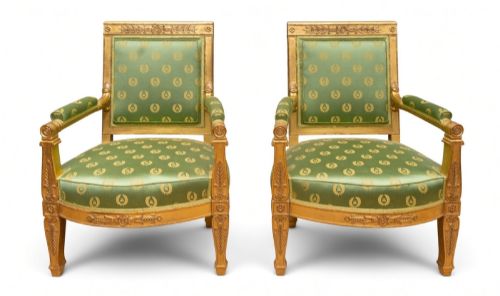
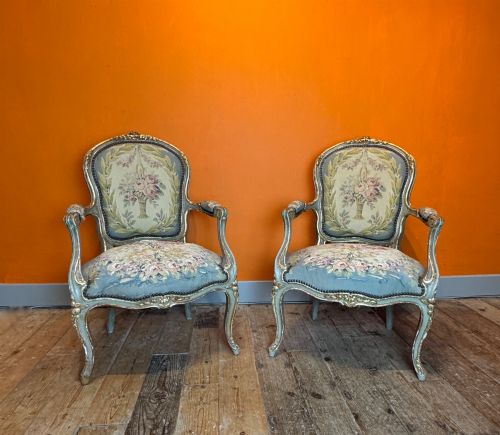
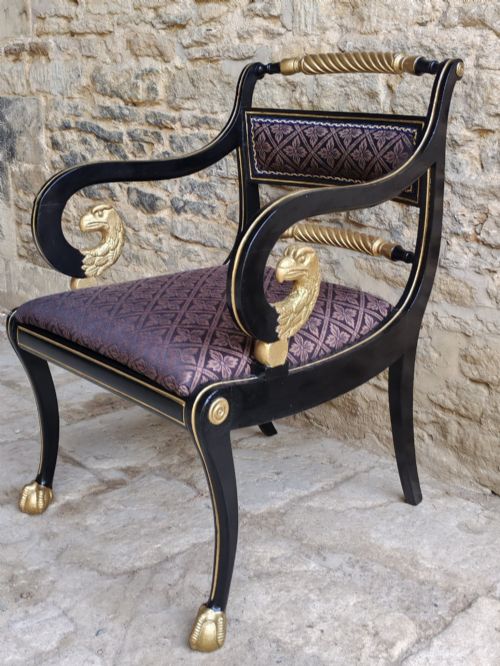
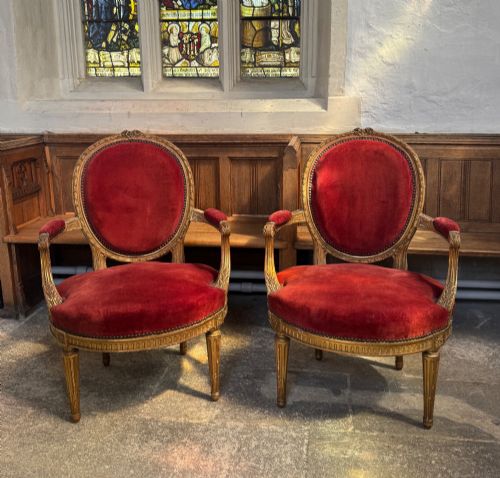
These gilt accented armchairs bring French and Italian period elegance to a room through carved woodwork and metallic highlights.
Gilt Accented Armchairs
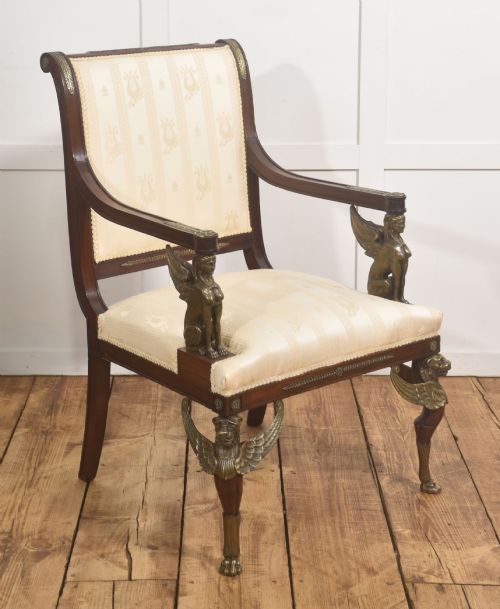
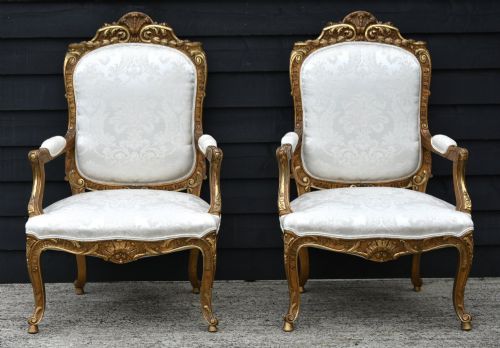
Gilt accented armchairs encompass formal seating forms from the eighteenth and nineteenth centuries, including bergères, fauteuils, and salon chairs. French and Italian workshops dominate these listings, drawing heavily on Louis XVI, Rococo, and Empire designs.
Buyers will frequently encounter nineteenth-century revival pieces alongside eighteenth-century originals and early twentieth-century interpretations. These seats function primarily as decorative occasional pieces or salon seating rather than everyday lounging chairs.
What Varies in Quality
The crispness of the wood carving separates standard commercial production from finer workshop output. Deeply undercut relief and precise detailing indicate superior craftsmanship in the frame construction.
The integrity and application of the gilding layer dictate the visual depth of the finish. Original surface patination holds more appeal than heavy modern re-gilding.
Gilt Accented Armchairs Retail Price Guide 2026
Typical asking prices for gilt accented armchairs among the pieces listed under this phrase on Sellingantiques today, from the lower quarter to the upper quarter. They describe what is for sale here now, not the wider market.
The inventory spans the seventeenth century through to the early twentieth century, reflecting eighteenth-century originals and nineteenth-century revivals.
Blaise Maucuy·Jacob-Desmalter
The Gilt Accented Armchairs Glossary
- Fauteuil
- An open-armed upholstered armchair originating in France, typically featuring an exposed wooden frame. This form became popular during the seventeenth and eighteenth centuries.
- Bergère
- A closed-arm upholstered armchair with padded sides and a built-in upholstered back. It often includes a loose seat cushion resting over a rail.
- Giltwood
- Timber that has been coated with gold leaf or a gold-coloured metallic preparation. This finish protects the underlying wood while providing a brilliant decorative surface.
- Parcel-gilt
- Woodwork where only specific carved details or motifs receive gilding, leaving the rest of the painted or polished wood exposed. It creates a contrasting two-tone visual effect.
- Louis XVI Style
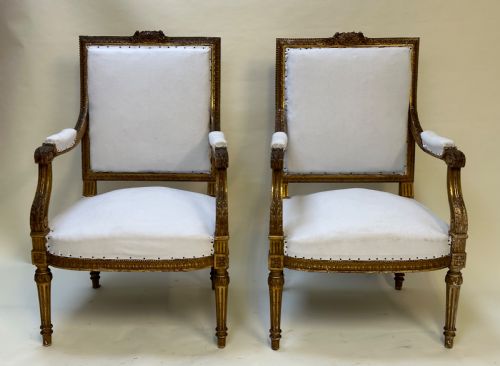
- A neoclassical design vocabulary characterised by straight tapered legs, rectilinear frames, and classical motifs. This style returned to popularity during nineteenth-century revivals.
Gilt Accented Armchairs: Frequently Asked Questions
Where should I place a gilt armchair?
These chairs suit formal drawing rooms, bedrooms, or libraries where their decorative presence can be appreciated. They function well as accent seating rather than primary lounging chairs.
Position them away from direct sunlight to protect delicate silk or velvet upholstery fabrics from fading over time.
How do I identify a Louis XVI style chair?
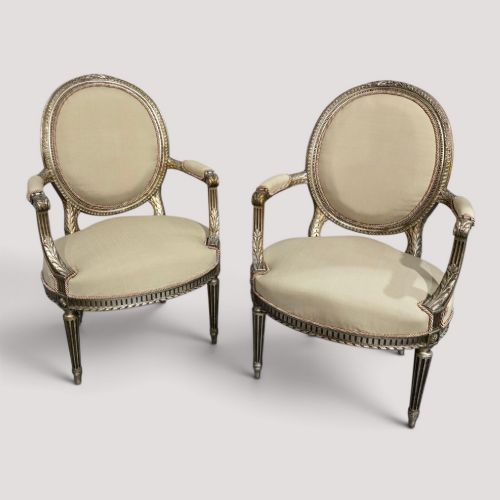
Louis XVI style pieces typically display straight, fluted legs and geometric frame shapes like ovals or rectangles. Carved classical motifs such as acanthus leaves and ribbons frequently decorate the crest rails.
This aesthetic contrasts sharply with the earlier curved, asymmetrical lines of Rococo design.
Can these chairs be used daily?
Period seating requires careful handling due to the age of the timber frames and traditional joinery methods. They support normal sitting but are best suited for light or occasional use.
Regularly check the stability of the legs and frame joints to prevent structural strain.