




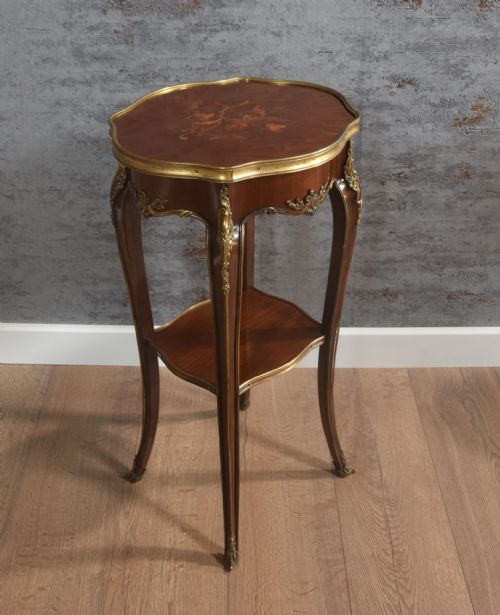

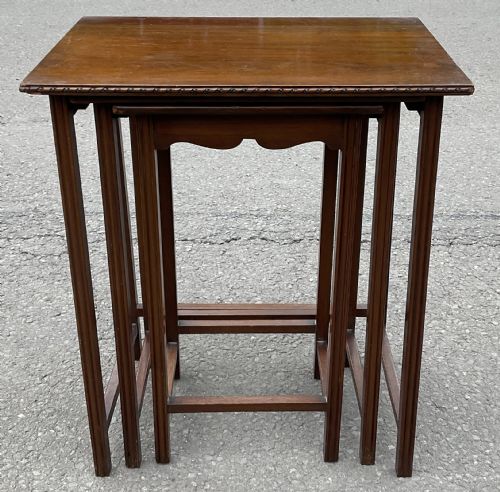


Gillows Style Occasional Tables
Gillows style occasional tables bring refined cabinet-making into everyday rooms through thoughtful proportions and rich timber.
Gillows Style Occasional Tables
When you search for gillows style occasional tables, you encounter versatile pieces designed for specific household tasks, from sewing and games to holding lamps or wine. These items range from compact lamp and wine tables to multi-functional work tables and nests, reflecting the diverse domestic needs of past centuries.
The pieces appearing on this page span several eras, with nineteenth-century examples predominating alongside earlier eighteenth-century items and later revival pieces. Rosewood and mahogany form the backbone of these listings, often enriched with satinwood, ebony, or brass mounts.
Stylistic influences vary widely across the selection, moving from Regency and William IV to Aesthetic Movement and French Revival designs. Buyers frequently find tripod bases, tilt-tops, and drop-leaf configurations among the objects currently catalogued.
How they were made
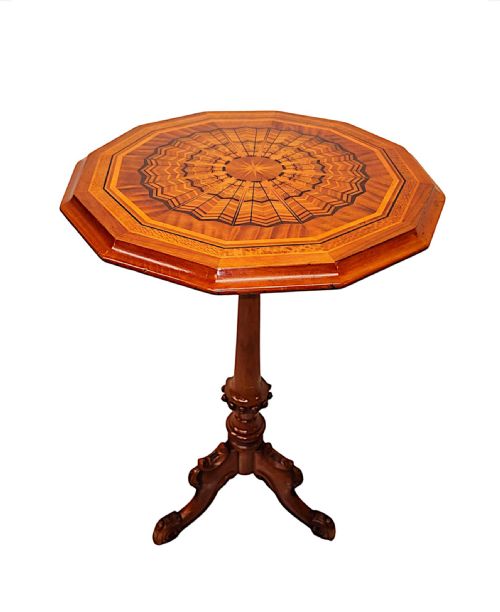
Cabinet-makers relied heavily on dense hardwoods such as mahogany and rosewood, frequently selecting figured veneers and flame mahogany to create visually striking table tops. Satinwood and ebony provided contrasting inlay work, while brass mounts added structural and decorative accents.
Construction techniques encompassed specialised forms like tilt-top tripod mechanisms, drop-leaf joints, and multi-drawer carcases designed for sewing or writing. Papier-mâché and painted surfaces also appear, demonstrating the adaptability of workshops working within this design tradition.
Period spans represented include the eighteenth, nineteenth, and early twentieth centuries.
What varies in quality
The degree of refinement in timber selection and inlay work marks the difference between standard production and exceptional execution. Finer pieces display meticulously matched grains, complex marquetry, and superior bronze or brass fittings.
Structural integrity and the crispness of carved details reveal the skill of the maker. Subtly turned pedestals and precisely fitted joints elevate certain items well above utilitarian furniture of the same period.
Gillows of Lancaster·Waring & Gillow
The Gillows Style Occasional Tables Glossary
- Tripod table
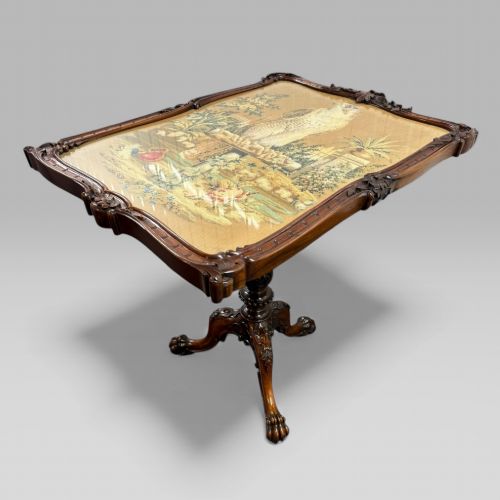
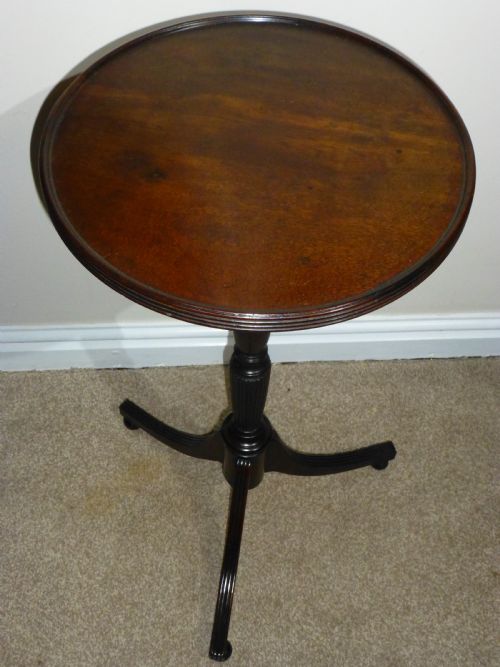
- A small freestanding table supported by a central pillar resting on three legs. This form allows the top to tilt or remain fixed depending on its intended use.
- Work table
- A specialised piece containing compartments, bags, or drawers for sewing and needlework. These items often feature drop leaves and elegant pedestal bases.
- Flame mahogany
- A veneer cut from the fork of the mahogany tree to produce a flickering, flame-like pattern. It was widely utilised on prominent surfaces to catch the light.
- Aesthetic movement
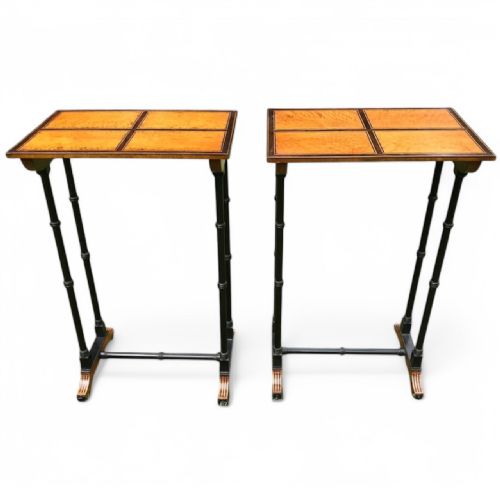
- A late nineteenth-century design style emphasising visual beauty over narrative content. Pieces from this period often incorporate ebonised wood and simple geometric lines.
- Inlay
- A technique where pieces of contrasting wood, metal, or shell are inserted into depressions within a solid timber base. This creates flat, decorative patterns across table tops.
Gillows Style Occasional Tables: Frequently Asked Questions
What is a tilt-top table used for?
Tilt-top tables were designed to be tipped vertically when not in use, allowing them to be pushed against a wall to save floor space in smaller rooms. They served primarily as occasional tables for holding lamps, books, or drinks during the evening.
Over time, the mechanism allowed these versatile pieces to transition smoothly between active use and unobtrusive storage within domestic interiors.
How do I identify a work table?
Work tables typically feature fitted interior compartments, small drawers, or suspended fabric bags designed to hold sewing materials and needlework supplies. Their compact proportions made them easy to move beside seating areas.
Many examples include drop leaves to expand the available surface area when active handwork required extra space for tools and fabrics.
What distinguishes Regency style tables?
Regency tables often incorporate classical architectural motifs, bold rosewood or mahogany veneers, and distinct brass or gilt-bronze mounts. Pedestal bases supported by tripartite or tripod feet are especially common.
Cabinet-makers of this period favored clean geometric lines balanced by rich wood grain and restrained decorative detailing.
Where should I place an occasional table?
Occasional tables fit naturally beside armchairs, sofas, or in hallways where a compact surface is required for lamps or small decorative objects. Their portable nature allows them to be repositioned easily throughout a room.
Pairing them with appropriate seating ensures the height matches the surrounding furniture for comfortable daily use.