




Ebony Occasional Tables
Ebony occasional tables are striking accent pieces bringing deep dark contrast and intricate inlay to a room.
Ebony Occasional Tables
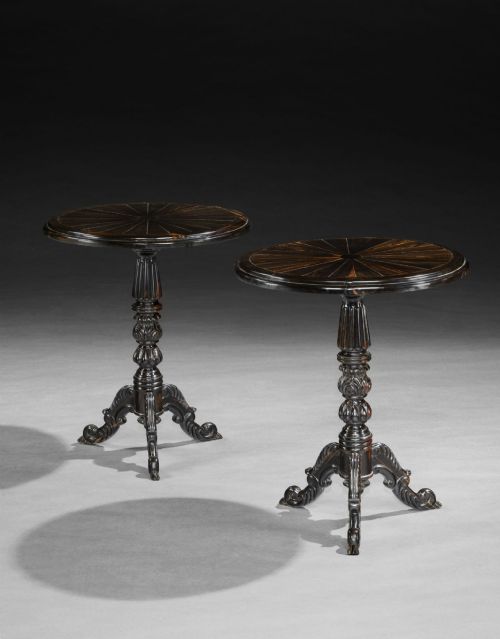
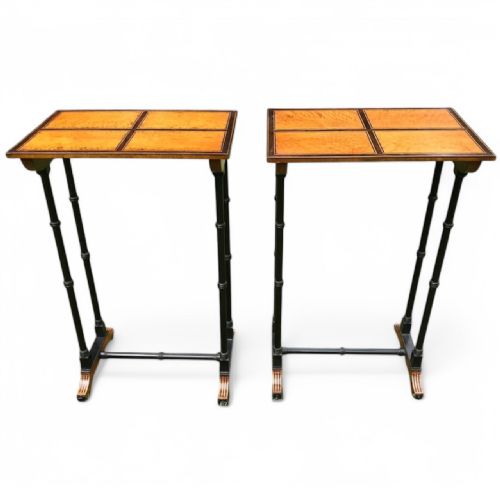
The selection ranges from carved Ceylonese specimen wood designs to British Victorian and Edwardian examples featuring contrasting stringing and parquetry. These tables served historically as tea tables, lamp stands, or display surfaces in principal reception rooms.
Makers utilised solid exotic timbers alongside lighter carcases inlaid with dark wood, creating distinct geometric or floral patterns. The forms vary from folding card tables to multi tiered revolving book tables and small tripod stands.
How they were made
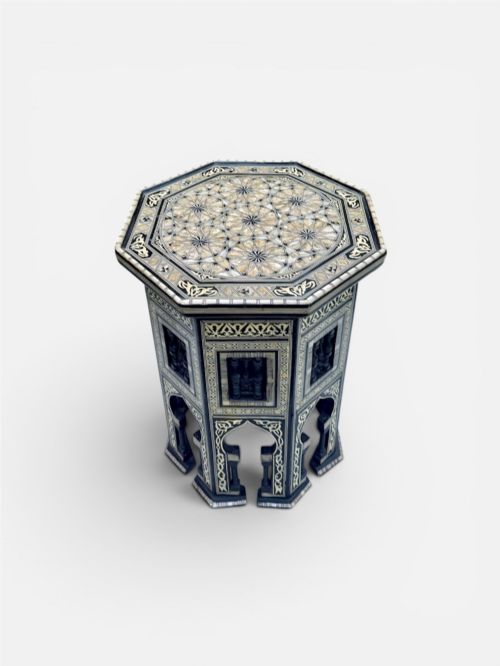
Construction relies heavily on dense dark hardwoods paired with lighter contrasting materials such as satinwood, rosewood, amboyna, and burr walnut. Artisans incorporated intricate bone, mother of pearl, and brass stringing to accentuate the deep black grain of the primary timber.
Joinery methods encompass traditional turning, intricate hand carving seen in Anglo Indian examples, and precise parquetry or veneering. Surfaces often feature elaborate geometric or botanical inlay work set directly into the timber carcase.
Several tables feature carved wooden elephants supporting the top, bringing an exotic menagerie straight into the nineteenth century parlour.
What varies in quality
Quality resides in the precision of the timber selection and the complexity of the decorative inlay. Tables demonstrating superior craftsmanship exhibit tightly secured parquetry, crisp hand carving without splintering, and harmonious pairing of contrasting exotic woods.
The architectural balance of the base, particularly on tripod and multi tiered forms, dictates the overall integrity of the piece. Exemplary items maintain structural rigidity while displaying refined attention to detail across secondary timbers and hidden joins.
Gillows
The Ebony Occasional Tables Glossary
- Ebonised
- Timber treated with a dark finish to imitate true ebony wood. This technique allowed cabinetmakers to achieve high contrast detailing on more accessible furniture carcases.
- Parquetry
- Geometric mosaic woodwork arranged in decorative patterns across a tabletop. It creates durable surfaces utilising contrasting timber blocks.
- Tripod table
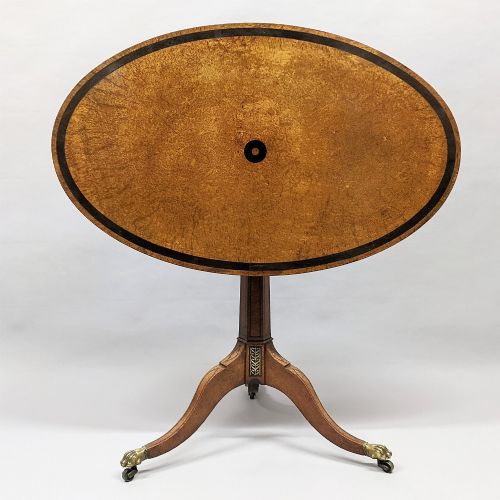
- A small standalone table supported by a pillar above three spreading feet. This form gained popularity for its portability and stability on uneven floors.
- Stringing
- Thin inlaid lines of contrasting timber or metal embedded into the surface of furniture. It defines borders and highlights structural contours.
- Specimen wood
- Furniture constructed from a multitude of different decorative timbers gathered from various regions. This highlights the natural colour variations of exotic woods.
Ebony Occasional Tables: Frequently Asked Questions
What is an occasional table?
An occasional table is a small, moveable piece designed for a specific, intermittent function rather than permanent placement. These tables typically serve as convenient surfaces for holding drinks, books, or lamps.
Historically, they could be easily relocated around a drawing room or parlour as needed by the household. Their compact proportions made them adaptable additions to period interiors.
How do I identify Ceylonese ebony tables?
Ceylonese tables are distinguished by dense dark ebony or mixed specimen woods featuring intricate, deeply carved foliage motifs. Many incorporate regional tripod structures or elephant motifs reflecting traditional craftsmanship.
These pieces frequently utilise local exotic timbers combined with contrasting light wood elements. The carving work is executed by hand directly into the dense hardwood.
Where were etagere tables used?
Etageres were utilised in Victorian and Edwardian drawing rooms primarily for display rather than heavy dining use. Their multiple open tiers provided ideal shelving for ornaments, small clocks, and decorative ceramics.
They functioned as decorative centrepieces or corner display units. The tiered design allowed collectors to exhibit several smaller items within a compact footprint.
What distinguishes Arts and Crafts tables?
Arts and Crafts tables emphasise honest construction, visible joinery, and the natural grain of timbers such as oak combined with dark wood accents. Ornamentation is secondary to structural integrity and functional design.
These pieces reject mass produced industrial regularity in favour of hand finished details. They coordinate well with simplified interior schemes that value tactile materiality.