





Gillows Games Table
A Gillows games table is a finely constructed piece of Regency or Victorian furniture built for indoor pastime, prized for its clever mechanical design and cabinet-making pedigree.
Gillows Games Table
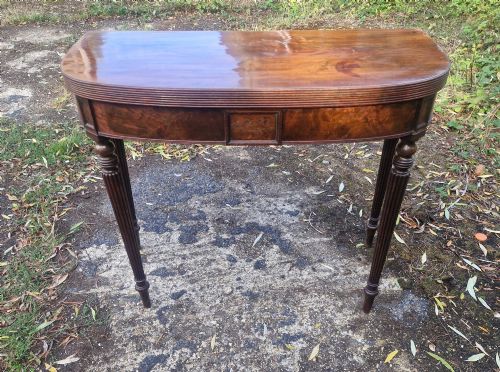
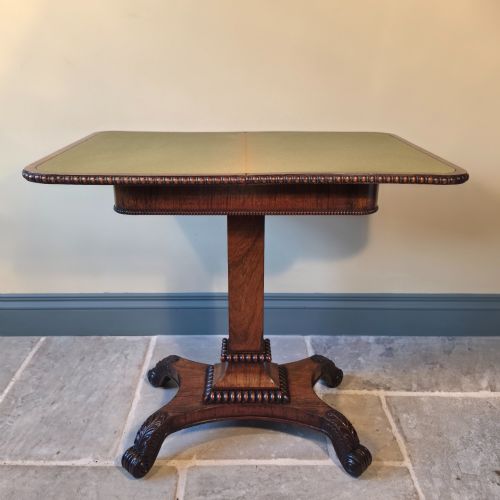
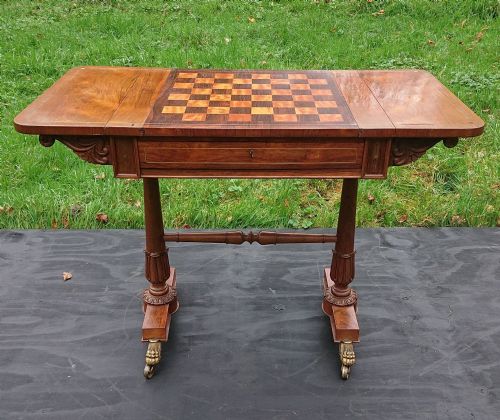
A gillows games table is a piece of furniture designed for card playing, chess, backgammon, or sewing, appearing most frequently in rosewood, mahogany, and burr walnut from the Regency and Victorian periods. Buyers search for these items to acquire pieces that combine domestic utility with the distinctive aesthetic of the Lancaster and London workshops.
The versions met most often on this page date from the early nineteenth century during the Regency era, taking the form of fold-over card tables or multi-purpose work tables. They reflect the high standards of a firm known for supplying furniture to elite households.
Many examples in the evidence display attribution to the maker through distinctive leg forms, stamped signatures, or characteristic timber selection. The grouping spans tea tables, card tables, and occasional tables that share a design vocabulary rooted in the early eighteen-hundreds.
Materials and construction
Cabinet-makers working in the manner of Gillows relied on dense tropical hardwoods like rosewood, mahogany, and goncalo alves, often enhanced by satinwood or burr walnut veneers. These timbers provided stable surfaces for intricate marquetry inlay and durable framing for folding leaves.
Internal components frequently incorporated secondary woods and specialised mechanisms to support removable chess and backgammon boards or sliding work bags. Brass mounts, leather inserts, and baize playing surfaces completed the construction of tables intended for multi-functional social rooms.
Gillows Games Table Retail Price Guide 2026
Typical asking prices for gillows games table among the pieces listed under this phrase on Sellingantiques today, from the lower quarter to the upper quarter. They describe what is for sale here now, not the wider market.
Some game tables doubled as sewing work stations, proving that nineteenth-century ancestors took their needlework and gambling with equal seriousness.
Judging the standard
Quality in these tables rests upon the selection of timber figures, such as plum pudding mahogany or highly figured rosewood, combined with the crispness of carved details like the Gillows style leg. Superior examples demonstrate precise joinery in their pivoting tops and concealed compartments.
Attribution or physical stamps from Lancaster and London elevate certain pieces, alongside the presence of original brass work, gilt bronze mounts, and fitted writing or gaming interiors. Simpler Victorian variations or pieces executed merely in the manner of the maker occupy a different tier from stamped boardroom productions.
Gillows of Lancaster and London·Gillow
The Gillows Games Table Glossary
- Goncalo Alves
- A dense, heavily figured exotic timber with dark brown striping utilised for high-status nineteenth-century cabinet work. It provides a striking alternative to rosewood.
- Baize
- A coarse woolen fabric used traditionally to line the playing surfaces of card tables. It offers a soft, tactile texture that dampens the sound of dice and counters.
- Quartetto tables
- A nest of four graduating occasional tables designed to slide neatly beneath one another. They appear in Regency groups attributed to the Lancaster workshop.
Gillows Games Table: Frequently Asked Questions
What is a gillows games table used for?
These tables served multiple functions in the nineteenth-century drawing room, functioning as writing desks, sewing tables, or side consoles when closed. Opening the fold-over top revealed baize-lined playing surfaces or removable boards for chess and backgammon.
Their adaptable design allowed households to transition a room swiftly from afternoon hospitality to evening parlour games without cluttering the interior.
How do I identify a gillows piece?
Identification relies on locating physical stamps on the woodwork, observing characteristic leg turnings, and recognising the dense grain of timbers like rosewood or mahogany. Many authentic items also exhibit distinctive structural fittings within their internal compartments.
Comparing construction methods against documented examples helps distinguish works produced in the Lancaster and London workshops from general nineteenth-century cabinet-making.
What periods do these tables date from?
The pieces span the early nineteenth century up to the late Victorian era, with a strong concentration in the Regency and William IV styles. Dates in the evidence range from around eighteen-hundred through to eighteen-ninety.
Earlier items display classic Regency proportions and timber choices, while later examples incorporate burr walnut and Victorian design conventions.
How should I care for a rosewood table?
Maintain the timber by keeping the surface away from direct sunlight and maintaining stable room humidity to prevent veneer splitting. Gentle dusting with a dry cloth preserves the polish without introducing moisture.
Avoid placing hot items or liquids directly onto the polished top or the baize playing surface.