
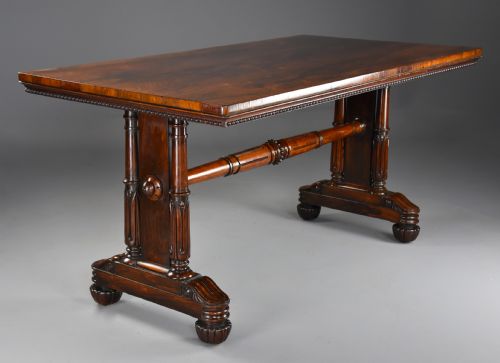

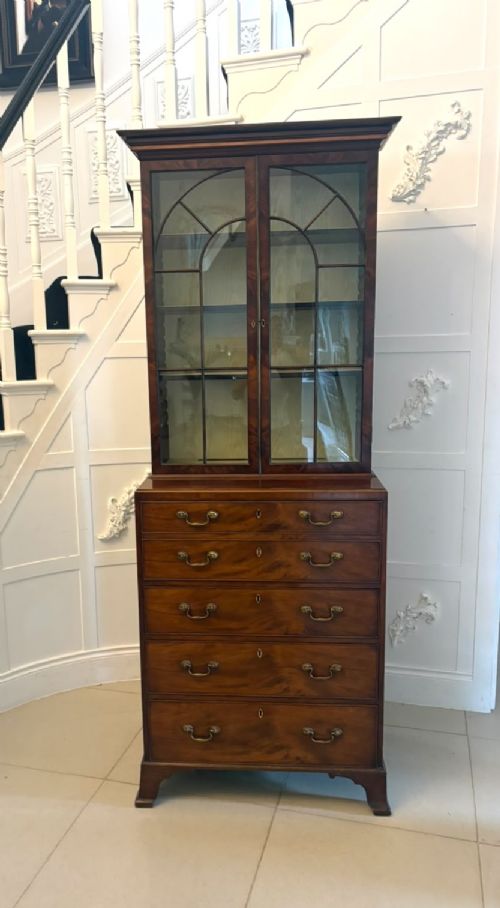

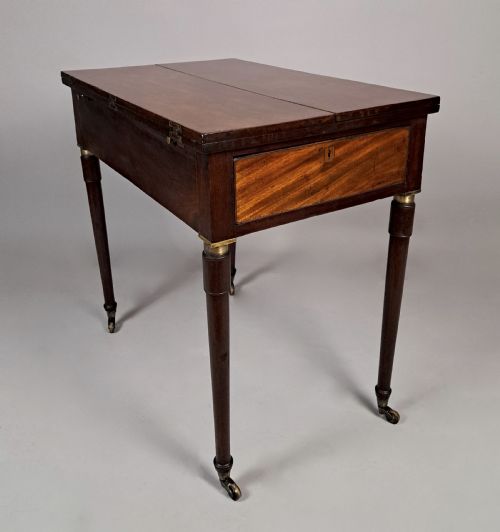


Gillows Furniture Desk
A gillows furniture desk brings cabinet-making pedigree to the study, combining robust timbers with meticulous workshop execution.
Gillows Furniture Desk
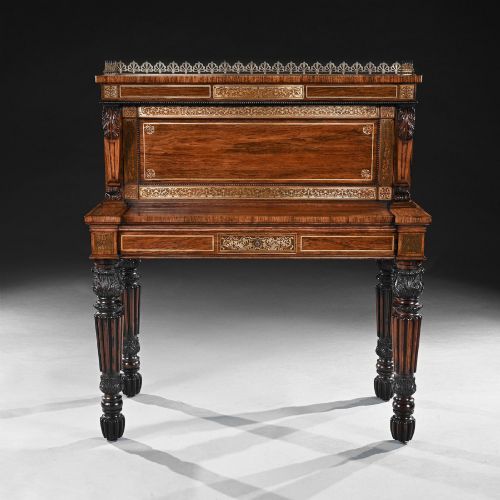
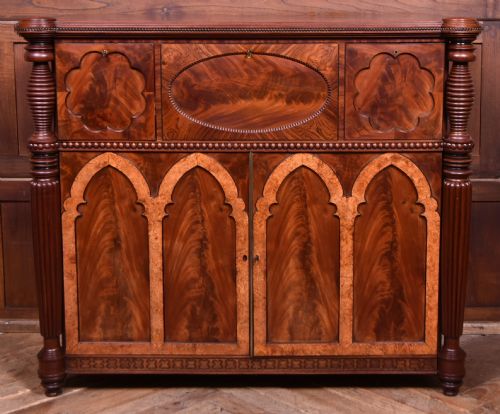
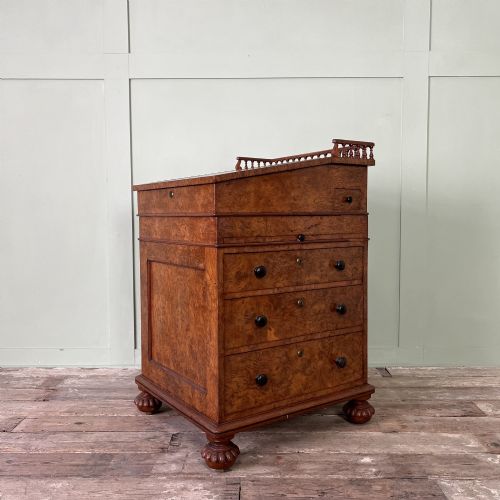
Buyers exploring gillows furniture desk options encounter a variety of forms including compact davenports, pedestal desks, and larger library writing tables. These pieces span the eighteenth, nineteenth, and Victorian eras, demonstrating the enduring output of the Lancaster and London workshops.
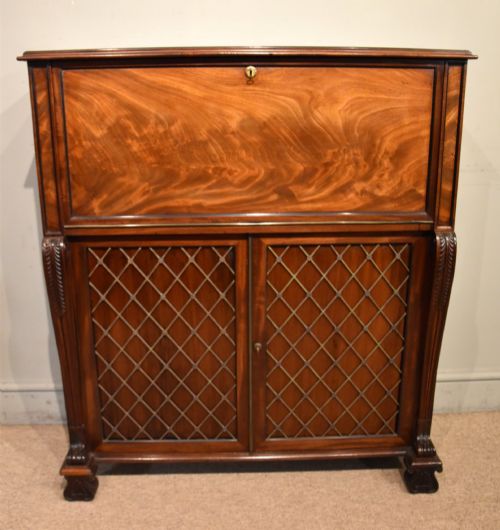
Mahogany and rosewood dominate the selection, frequently accompanied by satinwood and burr walnut veneers. Forms range from campaign tables and Carlton house desks to secretaire bookcases and simpler writing tables.
The assortment reflects both documented maker pieces bearing stamps and pieces attributed through distinct structural characteristics and proportions. Buyers meet variations from the George III period through to late Victorian production.
Materials and construction methods
Cabinet makers utilised dense hardwoods such as mahogany and rosewood as the structural foundation, often enhancing visual depth with flame mahogany, satinwood, or burr walnut veneers. Brass hardware, including gallery rails, inlay, and handles, adds functional and decorative contrast to the timber surfaces.
Leather inserts frequently form the writing surface, bordered by blind or gilt tooling. Joinery relies on traditional techniques that accommodate the movement of solid woods and fine veneers over centuries of use.
Some desks include ingenious hidden compartments for stashing secret letters.
Distinguishing quality in the workshop output
Quality separates along the lines of timber selection and the precision of secondary details such as interior drawer construction and brass inlay. Pieces with documented stamps or clear attribution to the Lancaster or London premises generally demonstrate superior timber figuring and tighter joinery.
The sophistication of the mechanism, particularly in davenports and secretaire drawers, dictates the tier of execution. Finer examples retain original leather surfaces, matched veneers, and uncompromised structural integrity throughout the carcase.
Gillow & Co·Gillows of Lancaster·Thomas Myers of Gillows
The Gillows Furniture Desk Glossary
- Davenport
- A compact small desk featuring a sloping writing lid above a pedestal of drawers. This form became particularly popular during the nineteenth century.
- Secretaire
- A piece of furniture incorporating a pull-down writing drawer that conceals a fitted interior of small pigeonholes and compartments. It often takes the form of a bookcase or cabinet.
- Astragal
- Moulding framing the panes of glass in a cabinet door. These strips divide the glazed area into smaller geometric sections.
- Pedestal desk
- A heavy writing desk supported by two matching banks of drawers beneath the work surface. These freestanding pieces offer storage on both sides in grander library settings.
- Whatnot
- An open set of multiple shelves used for displaying or storing small objects. The form sometimes incorporates writing or reading surfaces in workshop designs.
Gillows Furniture Desk: Frequently Asked Questions
How do I identify a genuine piece?
Look for workshop stamps on drawer edges or specific structural traits associated with the Lancaster records. Secondary timbers and dovetail execution also offer strong indicators of origin.
Attribution often relies on proportion, brass hardware choices, and the specific arrangement of internal stationery fittings characteristic of the documented cabinet makers.
What periods do these pieces cover?
The selection spans from the eighteenth century through the Georgian and Regency eras into the Victorian period. Production extends into the late nineteenth century.
Earlier examples often display George III or Regency stylistic elements, while later pieces incorporate Victorian tastes such as heavier walnut or ebonised details.
Which woods were commonly used?
Mahogany serves as the primary timber, appearing in solid form or as flame mahogany veneers. Rosewood, satinwood, and burr walnut are also frequently encountered.
Secondary woods like oak or pine appear in drawer linings and internal framing, consistent with period workshop practices.
How should I care for the leather?
Keep the writing surface away from direct sunlight and excessive heat to prevent the leather from drying out and cracking. Gentle dusting with a dry cloth maintains the surface.
Avoid harsh chemical cleaners or excessive moisture when maintaining the gilt tooling and the surrounding timber border.