
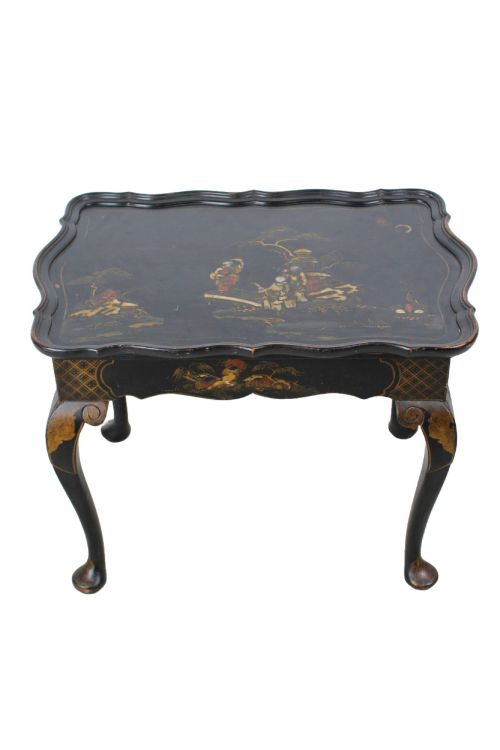

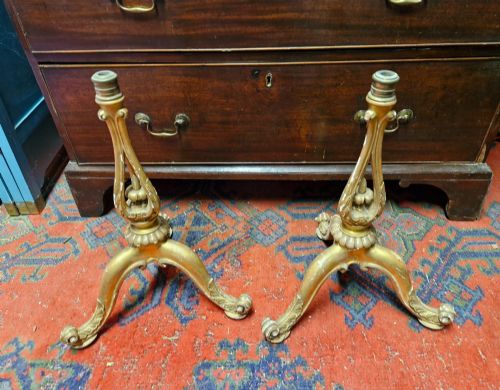
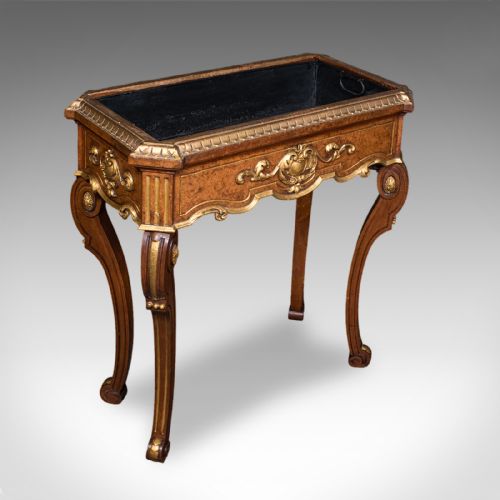





Gilded Wooden Table
A gilded wooden table brings reflective warmth and classical proportion to a room.
Gilded Wooden Table
A gilded wooden table encompasses various functional forms designed to catch the light, including console tables, coffee tables, and occasional side tables. The pieces on this page span several centuries, with particular representation from the eighteenth and nineteenth centuries, alongside later twentieth-century examples.
Continental workshops feature prominently, particularly Italian and French variants executed in rococo, baroque, and neoclassical idioms. These range from heavy architectural console tables with marble tops to smaller occasional stands and lamp tables.
Makers utilised wood as the primary structural substrate, often shaping forms like the half-moon console or the tripod base to suit formal reception rooms and hallways.
Materials and Technique
The construction relies on carved timber foundations, frequently overlaid with gesso to create a smooth, prepared surface for gilding. Artisans applied thin sheets of gold leaf or gilt onto the gesso layer, sometimes combining this metallic finish with paint or parcel-gilt highlights.
Surface embellishment often includes intricate carved wooden details, ranging from classical swags and floral motifs to more elaborate figural elements. Marble inserts frequently top heavier console and coffee tables, providing a contrasting cool surface to the warm giltwood framework.
Listings feature eighteenth and nineteenth-century examples alongside twentieth-century items, employing materials including giltwood, marble, gesso, and gold leaf.
The Measure of Quality
Quality rests in the crispness of the underlying wood carving and the depth of the preparation layers beneath the metal leaf. Finer examples display sharp, hand-carved relief work where the gesso has not softened the underlying detail during application.
The durability and richness of the surface finish distinguish superior items, as skilled gilding reflects light evenly across the contours of the timber. Proportion and the integrity of the joinery in the supporting legs further separate standard utility pieces from master-carved decorative furniture.
The Gilded Wooden Table Glossary
- Giltwood
- Wood that has been coated with gold leaf or powder using a metallic finish over a prepared ground. This technique creates a luminous surface that mimics solid gold while utilising a lighter wooden core.
- Gesso
- A plaster mixture applied to wood as a smooth base for painting or gilding. It fills the grain of the timber to provide an ideal surface for the subsequent application of gold leaf.
- Console table
- A table designed to stand against a wall, frequently secured to it for stability. These pieces often feature decorative front legs and flat backs.
- Neoclassical
- A style originating in the mid-eighteenth century inspired by classical antiquity. It favours straight lines, symmetrical proportions, and restrained classical motifs.
Gilded Wooden Table: Frequently Asked Questions
Where should I place a gilded wooden table?
These tables suit hallways, drawing rooms, or living spaces where their reflective surfaces can catch natural light. They function well against neutral walls that allow the metallic finish to stand out.
Avoid placing them in areas of high humidity or direct prolonged sunlight, which can damage the delicate gold leaf and gesso layers over time.
Are these tables sturdy enough for daily use?
Many of these pieces are decorative or occasional furniture intended to hold lamps, mirrors, or small decorative items rather than heavy loads. Console tables are frequently wall-mounted for added stability.
Consider the specific build of the piece, particularly tripod bases or slender legs, before using it in high-traffic areas of the home.
How can I tell the period of a table?
Dating relies on stylistic clues such as the carved motifs, the profile of the legs, and the construction methods visible underneath or inside the joints. Eighteenth-century pieces often display hand-cut joinery and heavy baroque or rococo carving.
Later nineteenth-century and Edwardian revivals incorporate historical motifs while utilising slightly more mechanised preparation and assembly techniques.