

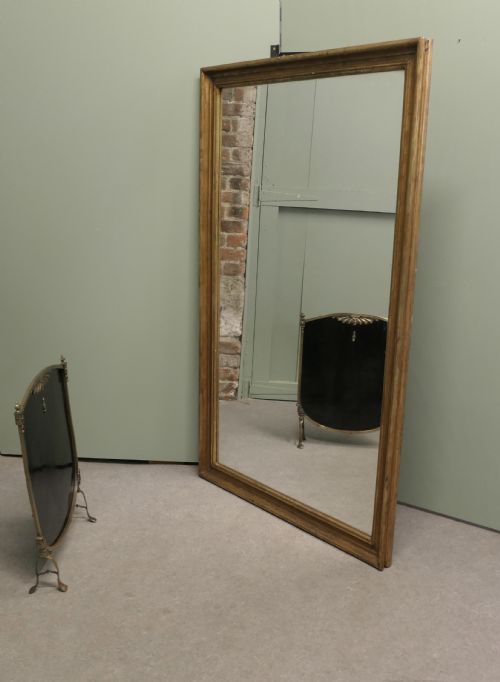


Gilded Wooden Pier Mirror
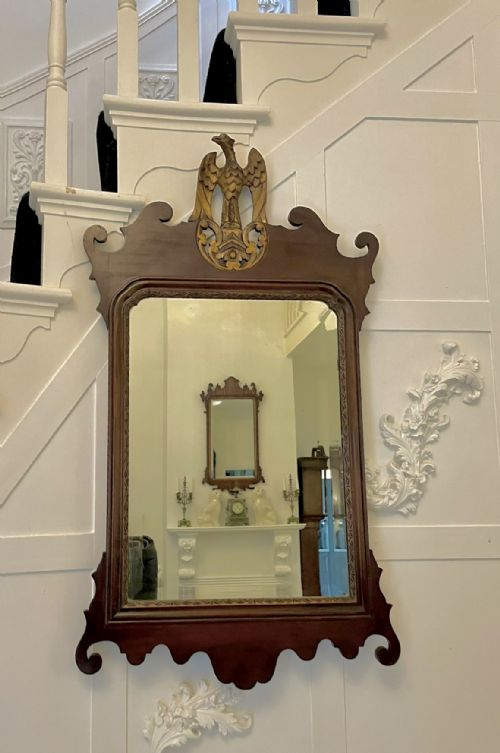
A gilded wooden pier mirror brings light and classical proportion to a room, hung between windows or above a console.
Gilded Wooden Pier Mirror
A gilded wooden pier mirror is a tall looking glass designed to sit between windows on a pier wall, reflecting natural light back into the interior. These pieces frequently date from the eighteenth and nineteenth centuries, spanning Georgian, Victorian, and Edwardian periods.
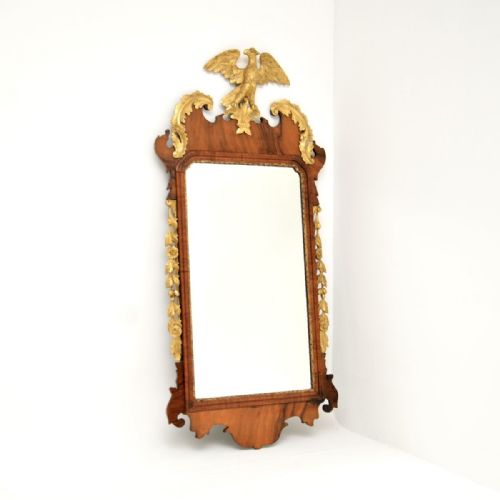
The selections available here range from formal walnut and parcel gilt frames to elaborate carved wood and gesso French examples. Many incorporate regional styles such as Venetian Rococo or Chippendale Revival alongside simpler fretted wall mirrors.
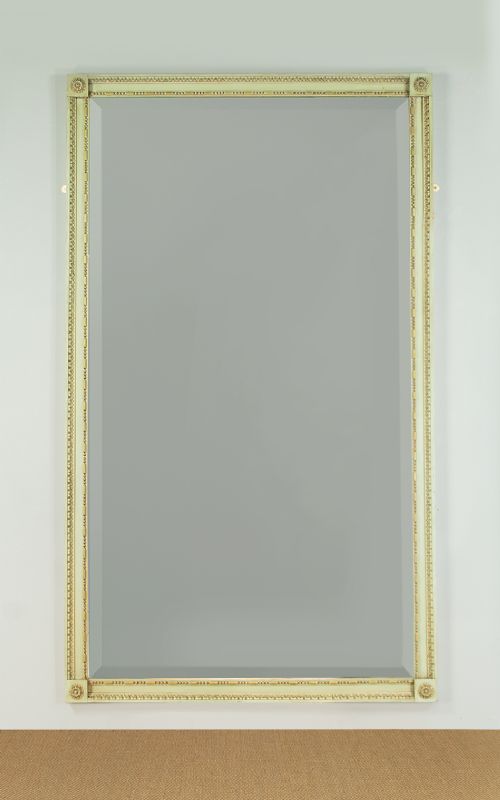
Makers and artisans constructed these mirrors in various proportions, from tall rectangular formats to large floor-standing designs. The primary function remains decorative and architectural, anchoring tall spaces with reflective glass and gilt frames.
Construction and materials
Makers built the foundational frames using solid timbers such as mahogany and walnut, often applying a layer of gesso to carve intricate ornamentation. Gold leaf or over-painted finishes were then applied over the prepared wooden and gesso surfaces.
Glass panels varied from early multi-part Vauxhall plates to large single sheets of silvered mirror glass. Fretwork elements and carved wooden details were frequently hand-cut and joined to the main frame using traditional cabinetmaking techniques.
Listings feature walnut, mahogany, and giltwood frames spanning the eighteenth, nineteenth, and early twentieth centuries.
Judging quality and craftsmanship
The distinction between standard and exceptional pieces lies in the crispness of the wood carving and the depth of the gesso relief. Finer mirrors display hand-cut fretwork and carefully burnished gold leaf rather than heavy modern coatings.
Originality of the mirror plate and the underlying timber frame heavily influences the standing of a piece. Faint foxing or age spots on the glass often indicate genuine period manufacture, whereas completely uniform surfaces suggest later replacement.
The Gilded Wooden Pier Mirror Glossary
- Giltwood
- Wood that has been decorated with gold leaf. This finish requires a prepared gesso ground to adhere properly to the timber underneath.
- Gesso
- A plaster-like mixture applied to wood frames to create a smooth surface for carving and gilding. It allows for sharp, crisp decorative details.
- Parcel Gilt
- A decorative treatment where only specific parts of a wooden object are gilded, leaving the underlying wood grain visible elsewhere.
- Vauxhall Mirror
- An early type of mirror plate often featuring bevelled edges and a distinctive thickness, named after the famous London glasshouse.
- Trumeau
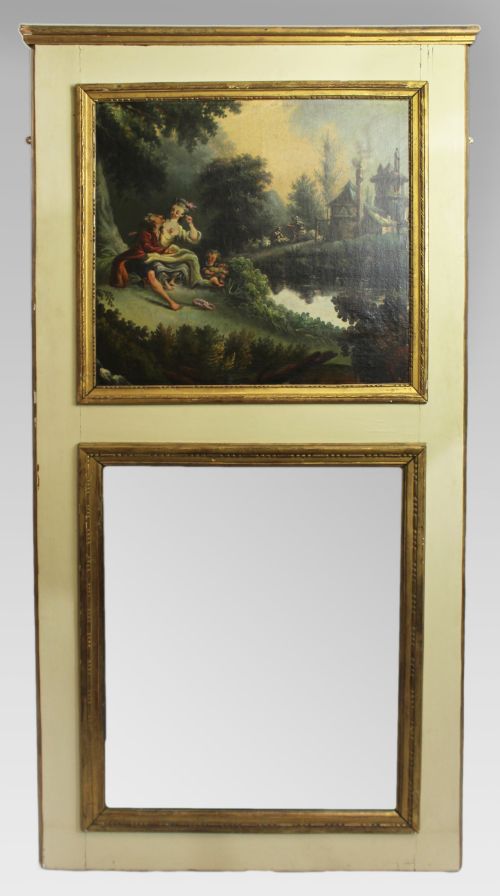
- A decorative wall mirror combined with a painted panel or artwork above the glass. These French examples often feature pastoral scenes.
- Fretwork
- Openwork ornamentation cut into thin boards using a scroll saw or piercing technique. It appears frequently on eighteenth-century frames.
Gilded Wooden Pier Mirror: Frequently Asked Questions
Where should I hang a pier mirror?
These mirrors traditionally hang on the narrow wall space between two windows, known as the pier. They also function effectively above low console tables or mantelpieces to maximise room illumination.
Ensure the wall fixings match the substantial weight of these wooden and gesso frames. Professional installation is advisable for larger or floor-standing formats.
How do I care for giltwood frames?
Dust the carved surfaces gently with a soft, dry brush to prevent the accumulation of dirt within the gesso relief. Avoid liquid cleaners, as moisture damages delicate gold leaf and historical finishes.
Keep the mirrors away from direct sunlight and damp environments to protect the underlying timber and prevent the silvering on the glass from deteriorating further.
What is a trumeau mirror?
A trumeau is an architectural mirror featuring an integrated panel positioned above the glass. These panels frequently display oil paintings or carved wood decoration.
Originating largely in France during the nineteenth century, they were designed to integrate seamlessly with wall panelling and formal interior schemes.
How can I tell the age of the glass?
Period glass often exhibits minor imperfections, slight distortions, and natural foxing where the backing has aged over centuries. These characteristics indicate the plate has remained with the frame since manufacture.
Completely clear, unblemished glass without any distortion typically points towards a modern replacement plate rather than original eighteenth or nineteenth-century material.