
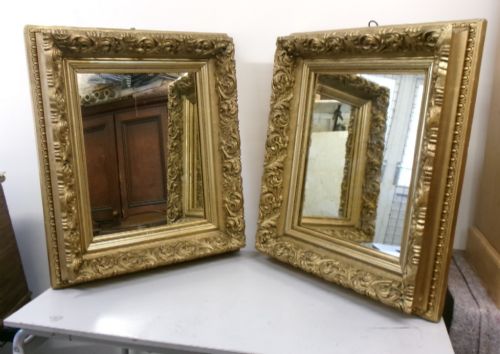
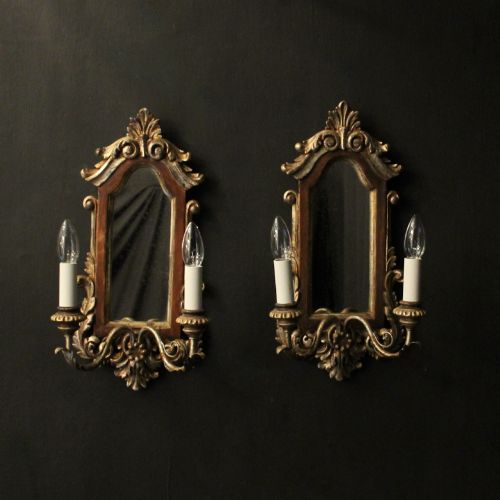
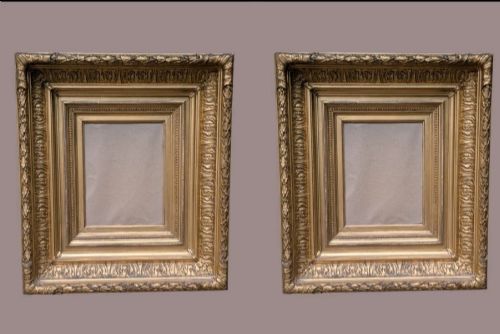
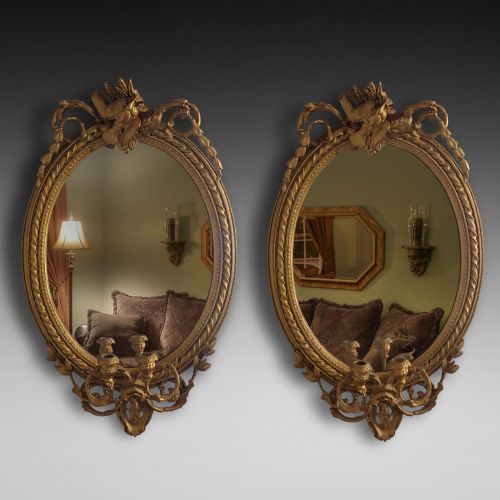
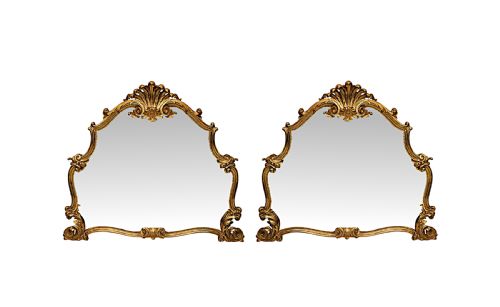
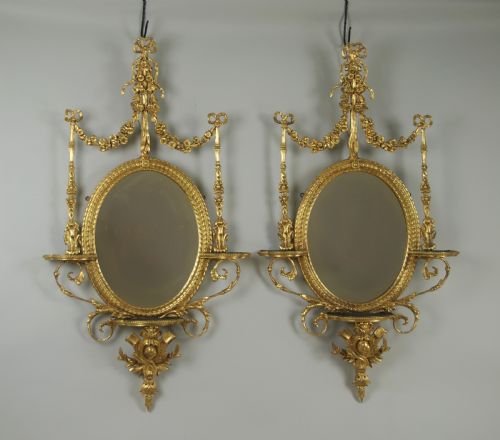
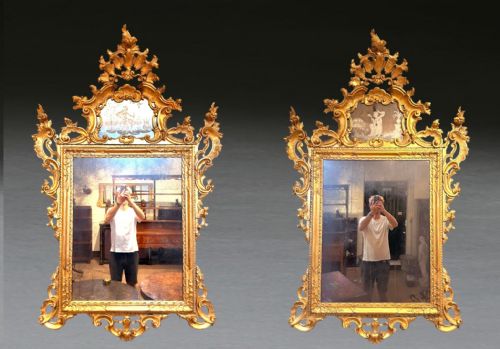
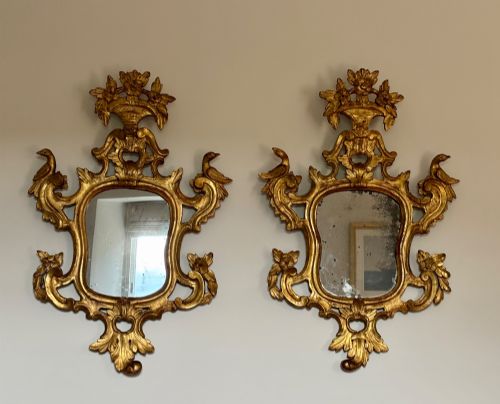
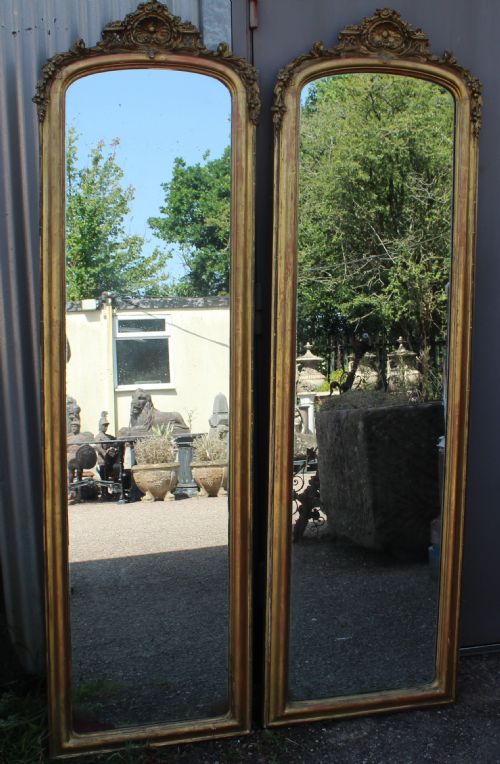
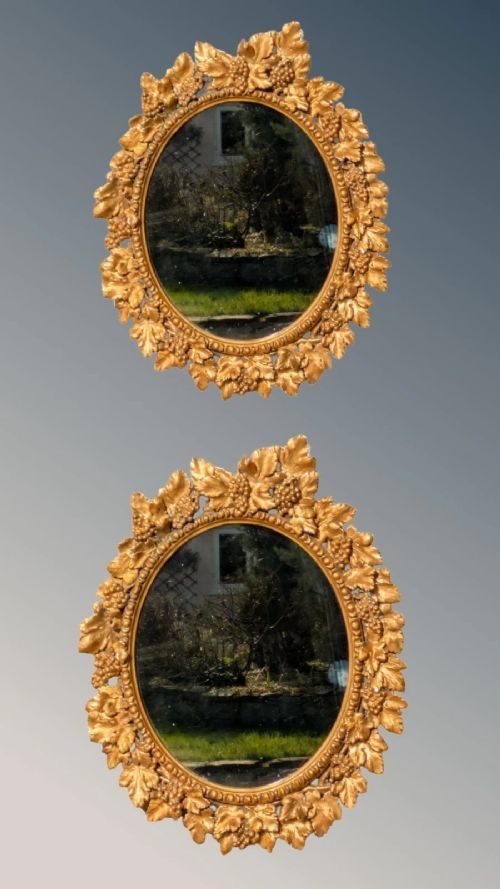
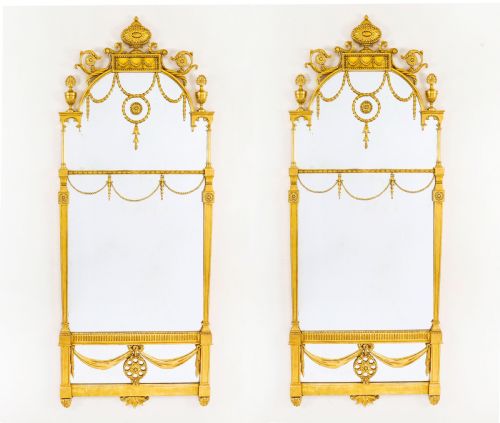
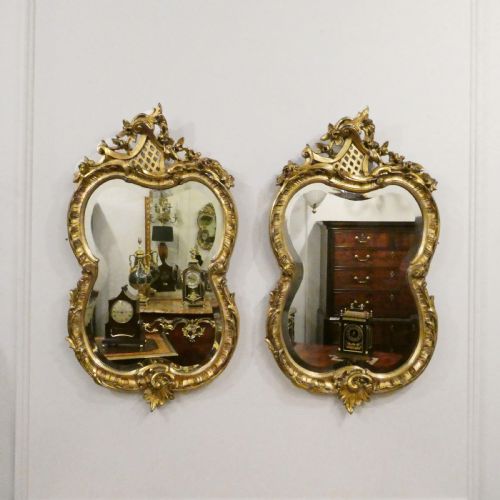


Gilded Wood Mirror Pair
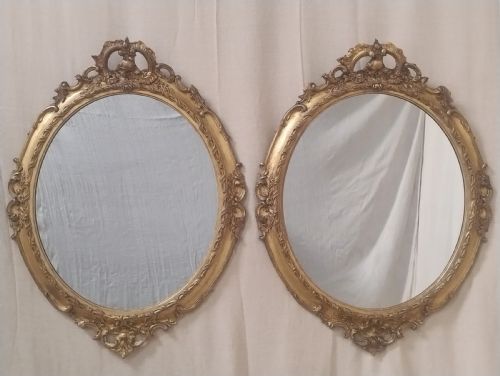
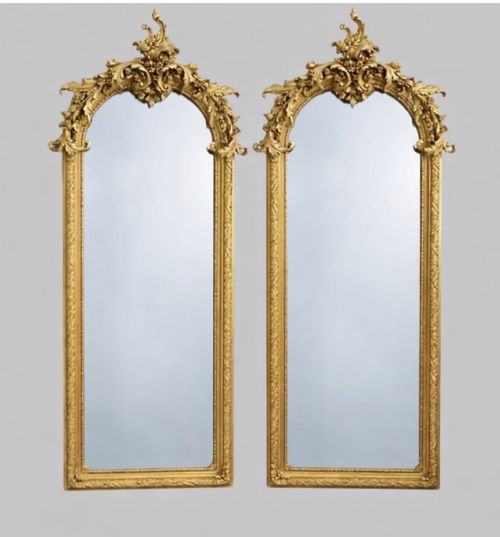
A gilded wood mirror pair brings balanced symmetry and reflective warmth to a room, drawing the eye with carved detail and gold surfaces.
Gilded Wood Mirror Pair
A gilded wood mirror pair comprises two matching reflective wall pieces designed to hang together, often utilised to flank a fireplace, window or piece of furniture. When searching for a gilded wood mirror pair, buyers encounter various forms such as pier mirrors, girandoles with candle arms, and oval wall hanging pieces.
The pieces seen here span multiple centuries and stylistic revivals, with nineteenth-century examples and Italian regional designs appearing frequently alongside Georgian and Regency periods. Makers and workshops from England, France and Italy produced these matching sets in shapes ranging from grand country house proportions down to miniature ovals.
Regional characteristics define much of what is available, particularly the robust carved foliage of English workshops and the elaborate scrolling forms associated with Florentine and Venetian traditions. Buyers select these pairs to establish formal symmetry within an interior scheme while introducing historical character through aged glass and gold leaf.
How they were made
Carved wood forms the structural base for these frames, utilising timbers like pine and hardwood shaped by hand before gilding. Artisans applied layers of gesso to smooth the carved surfaces and create crisp relief for fine decorative details.
Gold leaf or gilt paint was then laid over the prepared ground, sometimes supplemented by composition ornament pressed into moulds for repetitive motifs like vine leaves and bead runs. The reflective panels consist of mirror glass, which in older pieces shows natural foxing and subtle distortion from historical manufacturing methods.
Listings feature 18th Century, 19th Century and Regency periods, utilising materials such as giltwood, gesso and hand-blown mirror glass.
What varies in quality
The depth and crispness of the carving distinguish finer examples from simpler production, particularly where undercut foliage and scrollwork retain sharp definition through layers of gesso and gold leaf. Hand-carved elements display subtle irregularities that separate them from mass-moulded composition ornament.
The integrity of the original gilt surface dictates much of the visual weight, with burnished areas contrasting against matte grounds to create dimension. Proportion and balance between the two matching frames ensure that the pair reads as a unified architectural installation rather than two separate items.
The Gilded Wood Mirror Pair Glossary
- Giltwood
- Wood that has been coated with gold leaf or powder. This surface method provides a warm metallic sheen that ages with a soft patina.
- Girandole
- A decorative wall mirror fitted with one or more candle sconces attached to the frame. These arms allowed the reflective surface to multiply candlelight within a room.
- Pier glass
- A tall mirror specifically designed to hang on the narrow pier of wall space between windows. They frequently incorporate matching console brackets or tables.
- Gesso
- A plaster mixture applied to the carved wooden frame to create a smooth surface for gilding. It holds intricate moulded or carved details sharply.
- Foxing
- Small dark spots and discolouration within the mirror glass plate caused by the degradation of the silver backing over time. This process indicates age in antique glass.
Gilded Wood Mirror Pair: Frequently Asked Questions
Can I clean antique giltwood frames?
Dusting the carved surfaces gently with a soft, dry ostrich feather brush removes surface particles without disturbing fragile gold leaf layers. Moisture and chemical cleaning agents must be avoided entirely because they dissolve historical gesso and water-gilt finishes.
Glass plates can be wiped carefully using a cloth lightly dampened with distilled water, taking care not to let liquid seep behind the frame edges. Professional conservators should handle repairs to flaking gesso or damaged gilding.
How do I spot a matched pair?
True pairs exhibit identical dimensions, matching grain patterns in the wood where visible, and consistent wear across both frames. Minor hand-carved variations confirm that artisan hands shaped the pieces side by side rather than utilising modern mass production.
Backboards, fixings and the method of construction should align closely between the two items. Discrepancies in scale or gesso thickness suggest married pieces assembled together later in their history.
What is a pier mirror used for?
Pier mirrors were originally designed to hang on the narrow wall section between two windows to reflect natural light deeper into dark rooms. Their vertical proportions helped maximise illumination before the widespread availability of electric lighting.
In modern interiors, they serve as striking vertical accents that draw the eye upward and create an illusion of increased ceiling height. They work effectively when paired above matching side tables or low cabinets.
How do I identify Italian styles?
Italian mirrors often feature exuberant Rococo or Baroque carving with asymmetrical scrollwork, cherubs, and naturalistic floral motifs. Florentine and Venetian examples typically employ rich gold leaf applied over complex gesso relief work.
These frames display a theatricality distinct from more restrained English or French neoclassical designs. The underlying wood and construction methods further verify their regional origin and period.