


Gilded Wood Hallway Table
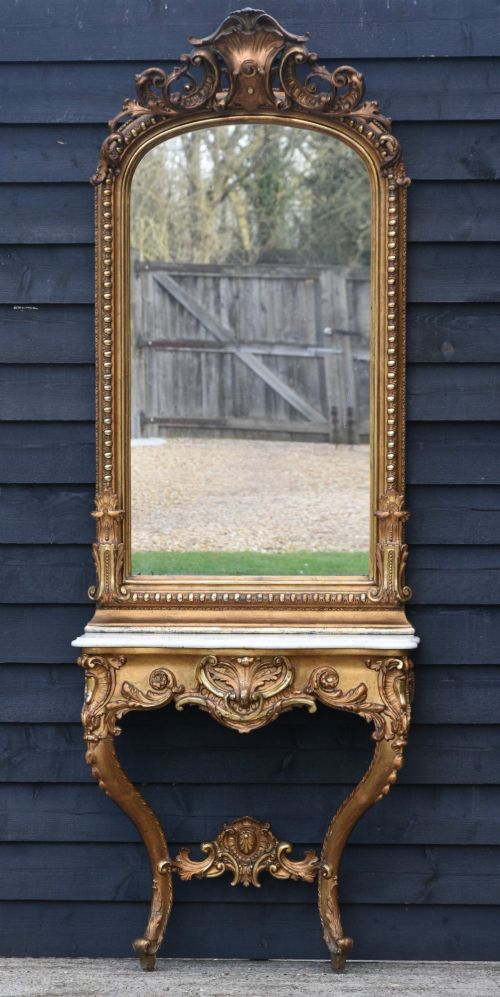
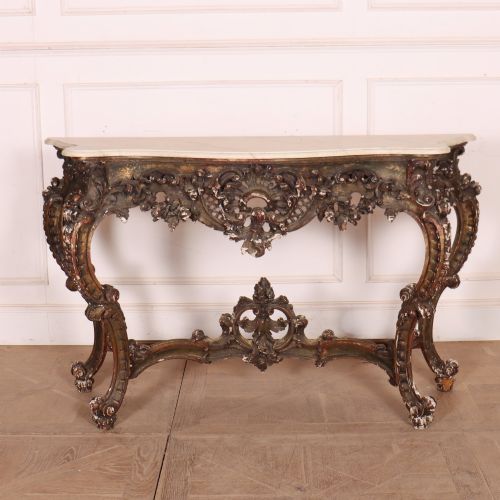
These gilded wood hallway table pieces bring undeniable presence to an entrance, offering surface and mirror combinations shaped by centuries of European craftsmanship.
Gilded Wood Hallway Table
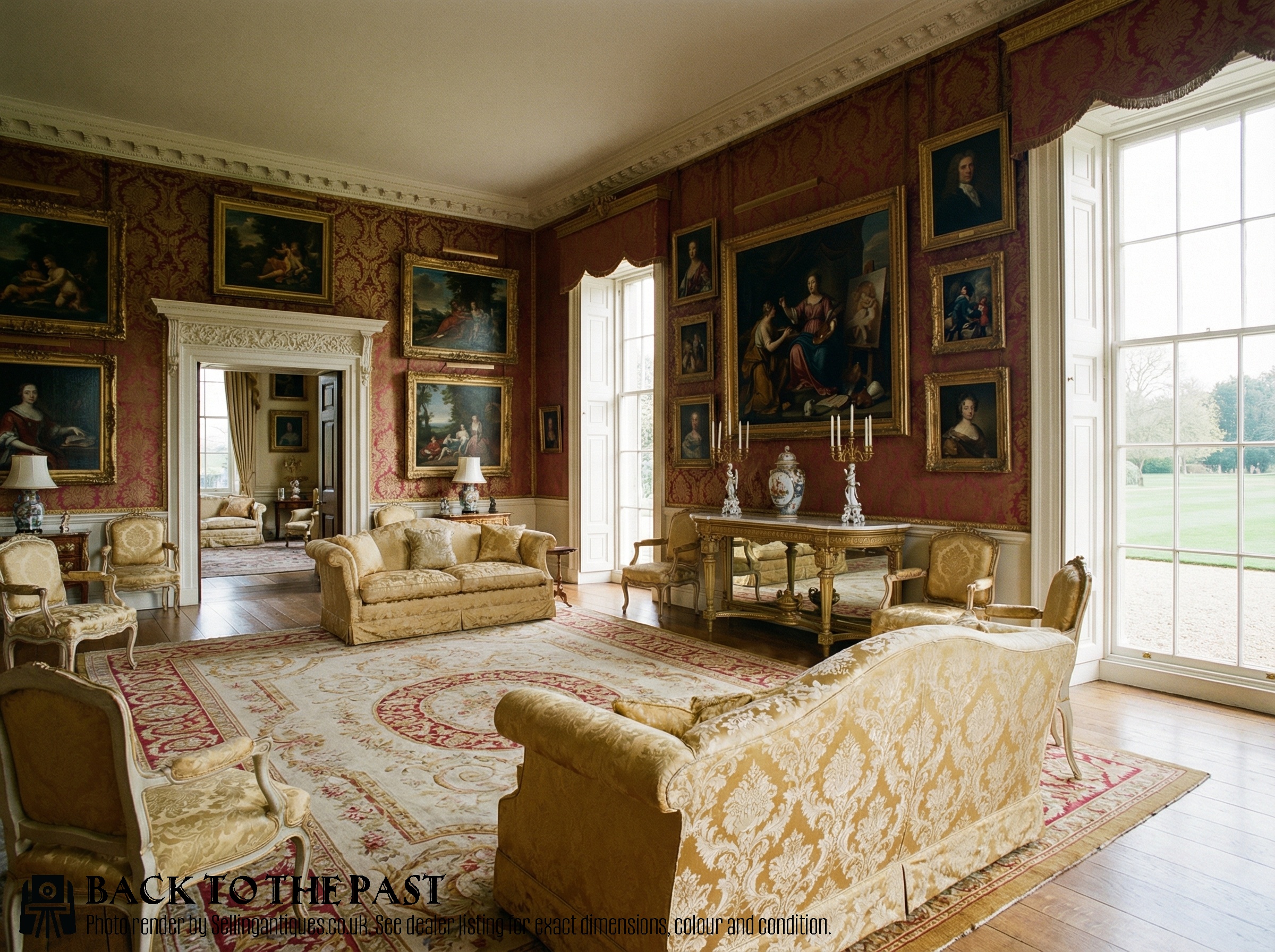
A gilded wood hallway table typically presents as a console table designed to sit flat against a wall, often paired with a matching pier mirror above it. These items arrive from various periods ranging from the eighteenth century to the early twentieth century, spanning English, French, and Italian origins.
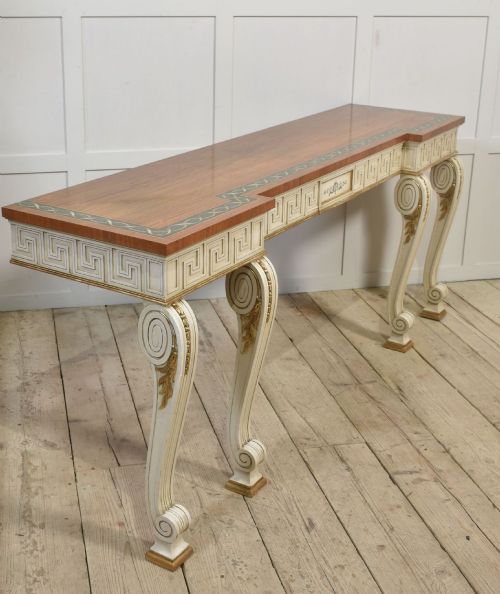
The most common form met here is the console table, frequently topped with marble and built with a serpentine outline in revival styles such as French Rococo, Louis XVI, or Neoclassical. Alongside these, buyers find occasional side tables and large wall mirrors sharing similar decorative vocabulary.
Materials and construction methods
The foundational structures rely on carved wood such as mahogany or general carved timber, overlaid with gesso to prepare the surface for gilding. Artisans applied thin sheets of gold leaf to create the characteristic metallic sheen that defines giltwood.
One exceptional mahogany buffet carries the shadow of Gillows, proving that even entrance furniture occasionally enjoyed a serious dining pedigree.
Distinguishing quality across pieces
Quality rests heavily on the depth and crispness of the wood carving, where hand-tooled details outshine simpler moulded decoration. The application of the gold leaf also dictates visual success, with burnished areas contrasting against matte surfaces to catch ambient light effectively.
The integrity of the structural joinery and the selection of secondary materials, such as heavy slab marble or genuine plate glass, separate high-tier workshop output from standard production. Attribution to notable makers like Gillows further elevates the standing of an individual piece.
Gillows
The Gilded Wood Hallway Table Glossary
- Giltwood
- Wood that has been covered with gold leaf or gold paint. This finish creates a luminous metallic appearance characteristic of formal antique furniture.
- Console table
- A table designed to be fixed against a wall, often supported by ornate brackets or legs rather than four standard vertical posts. They frequently carry heavy marble tops.
- Gesso
- A plaster-like mixture applied to wood surfaces as a base before gilding or painting. It provides a smooth ground that can be intricately carved once dry.
- Serpentine
- A curved shape that undulates inward and outward, commonly seen along the front edge of eighteenth and nineteenth-century tabletops and commodes.
- Pier mirror
- A tall mirror designed specifically to hang on the pier, the section of wall situated between two windows. They are frequently paired with console tables below.
Gilded Wood Hallway Table: Frequently Asked Questions
What is a giltwood console table?
A giltwood console table is a wall-mounted or bracket-supported table finished with gold leaf over gesso and carved wood.
These pieces were traditionally manufactured for formal reception rooms and grand hallways in European residences.
How do I identify French Rococo style?
French Rococo style relies on asymmetrical C-scrolls, S-scrolls, and naturalistic motifs derived from shells and foliage. The forms prioritise fluid, organic movement over rigid symmetry.
This aesthetic appears frequently across nineteenth-century revival console tables and frames.
Why do these tables have marble tops?
Marble tops provided a durable, cool, and luxurious surface that contrasted visually with the warm metallic shimmer of the giltwood base.
They also offered practical resistance to water and everyday wear in entrance halls.
What is the difference between a console and a side table?
A console table is designed to lean against a wall and often relies on the wall for structural stability via brackets or front legs. A side table stands independently on its own four legs.
Both forms appear frequently within nineteenth-century gilt furniture categories.