

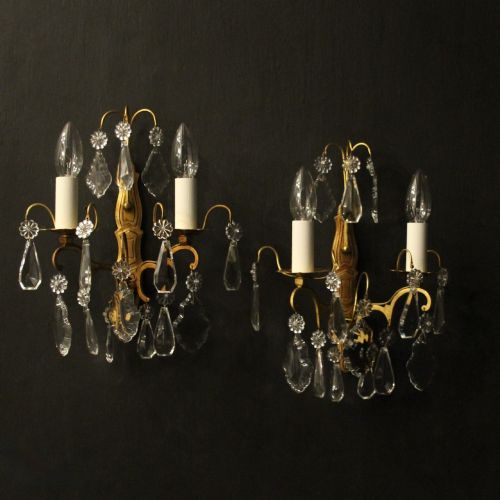
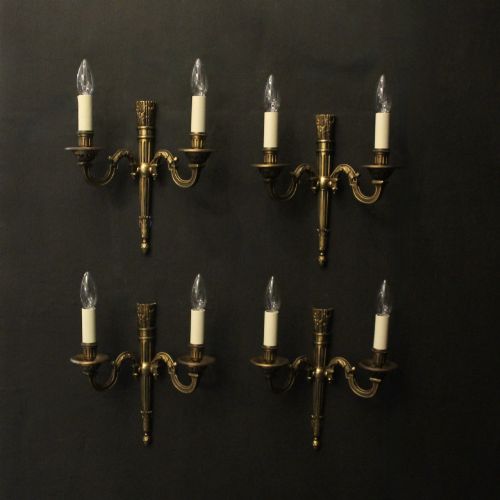
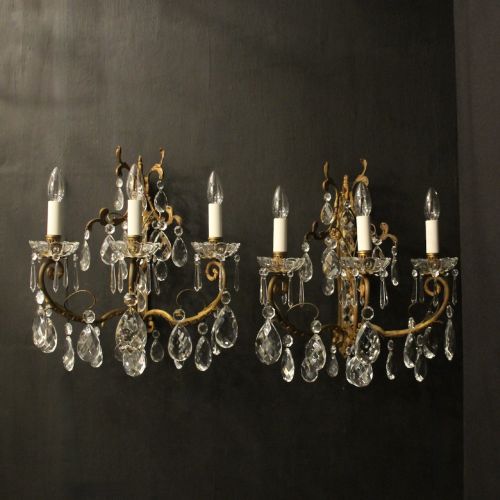
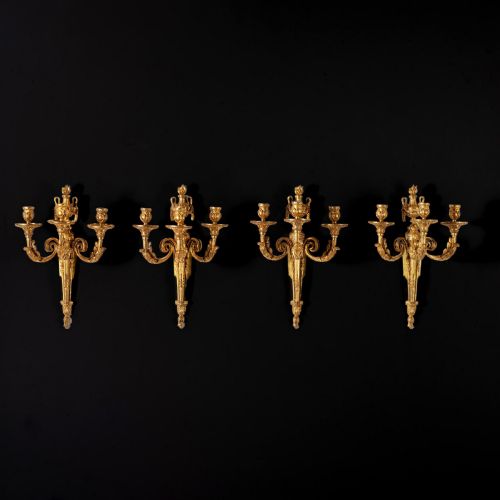
Gilded Wall Appliques
Gilded wall appliques bring interior spaces a warm, reflective glow through centuries of continental craftsmanship.
Gilded Wall Appliques
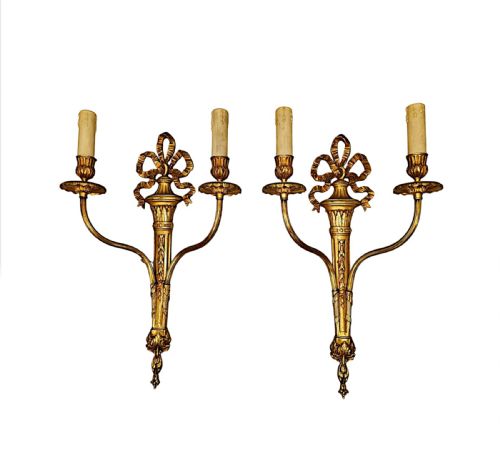
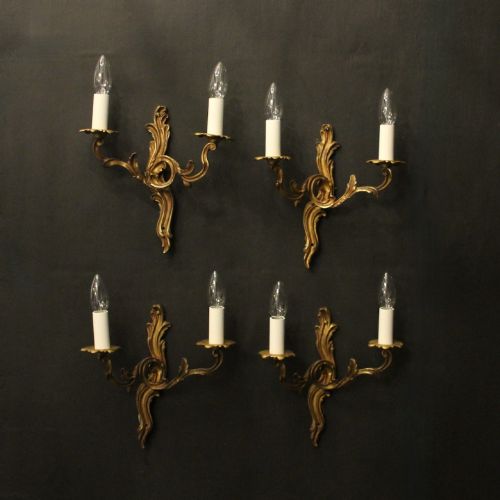
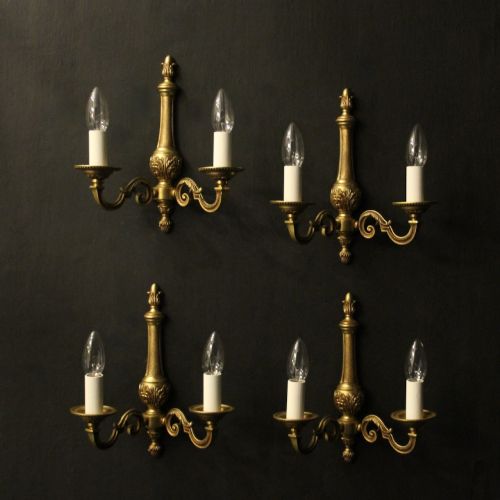
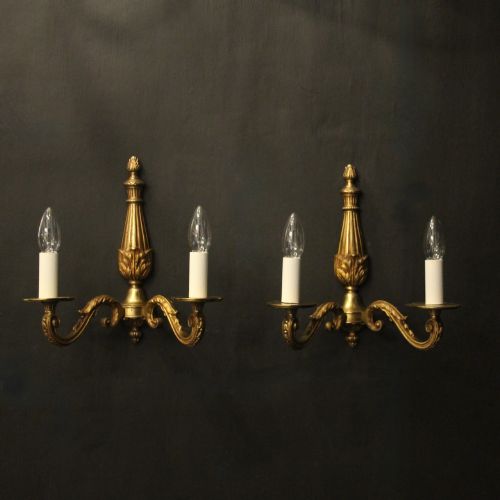
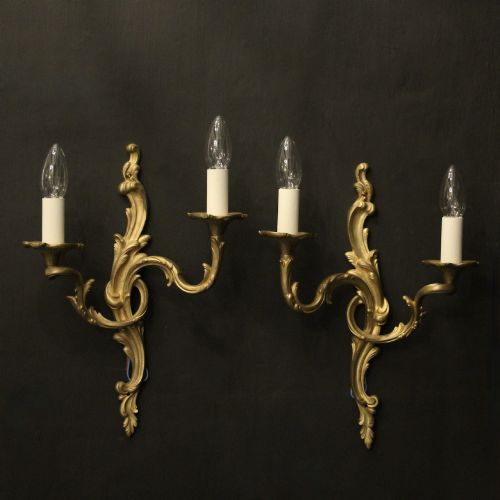
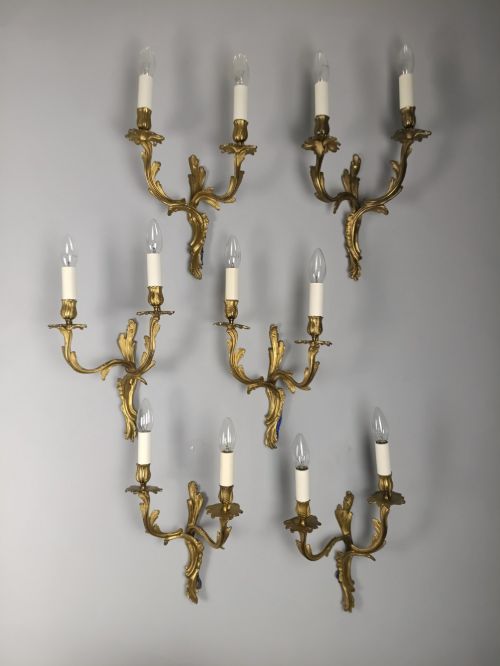
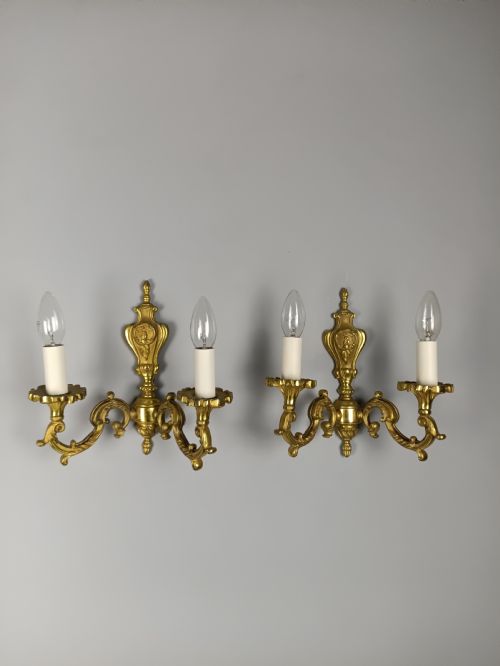
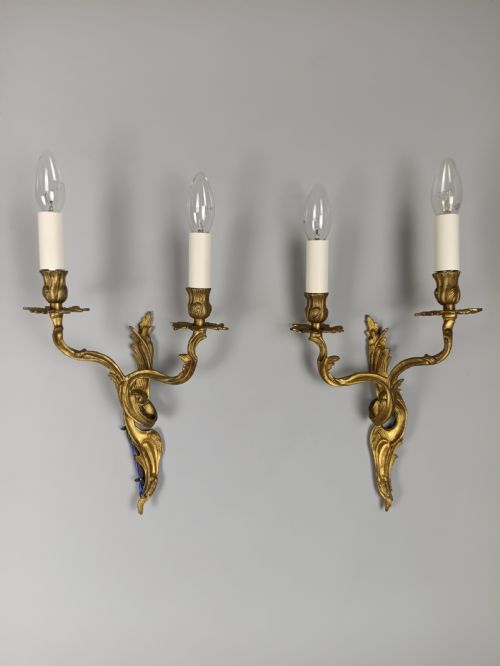
When you search for gilded wall appliques, you encounter decorative lighting fixtures designed to mount directly onto vertical surfaces, bouncing candlelight or electrical illumination across a room. The items on this page span several centuries, with the twentieth-century French examples appearing most frequently in sets and pairs.
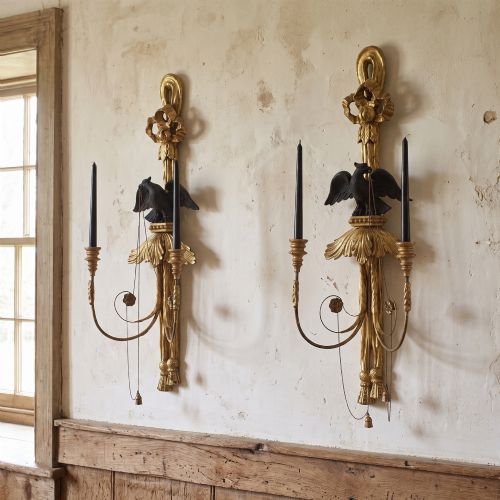
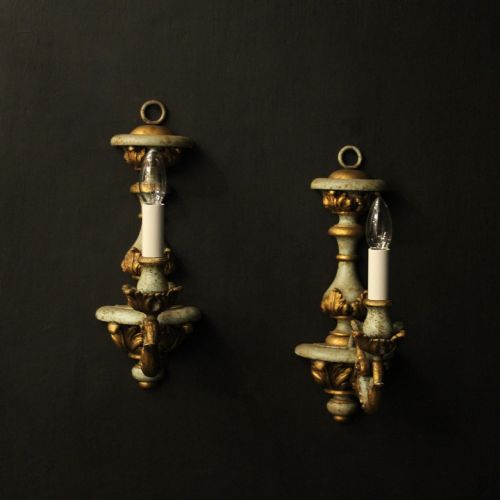
The inventory encompasses various regional interpretations, from ornate French Rococo and Louis XVI pieces to Italian Baroque and Venetian giltwood creations. These wall lights and sconces range from single-arm brackets to grand multi-branch configurations holding three or more candles or bulbs.
Materials and construction methods
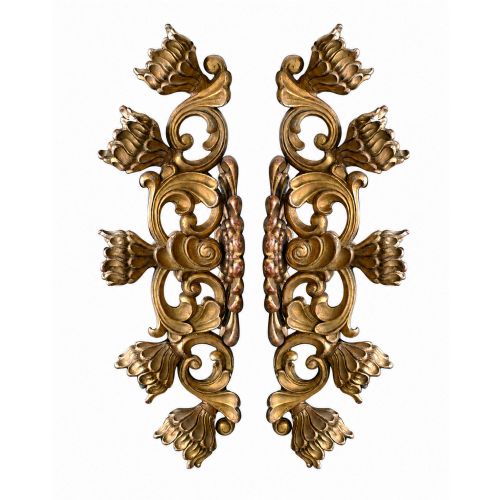
The core structures of these fixtures rely primarily on cast metals such as bronze, brass, and ormolu, alongside carved wooden frames fashioned from giltwood. Artisans applied thin layers of gold leaf or applied gesso and metallic finishes to achieve the characteristic reflective surfaces seen across the periods.
Many specimens incorporate supplementary elements like moulded crystal drops, Murano glass components, or polychrome details to enhance the visual complexity of the design. Metal components were frequently chased and cast in multiple arms, then assembled to create symmetrical twin and triple branch arrangements.
Cherubs and winged figures frequently peer out from Italian and French sconces, silently supervising the hallway lighting.
Distinguishing quality in gilded metal and wood
The refinement of the casting and carving dictates the upper tier of these pieces, where sharp relief work on acanthus leaves, ribbons, and figural motifs shows the hand of a skilled artisan. Softer, shallower surface details often point to mass production or later revival interpretations.
The integrity of the original gilt surface remains crucial, with superior examples retaining deep, warm metallic tones rather than flat or overly bright modern coatings. Heavier gauge brass and bronze components also provide structural stability compared to thinner, more pliable metal alternatives.
The Gilded Wall Appliques Glossary
- Ormolu
- Gilded bronze produced by applying a mercury and gold amalgam to a bronze base and heating it until the mercury vaporised, leaving a durable golden layer. This technique creates a rich, matte finish typical of high-end eighteenth-century French items.
- Giltwood
- Timber, often lime or pine, that has been carved and coated with gold leaf over a prepared gesso ground. This material allowed Italian and English makers to achieve intricate, lightweight scrollwork and floral motifs.
- Sconce
- A wall-mounted lighting fixture designed to hold candles or electric lamps. The term is often used interchangeably with wall lights in historical inventories.
- Chasing
- The process of hand-tooling metal surfaces with punches and chisels after casting to sharpen details and add texture. Fine chasing separates masterwork bronzes from standard commercial castings.
Gilded Wall Appliques: Frequently Asked Questions
How do I wire antique appliques?
Most period wall lights arrive ready for modern electrical installation by a qualified professional, often utilising the hollow central arms or backplates to conceal modern wiring.
Edison-style or candle-tube small base bulbs are frequently selected to mimic the original candle illumination without overpowering the historic aesthetic.
How do I clean gilded surfaces safely?
Dusting requires only a soft, dry ostrich feather duster or a very gentle microfibre cloth to protect the delicate gold leaf or ormolu surface.
Water, chemical solvents, and abrasive polishes must be strictly avoided because they strip the historic gilding away permanently.
How do I date a wall light?
Dating relies on stylistic clues, such as the symmetrical restraint of Louis XVI designs versus the exuberant asymmetry of Rococo forms, alongside the construction of the backplate and screws.
Examining the metal alloy composition and the wear patterns on the gilding also helps distinguish eighteenth-century originals from twentieth-century revivals.