




Gilded Travel Clock
When you handle a gilded travel clock, you touch portable horology from nineteenth-century France built for movement.
Gilded Travel Clock
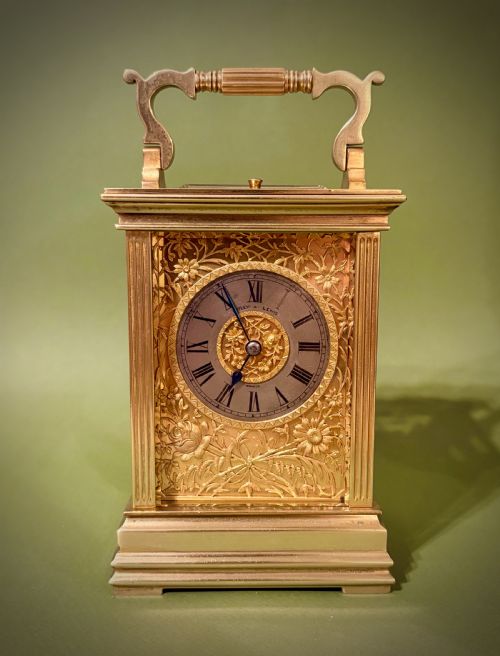
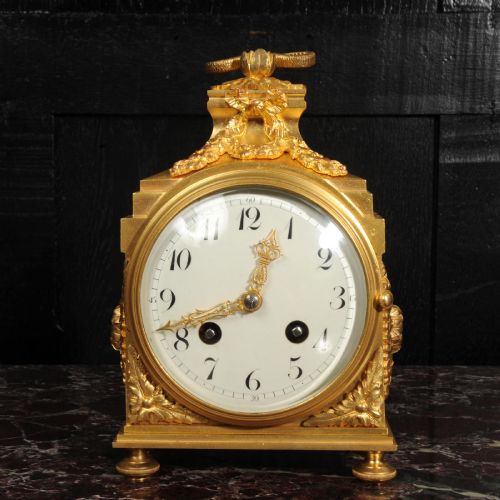
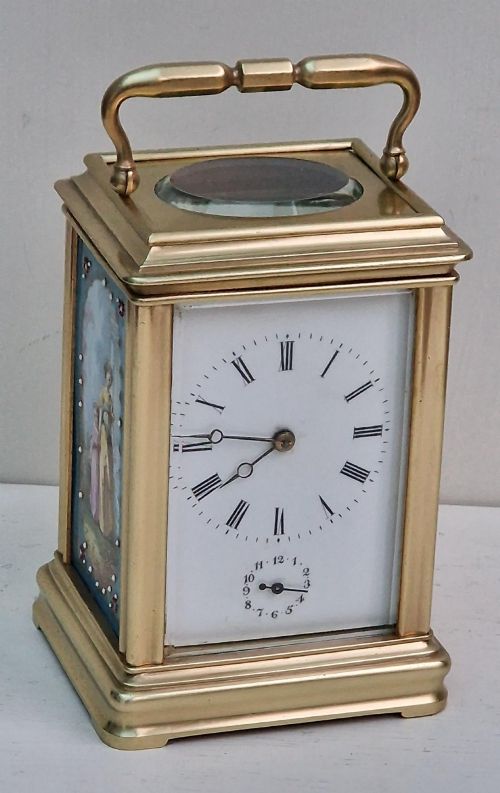
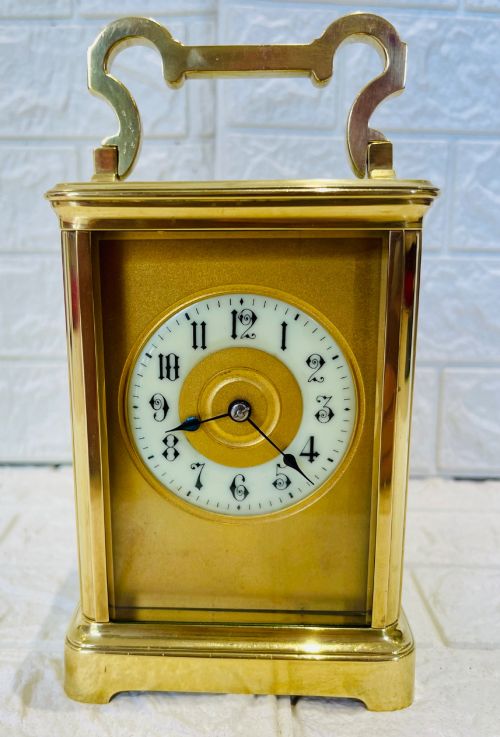
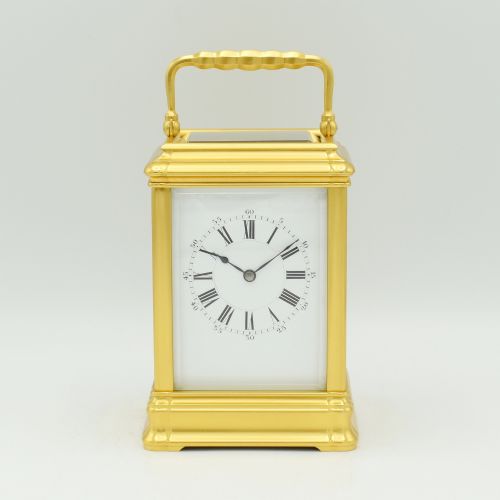
A gilded travel clock is primarily represented on this page by French carriage clocks and pendule d'officier mantle pieces spanning the nineteenth century. These brass and ormolu pieces were designed to be carried, holding timekeeping mechanisms within glass and metal cases during journeys.
Most examples originate from French workshops and date between eighteen fifty and nineteen hundred. You will frequently encounter gorge cases, enamel dial bands, and repeating complications that strike the hours and quarters upon demand.
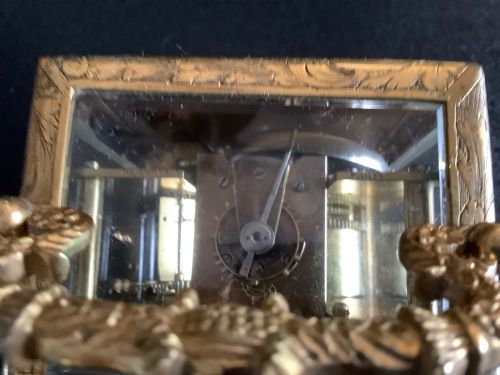
The forms range from subminiature and miniature travel clocks to large grande sonnerie and alarm pieces. Makers housed these movements in robust brass frames glazed on multiple sides to display the escapement and gear train.
Materials and Construction
Makers constructed these clocks using brass, gilt brass, ormolu, and bronze for the structural cases, housing precision mechanical movements of steel and brass. Glass panels protect the dials and permit a view of the working escapement from the sides and top.
Many dials and panels incorporate painted or limoges enamel, sometimes featuring bandings or pictorial scenes. Gilding applied to the metal frames provides a bright finish that catches the light around the bevelled glass windows.
Listings feature carriage clocks and pendule d'officier mantle pieces spanning the Victorian era, the French Second Empire, and the Belle Epoque.
Qualities of Construction
The complexity of the internal movement dictates much of the standing of an individual piece, distinguishing simple timepieces from those with striking, repeating, alarm, or calendar functions. The presence of a gorge case or specialised escapement points to higher standards of period production.
The crispness of the chasing on the brass or bronze panels and the retention of the original gilding reveal the initial investment in the object. Finer specimens display detailed enamel work and signed plates from known makers rather than plain dials and anonymous movements.
Henri Jacot·C. Detouche Paris·Margaine Of France·Drocourt·Paul Garnier·E.J.Dent·J.W.BENSON·Joseph Soldano·Alfred Hollinge
The Gilded Travel Clock Glossary
- Carriage clock
- A small, spring-driven portable clock with a handle, originally designed for officers and travellers in the nineteenth century. They often sit in brass and glass cases with platforms for the escapement.
- Gorge case
- A stepped rectangular brass case style popular on nineteenth-century French carriage clocks. It derives its name from the architectural moulding shape around the top and bottom borders.
- Grande sonnerie
- A complex striking train that chimes both the hours and the quarters automatically on the passage of time. These movements also repeat the last hour and quarters when a button or pendant is pressed.
- Pendule d'officier
- A military-style mantel clock with a distinct campaign handle, invented during the Napoleonic era. They often feature robust brass cases designed for portability.
- Repeating movement
- A mechanism that allows the owner to press a button on top of the case to sound the last hour and quarters in the dark. It utilises internal rack and snail components to calculate the correct time.
Gilded Travel Clock: Frequently Asked Questions
What is a carriage clock?
A carriage clock is a portable spring-driven timepiece fitted with a carrying handle on top. They were developed in France during the nineteenth century for people on the move.
The cases combine brass frames with glass panels so the escapement remains visible from multiple angles. Most sit on small feet and rely on a platform escapement rather than a pendulum.
How do repeating mechanisms work?
Repeating mechanisms allow the clock to sound the hours and quarters when you press a plunger on the top. The gear train calculates the correct chime based on the current position of the hands.
This function was essential for checking the time during dark night journeys before electric illumination. The striking uses gongs or small bells mounted inside the case.
What is a gorge case?
A gorge case is a stepped rectangular brass housing typical of nineteenth-century French carriage clocks. The distinctive moulded profile runs around the upper and lower edges of the frame.
This robust style protects the glass panels while offering a formal architectural appearance. It provides a heavy metal foundation for the repeating and striking movements.
How do I wind a travel clock?
Travel clocks use a key that fits onto square arbors on the backplate of the movement. Winding tensions the mainsprings that power the timekeeping and striking trains.
Care must be taken not to overwind the springs when maintaining the clock. Many models require a separate wind for the time, strike, and alarm functions.
Were these clocks actually used for travel?
These clocks were indeed built for transport in carriages and luggage during the nineteenth century. Makers provided sturdy leather travelling cases to protect the gilt brass and glass during rough journeys.
The platform escapement allows the clock to keep accurate time while moving, unlike a domestic pendulum clock.