

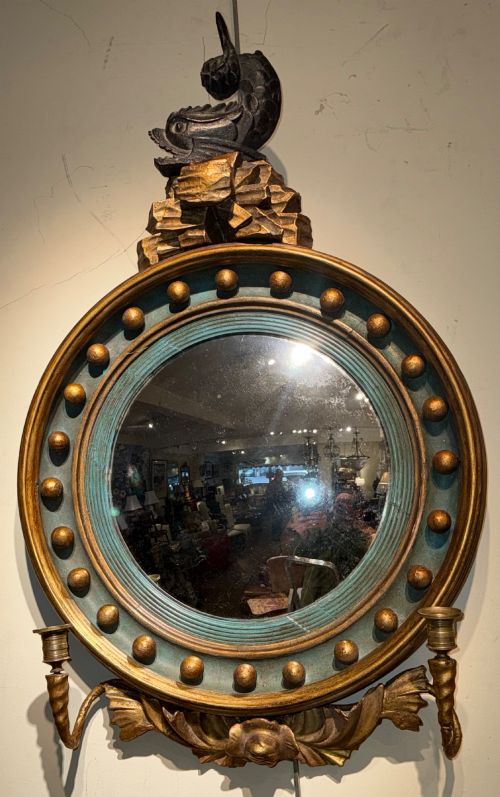


Gilded Sconce Wall Mirror
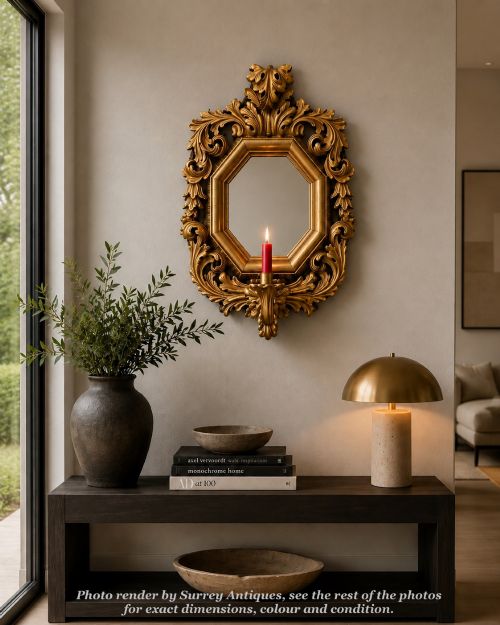
These gilded sconce wall mirror pieces combine reflected candlelight with carved gilt surfaces, bringing warmth and decorative depth to a room.
Gilded Sconce Wall Mirror
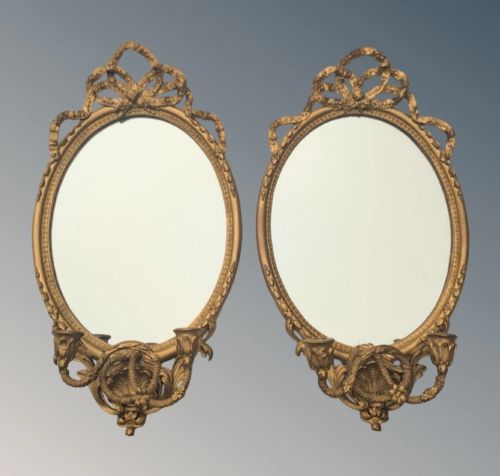
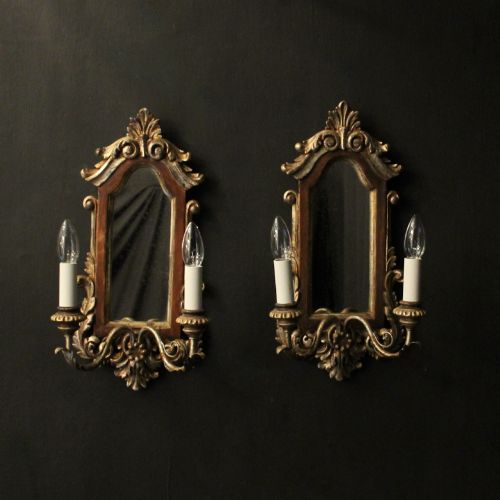
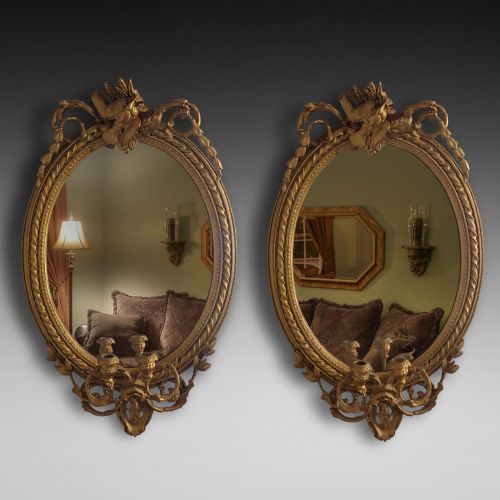
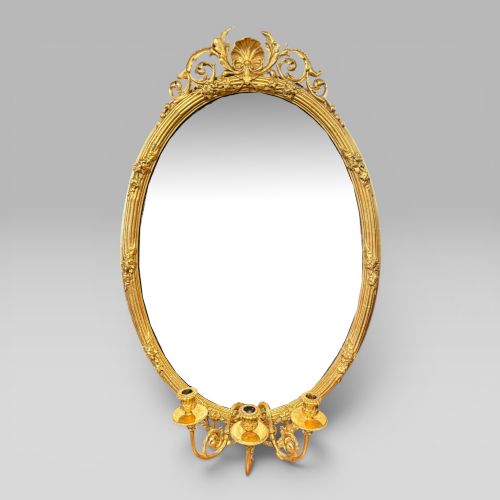
A gilded sconce wall mirror combines a reflective plate with integrated candle arms, serving both a functional lighting purpose and a decorative wall function. These pieces appear across various periods including the 18th century, Regency era, and Victorian period, taking forms such as girandoles, overmantels, and cartouche mirrors.
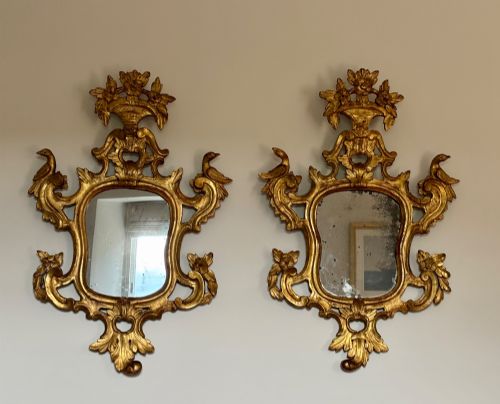
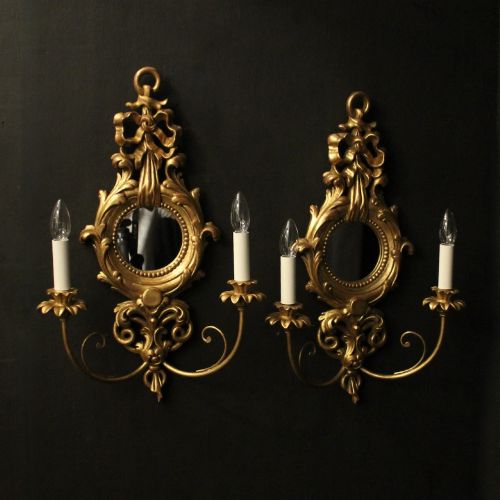
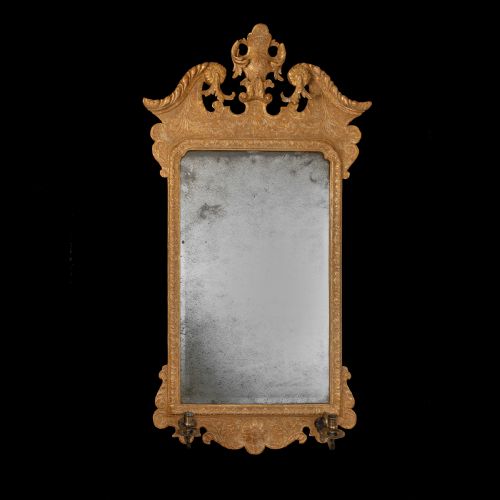
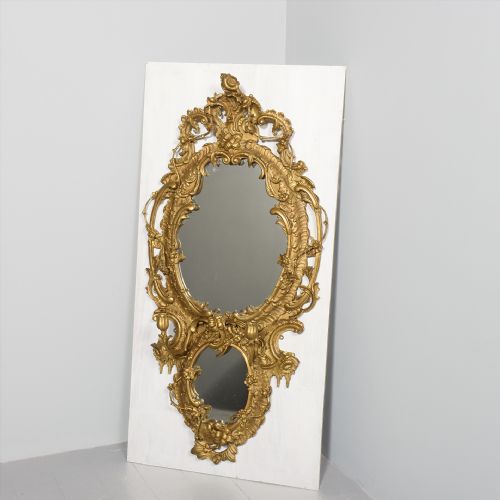
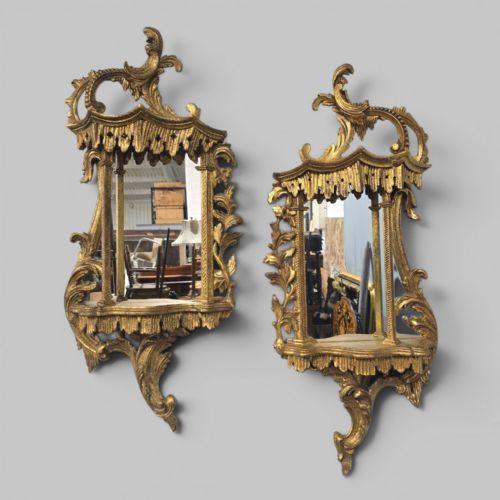
The version most commonly encountered on this page is the girandole or twin-arm wall mirror, frequently fashioned in pairs with giltwood or gesso frames. Origins span English, French, and Italian workshops, displaying styles ranging from Rococo Revival and Chinese Chippendale to Gothic and French Chateau influences.
Materials and construction
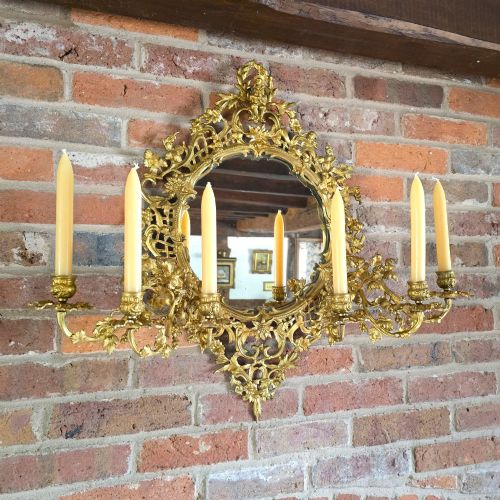
Carved timber foundations, predominantly giltwood, receive applications of gesso and gold leaf to achieve a luminous metallic finish. Alternatively, metal components such as brass and ormolu provide structure for six-branch candelabra or twin candle arms.
Mirror glass plates, sometimes exhibiting foxing from age, sit within frames secured by carved brackets, cherub motifs, or rope twist borders. Artisans shape these frames through carving and gilding techniques characteristic of periods from the George II era to the early 20th century.
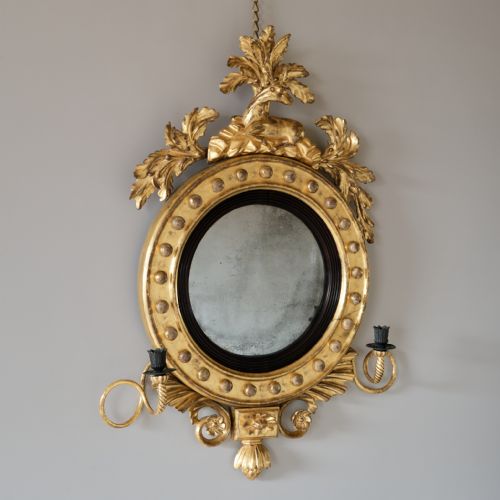
Convex mirrors were nicknamed banker's mirrors because their wide field of vision allowed shopkeepers to watch customers from behind the counter.
Quality variations
Depth and precision of the carved decoration set apart the finest examples, particularly where intricate Rococo scrolls, cherub brackets, or cartouche outlines remain crisp and well-defined. The integrity of the original gilding and the character of the mirror plate further differentiate standard production from masterworks.
Makers such as Benjamin Goodison represent the high tier of 18th-century craftsmanship, where architectural proportion and sculptural harmony elevate the object. Pairs that retain matching proportions, original glass plates, and unified gilding demonstrate superior workshop standards compared to mismatched or heavily restored items.
Benjamin Goodison
The Gilded Sconce Wall Mirror Glossary
- Girandole
- A decorative wall mirror fitted with candle arms or sconces attached to the frame. These fixtures multiply candlelight through reflection.
- Giltwood
- Timber, such as oak or pine, coated with gold leaf over a prepared gesso ground. This material forms the primary structure for many antique frames.
- Gesso
- A plaster-like mixture applied to wood frames to create a smooth surface for gilding. It allows carvers to achieve sharp relief details.
- Foxed plate
- Mirror glass displaying dark spots and age-related oxidation. This chemical change occurs naturally over decades within the silvering layer.
- Cartouche
- An ornamental frame resembling a scroll or rolled-up paper, often enclosing a mirror plate. Rococo examples feature asymmetrical scrollwork.
- Ormolu
- Gilded bronze used for decorative mounts and candle branches on mid-19th-century French pieces. The technique involves applying a mercury-gold amalgam to cast bronze.
Gilded Sconce Wall Mirror: Frequently Asked Questions
How do I hang a heavy gilded sconce wall mirror safely?
Secure the mirror directly into wall studs using appropriate brackets that match the weight of the timber and glass frame. Ensure the hanging wire or integrated fixing points distribute the load evenly across the structure.
Avoid relying solely on plasterboard without proper anchors, as the combination of carved wood, gesso, and glass creates substantial downward force.
What is the difference between a girandole and a standard wall mirror?
A girandole specifically incorporates candle branches or sconces attached to the frame, designed to reflect flickering light into the interior space. Standard wall mirrors serve purely decorative or optical expansion purposes without integrated lighting.
Historically, girandoles hung between windows to maximise natural and artificial illumination during evening hours.
How do I identify a Regency convex mirror?
Regency convex mirrors feature a round, outward-curving glass plate that provides a wide-angle reflection of the entire room. The frames frequently include reeded ebony inner rings, ball-bearing bezels, and eagle crests at the top.
These pieces date predominantly to the early 19th century and function as focal points in formal reception rooms.