




Gilded Satsuma Porcelain
Gilded satsuma porcelain brings intricate Japanese ceramic artistry into your rooms with detailed enamelwork and gold highlights.
Gilded Satsuma Porcelain
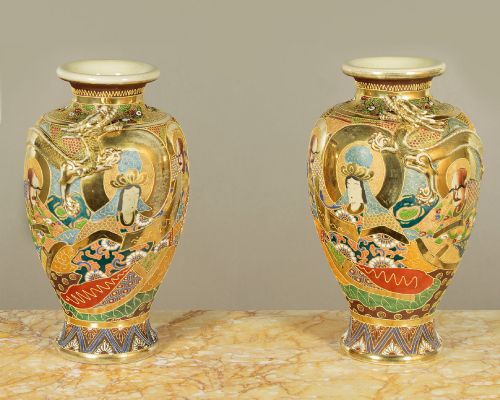
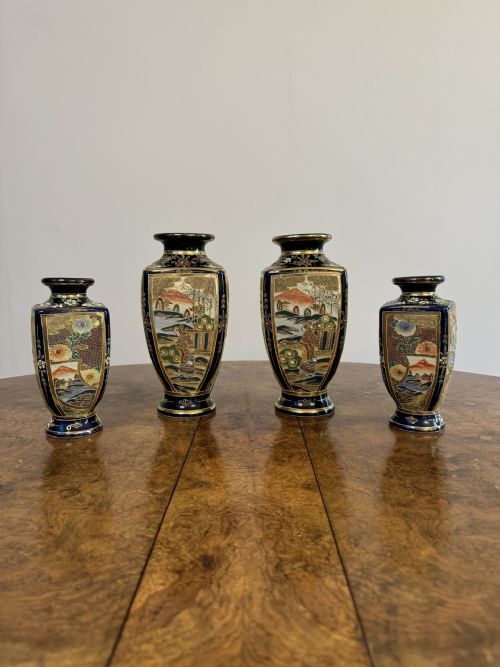
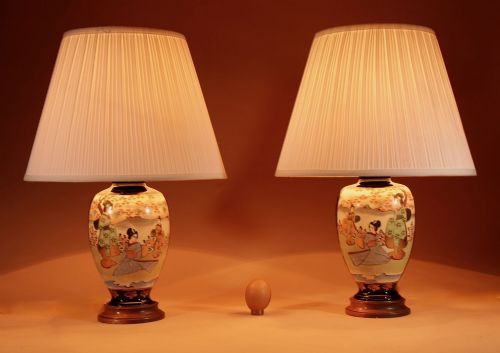
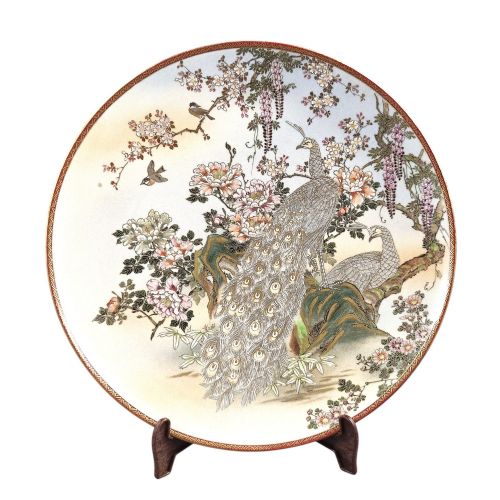
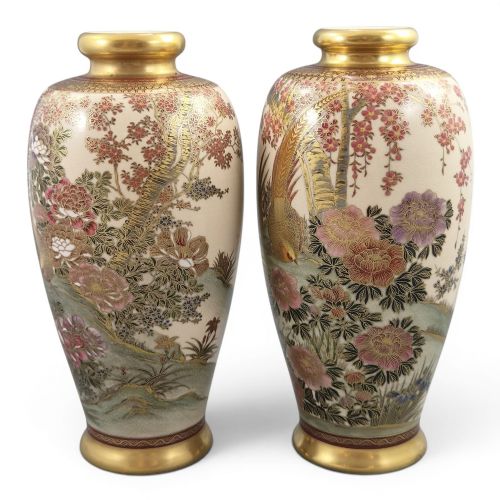
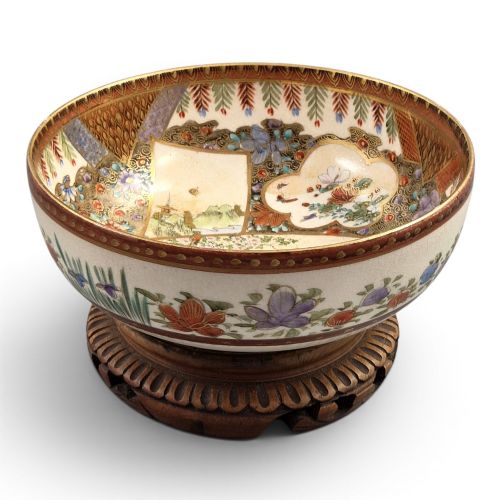
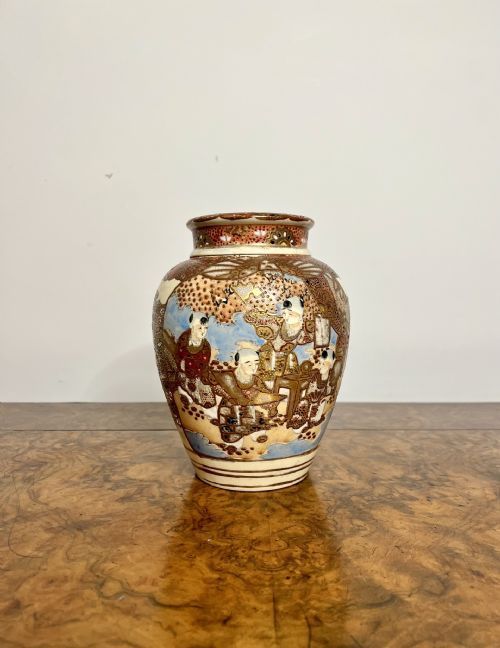
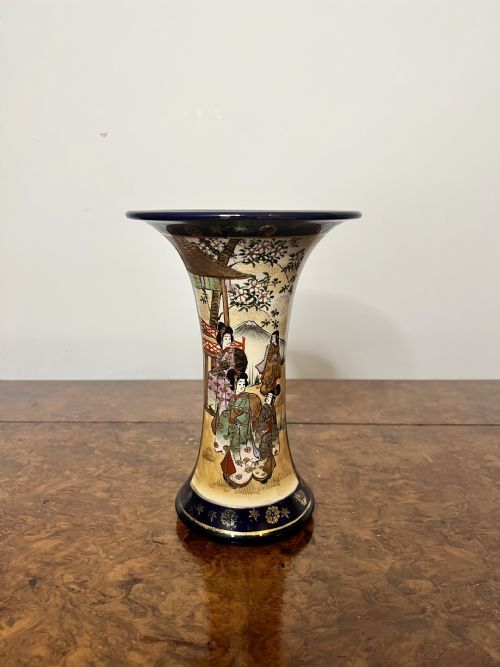
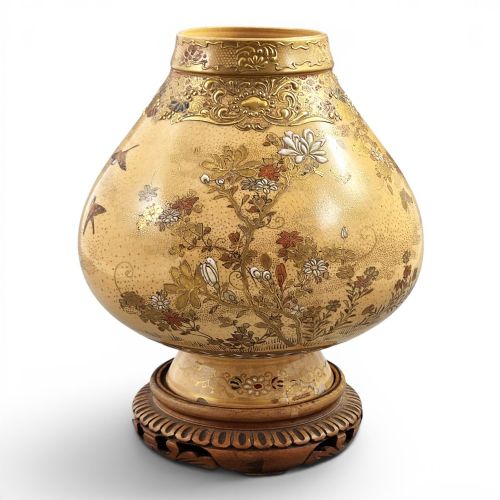
Gilded satsuma porcelain comprises decorative earthenware vessels, bowls, and figures originating primarily from the Meiji period through to the early twentieth century. These pieces encompass items such as large garniture vases, ginger jars, chargers, table lamps, and okimono figures.
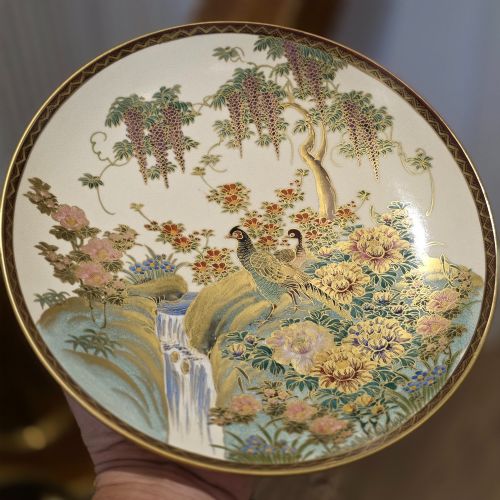
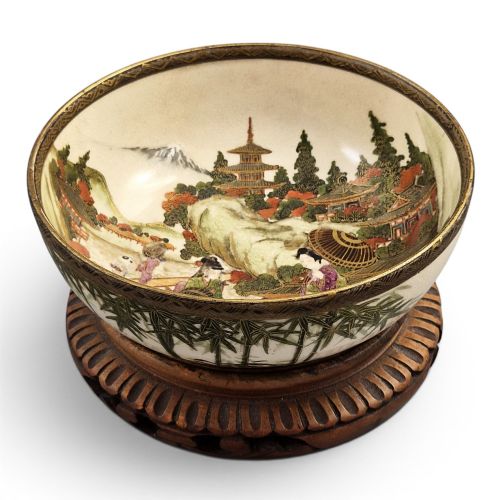
The objects frequently display characteristic Japanese motifs including court figures, landscapes, flowers like wisteria and peonies, and mythological subjects like arhats and dragons. Buyers will encounter both nineteenth-century Meiji examples and later twentieth-century creations spanning the Taisho and Showa periods.
How they were made
Maker workshops utilised earthenware bodies covered in a crackle-glaze ceramic finish, providing a textured base for subsequent painting. Artisans applied polychrome enamel pigments and gold leaf or gilt details by hand to create elaborate surface designs.
Techniques such as moriage involved building up raised clay paste beneath the enamel and gold to impart a tactile, three-dimensional quality to figures and decorative borders.
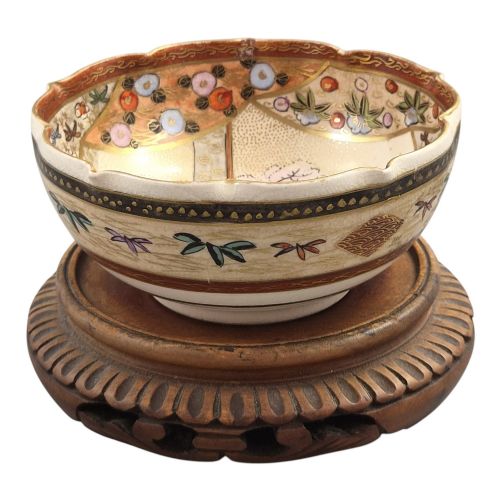
Listings feature earthenware vessels, ceramic bowls, and wooden stands from the Victorian and Edwardian eras.
What varies in quality
The distinction between standard commercial output and masterwork pieces rests in the precision of the brushwork and the complexity of the narrative scenes. Finer examples exhibit meticulous detail in facial expressions, robes, and background elements, often bearing the signatures of renowned Kyoto or Yokohama makers and workshops.
The application of gold leaf and the execution of raised moriage work also determine grade, where superior items demonstrate dense, deliberate gilding that remains crisp and registers depth without appearing crowded or heavy-handed.
Koshida·Manpei·Gyokkō·Kozan·Kinkōzan·Hotoda·Shizan·Makuzu Kozan II·Ryuzan·Chosei·Shuzan·Kizan·Seiko-en Chokei·Yamashu·Tagawa·Hododa·Tashiro·Tokyo Taizan
The Gilded Satsuma Porcelain Glossary
- Moriage
- A decorative technique where clay is applied in raised dots or lines before glazing and gilding to create a textured, three-dimensional surface effect. This method adds significant tactile depth to garments and floral motifs.
- Okimono
- A Japanese freestanding carving or figurine designed for display on a shelf or in a tokonoma alcove. These sculptures often depict deities, animals, or figures from daily life.
- Shimazu Mon
- The family crest of the Shimazu clan, featuring a cross within a circle, frequently found on high-quality satsuma wares originating from the Satsuma domain. Its presence often indicates production associated with premier kilns.
- Koro
- A traditional Japanese incense burner fitted with a pierced cover. These vessels typically rest on three or more feet and feature intricate painted panels.
- Garniture
- A set of matching vases or jars intended to be displayed together on a mantelpiece or sideboard. Such sets usually comprise three, five, or more coordinated pieces.
Gilded Satsuma Porcelain: Frequently Asked Questions
What is satsuma porcelain?
Satsuma ware is a type of Japanese earthenware traditionally featuring an ivory-coloured, crackle-glazed ceramic body decorated with colourful enamels and heavy gilding. The style evolved significantly during the nineteenth century to cater to Western export markets.
While often referred to broadly as porcelain, the underlying material is actually a fine earthenware that provides a warm, absorbent base for intricate hand-painted narratives and floral compositions.
How do I identify Meiji period pieces?
Meiji period items generally date between eighteen sixty-eight and nineteen twelve, a time when Japanese craftsmanship reached intense levels of detail for international exhibition. Look for dense hand-painted scenes, artist signatures, and refined moriage work.
Later pieces from the Taisho and Showa periods often simplify these motifs or adopt broader stylistic interpretations while retaining the characteristic crackle glaze and gold highlights.
Where were these pieces made?
Although the style originated in the Satsuma province of Kyushu, major production centres shifted to Kyoto, Tokyo, and Yokohama during the Meiji era to meet export demand. Master workshops in Kyoto became particularly famous for refined landscape and court figure painting.
Many pieces carry signatures or workshop marks on the base denoting the specific studio or artist responsible for the decoration.
How should I display them at home?
These decorative vessels and bowls suit prominent placement on sideboards, tables, or within cabinets where adequate lighting can catch the gold leaf and enamel details. Pairing matching vases or placing a single charger as a focal point creates a balanced display.
Keep pieces away from direct sunlight to protect the polychrome pigments and handle them carefully by the body rather than delicate rims or applied handles.