


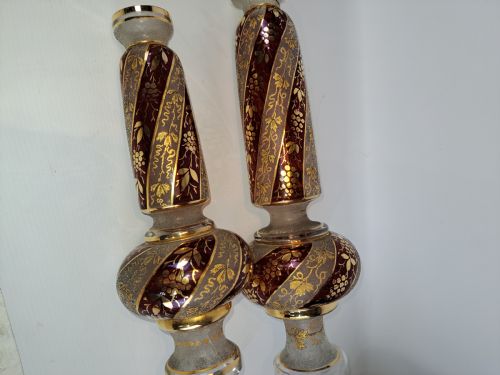


Gilded Ruby Glass
These pieces of gilded ruby glass bring deep crimson colour and bright gold to a room, offering the rich decorative presence collectors seek.
Gilded Ruby Glass
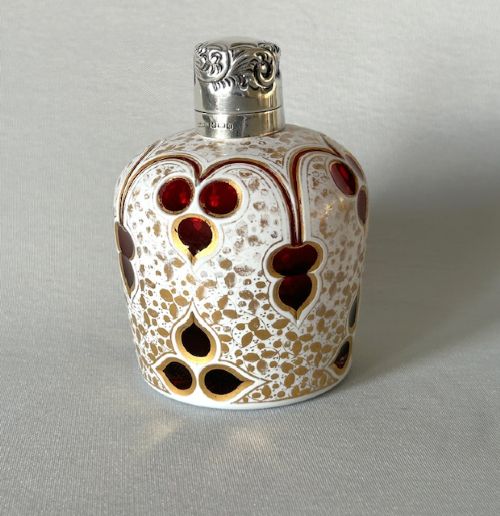
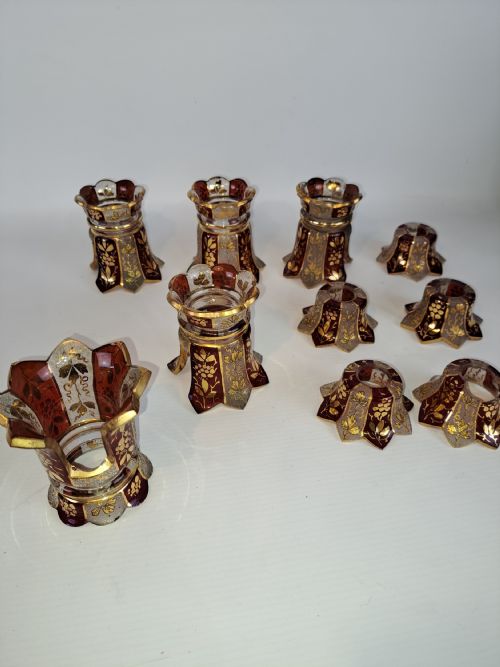
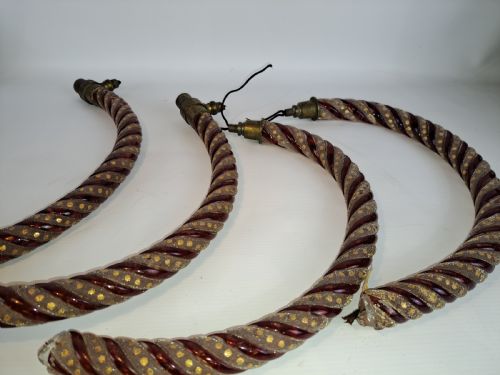
When you search for gilded ruby glass, you encounter items designed for display and interior illumination across the eighteenth, nineteenth, and early twentieth centuries. The selection spans distinct forms, from scent bottles and decorative dishes to vases, goblets, and extensive components for chandeliers.
You are most likely to meet nineteenth-century Bohemian pieces on this page, alongside Victorian examples and occasional Edwardian lighting fixtures. These objects combine intense red glass with applied gold leaf, enamel, and etched surface detailing.
How they were made
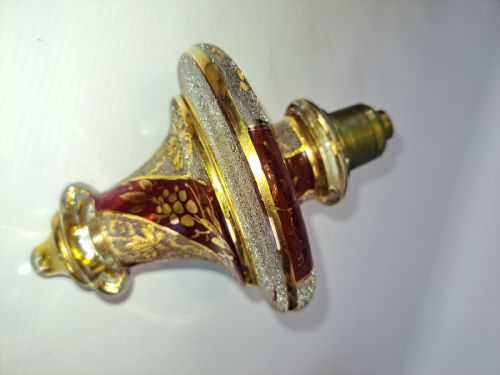
The makers formed these pieces using ruby glass, cranberry glass, and crystal, often layering or flash-cutting the material to reveal contrasting depths. Artisans applied gold leaf and enamel directly to the glass surface, frequently combining etching with parcel gilding to create intricate patterns.
Metal mounts in brass, silver, and gilded metal work frequently secure the glass elements, particularly in lighting components like pendants, chandeliers, and lanterns. These structural additions complement the warm red tones and gilded surface designs.
Listings feature items from the eighteenth, nineteenth, and early twentieth centuries, including Victorian and Edwardian periods.
What varies in quality
The precision of the surface decoration marks the distinction between standard vessels and exceptional examples. Fine pieces display crisp etching and careful application of gold leaf that remains sharp across the contours of the glass.
The integration of metal mounts and the depth of the glass colour also differentiate the items. Superior objects maintain an even crimson saturation and secure, well-fitted metalwork that enhances the overall form.
George Fox·Moser
The Gilded Ruby Glass Glossary
- Ruby Glass
- A deep red glass created by adding gold chloride or copper to the molten mixture. This intense coloration forms the base for subsequent gilding and etching.
- Lustre
- A decorative glass vase or pedestal fitted with hanging crystal prisms. These pieces reflect light through their coloured glass bodies and dangling drops.
- Flash-Cut
- A technique where a thin layer of ruby glass is overlaid on a clear or white glass body and selectively cut away to expose the base layer. This creates strong contrast within the decorative motifs.
- Tazza
- An elevated decorative dish or shallow bowl raised on a stem and foot. They serve as display pieces on tables and sideboards.
- Gilding
- The application of gold leaf or gold paint to the surface of the glass or metal mounts. It provides the metallic contrast characteristic of these decorative objects.
Gilded Ruby Glass: Frequently Asked Questions
What is gilded ruby glass?
Gilded ruby glass consists of deep red glassware decorated with applied gold leaf, enamel, or etching. The category includes vases, scent bottles, and various chandelier components from the eighteenth to the twentieth centuries.
These items range from functional tablewares to decorative lighting elements, all sharing the characteristic combination of rich red glass and metallic gold ornamentation.
How do I care for gilded ruby glass?
These pieces require gentle cleaning with a soft, dry cloth to protect the delicate surface gilding and enamel work. Avoid harsh chemical cleaners and abrasive cloths that can damage the gold leaf.
Display them away from direct, strong sunlight to preserve the depth of the ruby coloration and the integrity of the applied metallic details.
How are Bohemian pieces identified?
Bohemian pieces often feature distinct characteristics such as flash-cutting, layered glass panels, and elaborate etched motifs of floral or architectural designs. Many of these items were produced as decorative vases, goblets, or specialised chandelier parts.
The region was known for its technical skill in manipulating coloured glass layers and applying intricate surface gilding.
Where were these pieces used?
Victorian and Edwardian interiors utilised these objects primarily for display in drawing rooms, on mantelpieces, and as part of elaborate lighting schemes. Chandeliers and pendant lights brought coloured illumination into domestic spaces.
Smaller items like scent bottles and decorative dishes functioned as dressing table accessories or decorative accents on side tables.