

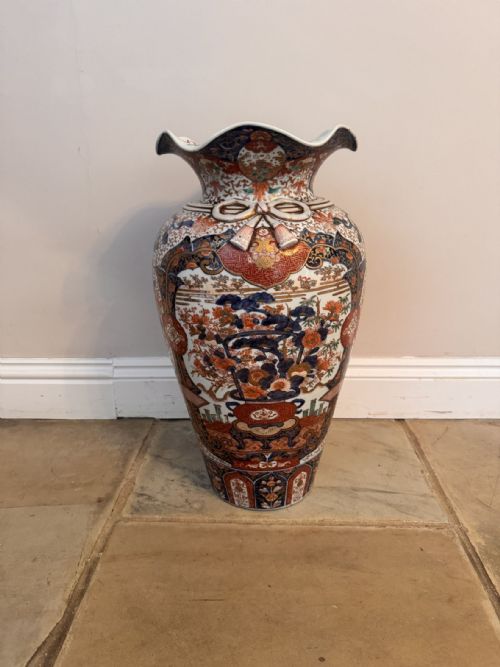


Gilded Rim Ceramic Urns
These gilded rim ceramic urns bring together painted porcelain, earthenware, and gold leaf from the nineteenth and twentieth centuries.
Gilded Rim Ceramic Urns
When you search for gilded rim ceramic urns, you encounter vessels and vases shaped for display, often featuring traditional Japanese Imari patterns alongside English works from the Regency and Georgian periods. These pieces include monumental floor-standing vases, ginger jars, and jardiniere forms produced across various global workshops.
The version you are most likely to meet on this page is a nineteenth-century Japanese Imari vase or an English porcelain piece from periods such as the Edwardian era and 1910. Makers utilised porcelain and earthenware bodies, finishing the rims with gold leaf or gilt details.
Vessels span diverse styles including Art Nouveau, Venetian Rococo, and Japanese Meiji Period designs. They serve primarily as decorative objects, occasionally adapted into lamps.
How they were made
Potters shaped these vessels from porcelain and earthenware, applying glaze and enamel to create decorative surfaces before firing the ceramic bodies. Artisans then added gold leaf or gilt highlights specifically along the rims and borders to frame the painted designs.
Some pieces incorporate specialised techniques such as the cut-out paper decoration seen on lacca povera items or hand-painted fruit scenes executed by studio artists. The combination of ceramic potting, kiln-fired enamel, and manual gilding defines the production of these vases.
Gilded Rim Ceramic Urns Retail Price Guide 2026
Typical asking prices for gilded rim ceramic urns among the pieces listed under this phrase on Sellingantiques today, from the lower quarter to the upper quarter. They describe what is for sale here now, not the wider market.
Materials recorded across the inventory include porcelain, gold leaf, enamel, wood, and earthenware.
What varies in quality
The standard of the painting on the ceramic surface dictates much of the distinction between pieces, with intricate hand-painted fruit or detailed Japanese Imari motifs sitting above simpler glazed finishes. The precision of the gold leaf application along the rim also marks out finer execution.
Scale and form contribute to the character of each piece, ranging from large country house vases and monumental floor-standing examples to smaller ginger jars and jardiniere vessels. The integrity of the ceramic body and the preservation of the enamel work determine the overall retention of the maker's original intent.
Royal Doulton·Royal Worcester
The Gilded Rim Ceramic Urns Glossary
- Imari
- A style of Japanese porcelain featuring rich cobalt blue and iron red decoration, often accented with gold. This aesthetic heavily influenced European ceramic production from the seventeenth century onwards.
- Jardiniere
- A large ornamental pot or receptacle designed to hold plants or flowers. These vessels often sit on floors or heavy furniture in domestic interiors.
- Gilt
- A thin layer of gold applied to the surface of ceramics or wood. It provides a metallic finish that mimics solid gold leaf.
- Ginger Jar
- A decorative ceramic vessel with a wide body and shoulders, traditionally used in East Asia for storing spices. Western makers later adopted the form purely for ornamental display.
- Earthenware
- Porous pottery fired at lower temperatures than porcelain. It requires a glazed surface to become completely waterproof.
Gilded Rim Ceramic Urns: Frequently Asked Questions
Where were these ceramic vessels displayed?
Large vases and floor-standing pieces usually stood in prominent reception rooms or hallways of country houses. Smaller ginger jars and jardiniere vessels sat on tables, consoles, or mantelpieces.
Their substantial scale made them focal points in Victorian and Edwardian interiors, often paired symmetrically on either side of a fireplace or entryway.
Can these vases hold water?
Many antique porcelain and earthenware vessels function safely for floral displays, provided you check the interior glaze for hairline cracks. However, pieces adapted into lamps or those with delicate enamel and gold leaf require caution.
It is safer to use a hidden inner plastic container rather than filling antique ceramic bodies directly, protecting both the interior glaze and the exterior finish.
How do I date a piece?
Examine the base for factory marks, maker's ciphers, and painted signatures that correspond to known operational periods. Stylistic clues like Japanese Meiji period motifs or English Regency forms also point to specific decades.
Comparing the potting technique, weight of the ceramic body, and the tone of the gilding helps confirm whether a vase originates from the nineteenth or twentieth century.