
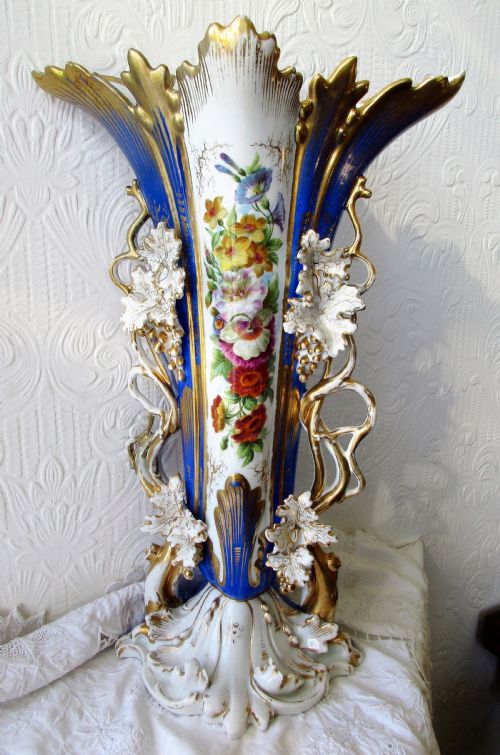
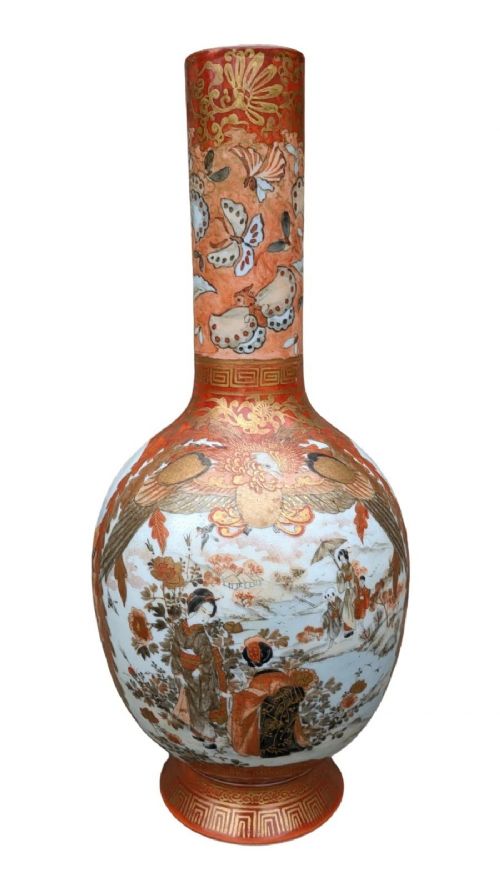
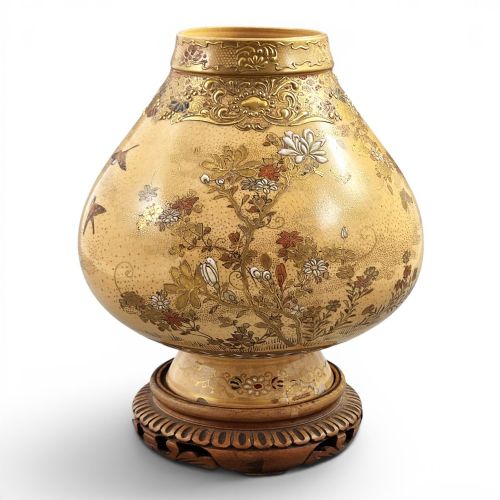


Gilded Porcelain Flower Vase
A gilded porcelain flower vase brings cabinet richness and hand-painted detail to any room, drawing the eye with metallic gleam and painted scenes.
Gilded Porcelain Flower Vase
A gilded porcelain flower vase is a ceramic vessel designed to hold blooms while displaying metallic gilding alongside painted decoration, spanning simple bud forms to elaborate garniture sets. These pieces emerge from English factories, continental European kilns and Asian traditions across the nineteenth and twentieth centuries.
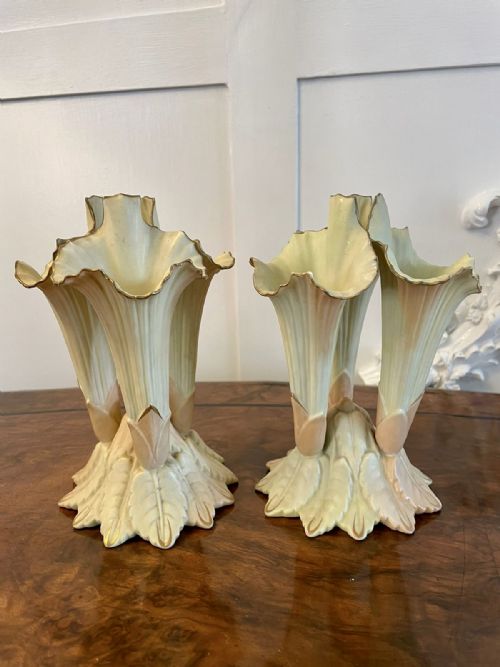
Buyers on this page most frequently meet nineteenth-century English works from factories such as Royal Worcester and Derby, alongside Japanese Satsuma and Chinese export pieces. Forms range from spill vases and blush ivory pots to beaker-form vessels and twin-handled decorative urns.
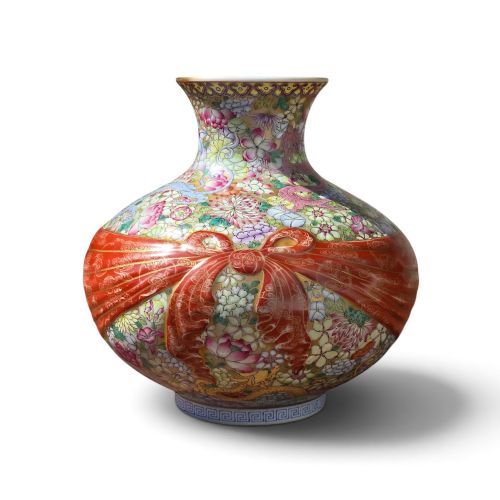
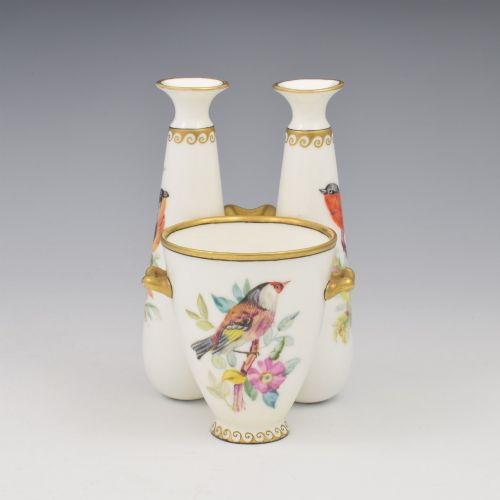
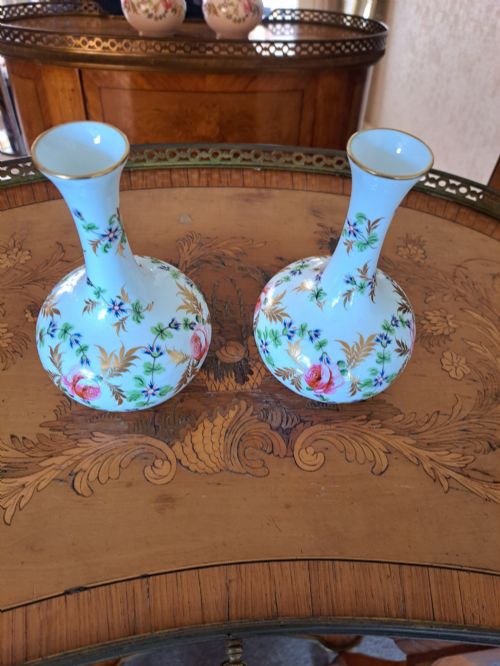
Collectors select these items for their hand-painted floral, ornithological or figurative scenes combined with gold leaf or gilt highlights. Each piece reflects the aesthetic preferences of its period, from Victorian ornamentation to Meiji craftsmanship.
How they were made
Potters shaped these vessels from porcelain, bone china, earthenware or stoneware, throwing or moulding the clay before initial firing. Artisans then applied enamel colours and gold leaf, gilding or gilt accents, often returning the piece to the kiln multiple times to set the metallic and painted decoration.
Makers utilised specialised techniques for specific effects, such as the blush ivory finish on Worcester pieces or the raised enamels found on Satsuma and Doulton wares. Hand-painted details required steady brushwork by skilled painters whose signatures or factory marks occasionally identify the workshop.
Nineteenth-century potters painted cattle, samurai and thousand-flower motifs onto porcelain, proving that Victorian mantelpieces enjoyed a remarkably diverse menagerie.
What varies in quality
Quality in these vessels rests upon the crispness of the porcelain body and the precision of the hand-painted brushwork. Superior examples display finely rendered details, such as ornithological studies or intricate floral motifs, rather than mass-produced transfer prints.
The application of the gold leaf or gilding also separates standard pieces from exceptional ones, with heavier, burnished gold surviving with greater brilliance. Furthermore, the reputation of the factory or workshop, from Royal Worcester to the Kinkōzan studios, influences the standing of the piece.
Royal Worcester·Kinkōzan Workshop·Doulton Burslem·Flight Barr and Barr·Ernst Wahliss
The Gilded Porcelain Flower Vase Glossary
- Gilding
- The application of gold leaf or gold powder to the surface of porcelain. This technique adds metallic highlights that contrast with the white or coloured ceramic body.
- Spill vase
- A narrow tubular vessel intended to hold thin wooden spills used for lighting fires. They often double as small flower holders on mantelpieces.
- Imari
- A style of Japanese export porcelain characterised by underglaze blue and iron-red overglaze enamels with gold highlights. European factories subsequently copied these distinctive palettes.
- Blush ivory
- A matte cream-coloured porcelain body developed by Royal Worcester. It mimics the tone of ivory and serves as a soft ground for floral painting and gilt details.
- Garniture
- A set of three or more matching vases designed to be displayed together on a mantelpiece or sideboard. These matched groups often feature a central vase flanked by two smaller companions.
Gilded Porcelain Flower Vase: Frequently Asked Questions
Were these vases meant for actual flowers?
Many forms, including spill vases, bud vases and bough pots, were specifically produced to hold fresh stems or dried arrangements. Larger decorative urns served primarily as ornamental garniture pieces.
Using them for water requires caution to protect historic interiors from moisture damage or staining through hairline cracks. Many owners prefer dry arrangements or display them empty.
How can I identify the maker?
Look to the base of the vessel for factory marks, impressed ciphers or painted numbers. English factories often stamped specific ciphers that date the exact year of production.
Japanese and Chinese pieces frequently bear studio signatures or period characters. Matching these marks against established ceramic reference guides confirms the origin.
What is the difference between gilt and gold leaf?
Gold leaf involves the application of hammered sheet gold onto a prepared surface, while gilt generally describes a gold wash or paint mixture. Both provide the characteristic metallic sheen seen on these decorative ceramics.
Burnished gold leaf usually holds up better to gentle cleaning and retains a deeper lustre over centuries. Paint-based gilding can sometimes show thin spots where wear has occurred.
Can I display these in direct sunlight?
Extended exposure to direct sunlight can cause hand-painted enamel colours to fade over time. Placing them away from bright south-facing windows preserves the vibrancy of the pigments.
Stable indoor humidity also prevents stress on the ceramic body and protects old glazes. Rotating the position occasionally ensures even exposure to ambient light.