
Gilded Pier Wall Table
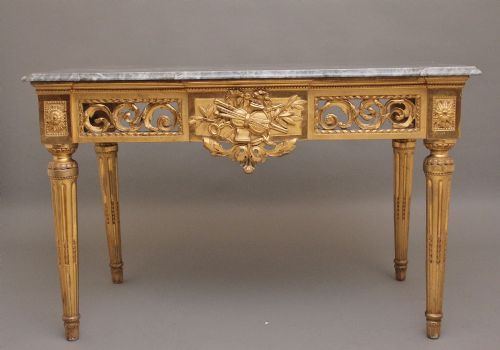
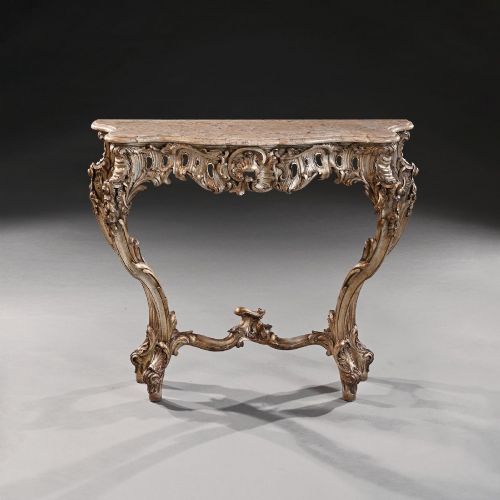
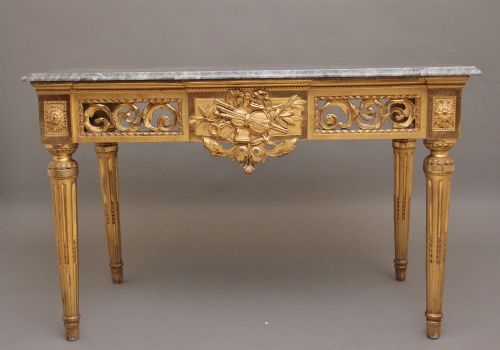
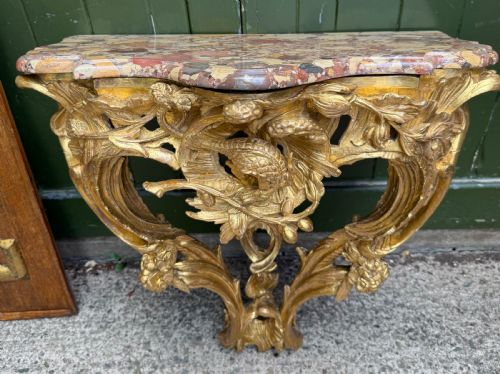
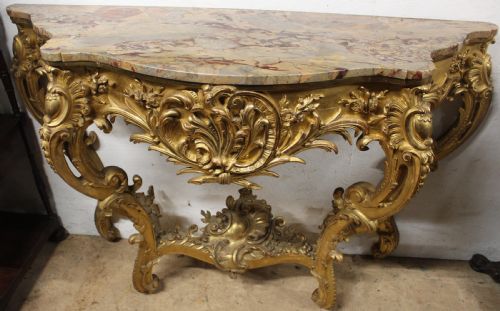
These gilded pier wall table options bring monumental presence and architectural symmetry to hallways and formal reception rooms through carved giltwood frames and fitted marble tops.
Gilded Pier Wall Table
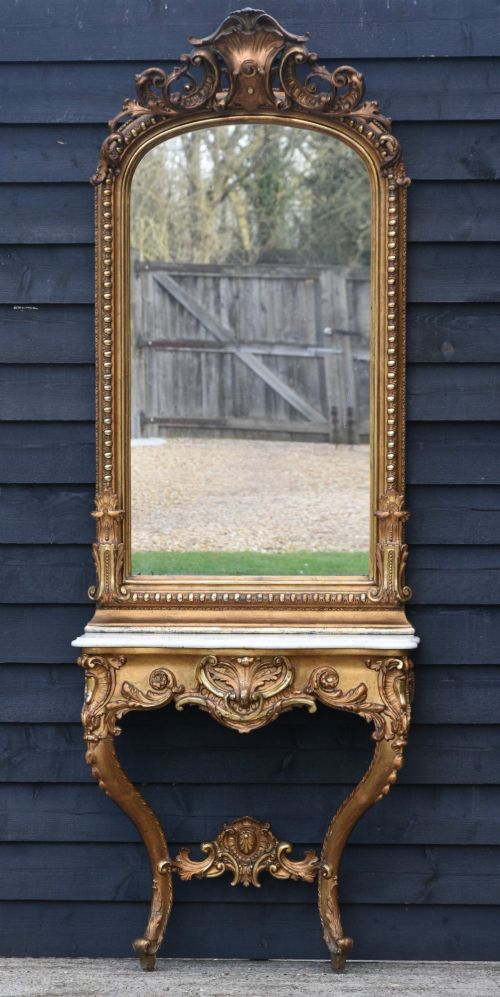
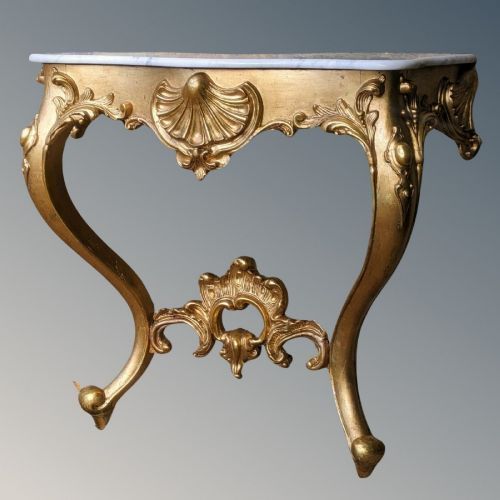
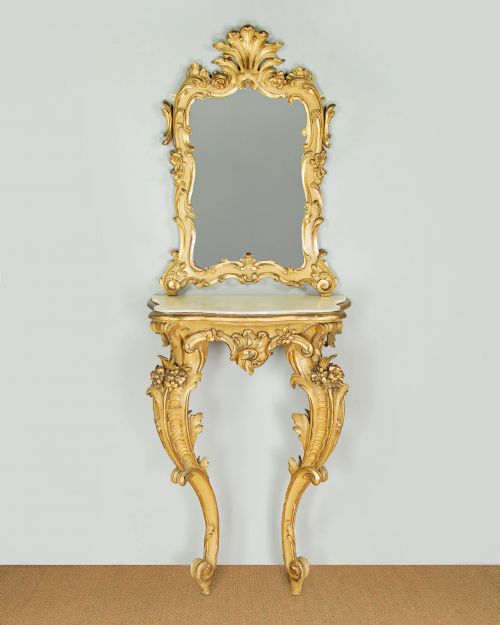
A gilded pier wall table stands flush against a wall beneath a pier glass or mirror, designed during the eighteenth and nineteenth centuries for grand domestic interiors. The forms on this page include console tables, side tables, console table and mirror sets, and pier mirrors originating from French, Italian, Swedish, and English workshops.
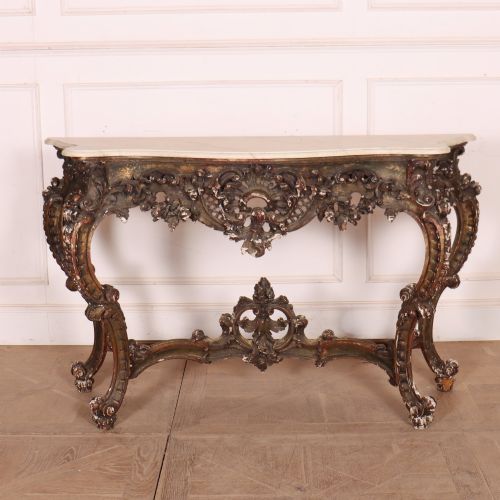
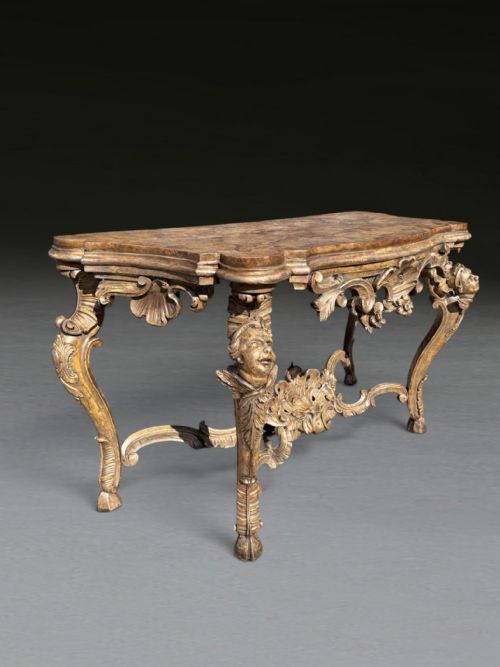
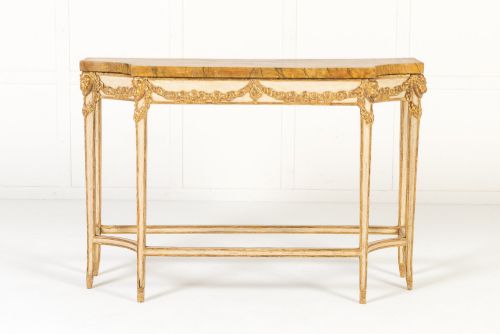
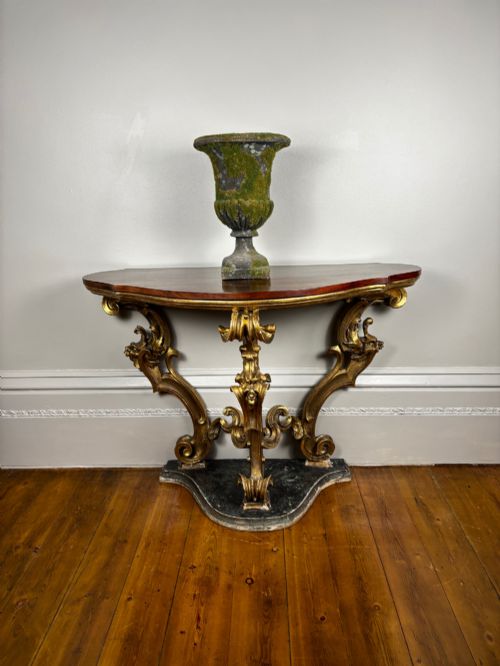
Buyers most frequently encounter nineteenth-century interpretations alongside eighteenth-century originals, spanning French Rococo, Neoclassical, and Victorian revival aesthetics. These pieces typically feature serpentine or shaped marble tops supported by heavily carved and gilded wooden bases.
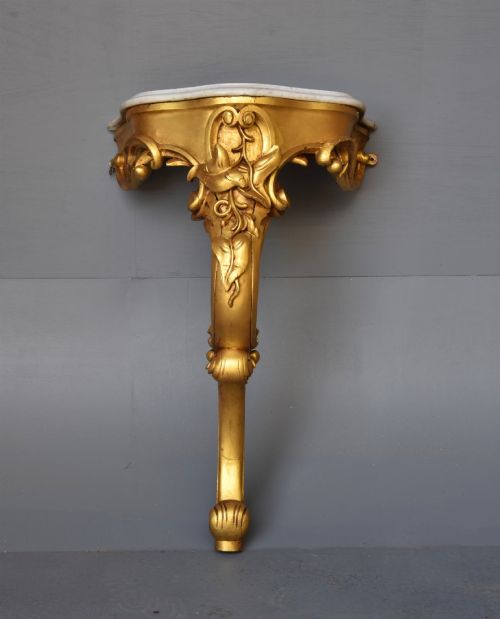
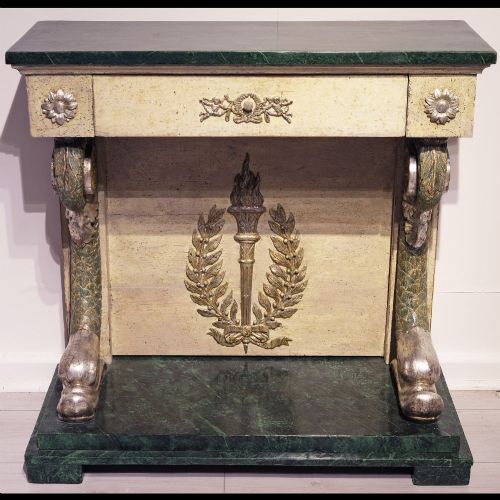
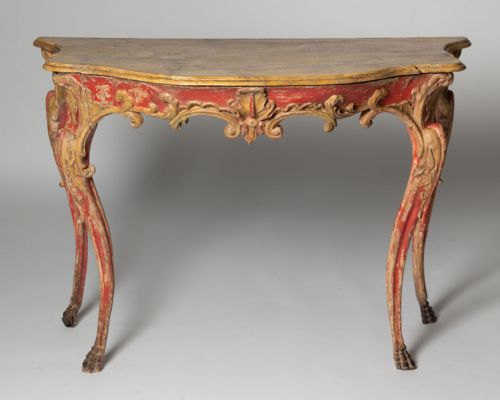
The selection ranges from small compact hall tables to monumental pairs with lion's paw supports, demonstrating the varied scale demanded by period architecture.
Materials and construction
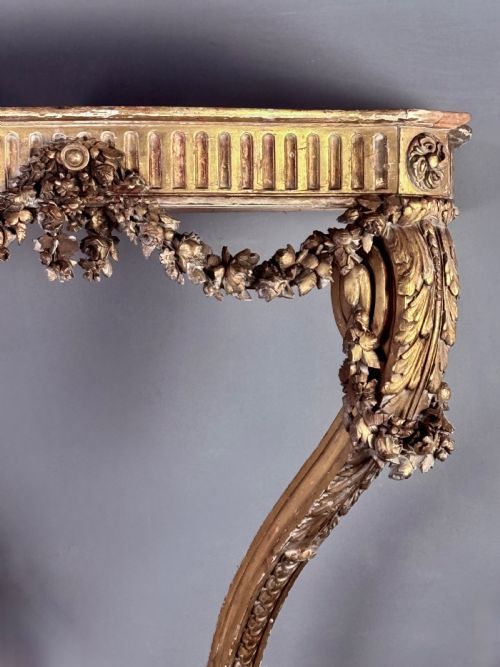
Craftsmen shaped these structures from carved wood, gesso, and wrought iron, applying gold leaf, silver gilt, and paint to create reflective surfaces. Giltwood surfaces require meticulous preparation of the gesso ground before applying thin gold leaf layers.
Heavier elements rely on solid timber foundations, whilst decorative flourishes utilise carved wood and moulded gesso to achieve intricate relief work. Fitted marble tops, including breccia and figured variants, rest upon the wooden subframes to provide durable, polished upper surfaces.
Listings feature items from the 18th century, 19th century, and early 20th century, utilising marble, giltwood, gesso, and gold leaf.
Judging quality
Quality rests in the crispness of the hand-carved relief work and the depth of the gilding on the wood and gesso structure. Finer examples display precise sculptural detail in foliage, scrolls, and figural supports without softening in the contours.
The integration between the fitted marble top and the wooden base distinguishes higher tier pieces, as does the preservation of original gold leaf and paint surfaces over centuries of use.
Felix-Alfred Ternisien
The Gilded Pier Wall Table Glossary
- Giltwood
- Wood covered with a thin layer of gold leaf or powder. This finish defines the reflective character of many period console frames.
- Gesso
- A plaster mixture applied to wood surfaces as a base for gilding or painting. It provides a smooth ground for detailed carving.
- Console table
- A table supported by wall brackets or console legs rather than four independent vertical posts. These forms sit flat against a wall.
- Serpentine
- A curved line with a central convex section flanked by two concave curves. This contour frequently shapes marble tops and wooden aprons.
- Breccia marble
- A composite stone made of broken rock fragments embedded in a fine-grained matrix. It appears often on nineteenth-century Italian tops.
Gilded Pier Wall Table: Frequently Asked Questions
Where do you place a pier table?
These tables belong against a flat wall space, traditionally positioned between two windows beneath a matching pier mirror. This placement reflects natural light into darker rooms and creates a balanced architectural focal point.
In modern settings, they serve equally well in entrance halls or principal reception rooms where floor space permits a shallow wall-mounted furnishing.
How do I identify a French Rococo table?
French Rococo examples display asymmetric scrolling, C-scrolls, and naturalistic floral motifs carved deeply into the giltwood frame. The overall silhouette tends to feature sweeping, organic curves rather than rigid symmetry.
Tables from this design lineage often incorporate serpentine marble tops that echo the fluid contours of the wooden base beneath.
Are these tables designed to be free-standing?
Console tables require wall attachment for absolute stability because their front legs carry the primary vertical load while the rear relies on the wall structure. Historical pier tables were invariably built to anchor against vertical architecture.
Attempting to place one entirely free-standing risks structural instability unless professional wall fixings secure the upper frame.
What is the difference between giltwood and paint and gilt?
Giltwood finishes consist entirely of gold leaf applied over gesso and wood, presenting a continuous metallic sheen across the entire carved structure. Paint and gilt combinations introduce contrasting painted base colours alongside gilded highlights.
Painted surfaces on these tables often utilise soft muted tones or contrasting borders that frame the gilded ornamental carvings.