
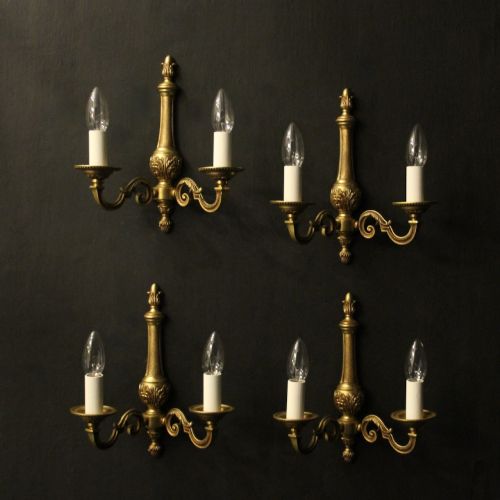
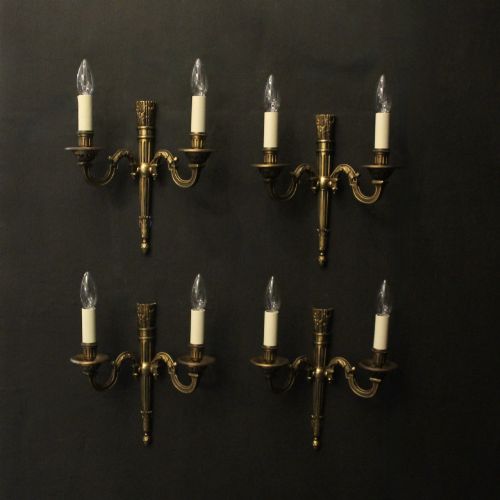
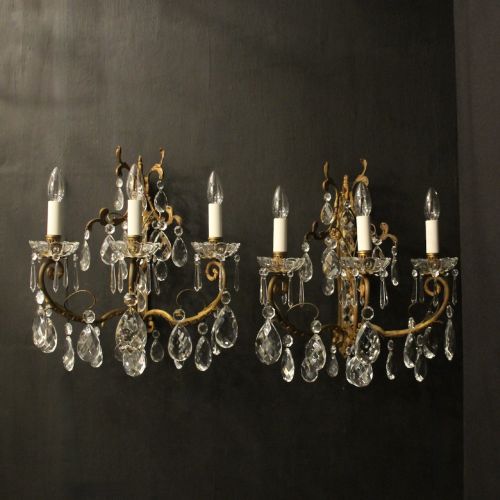
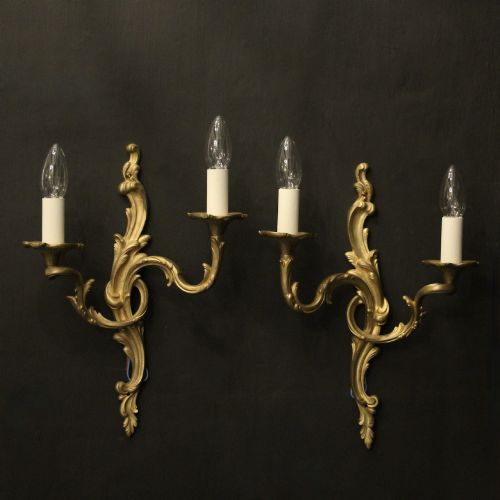


Gilded Metal Wall Sconce
A gilded metal wall sconce brings warm reflected light to a room, using polished metal and glass to brighten dark corners.
Gilded Metal Wall Sconce
A gilded metal wall sconce sits flat against a vertical surface, holding candles or electric bulbs to project illumination outward into a room. These pieces appear most frequently in pairs or larger sets, designed to flank mirrors, doorways or fireplaces for balanced interior lighting.
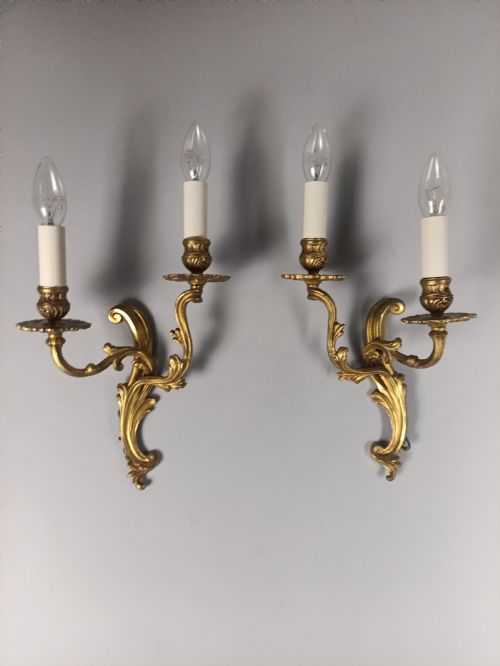
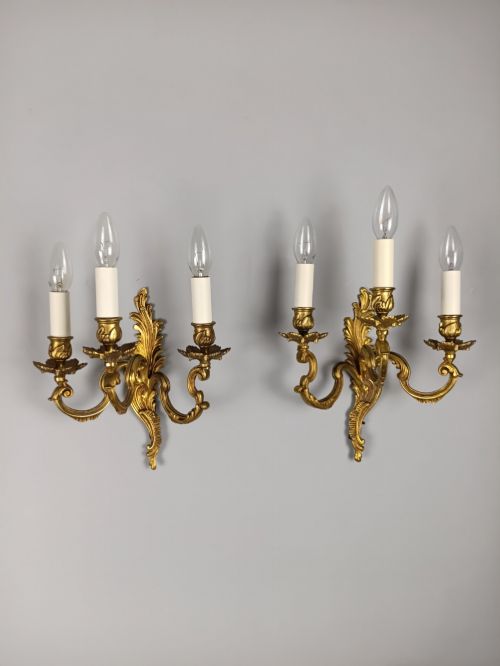
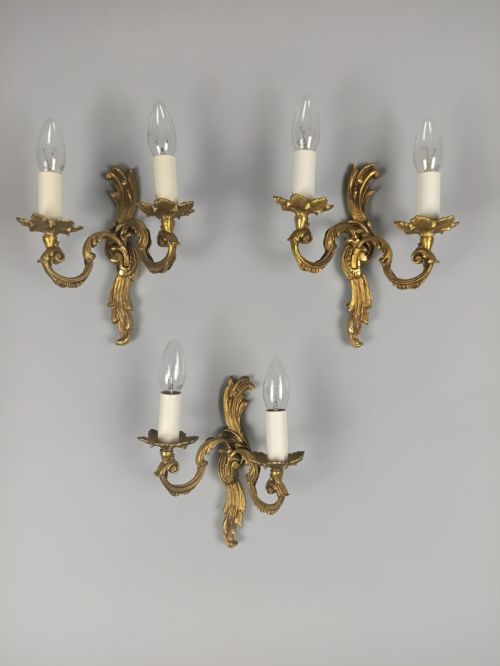
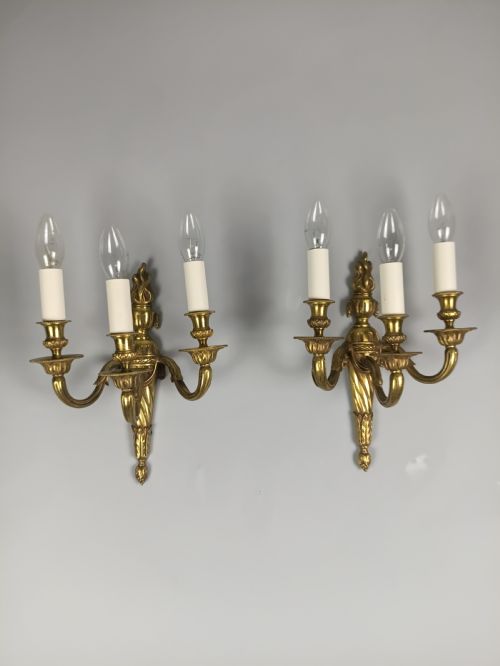
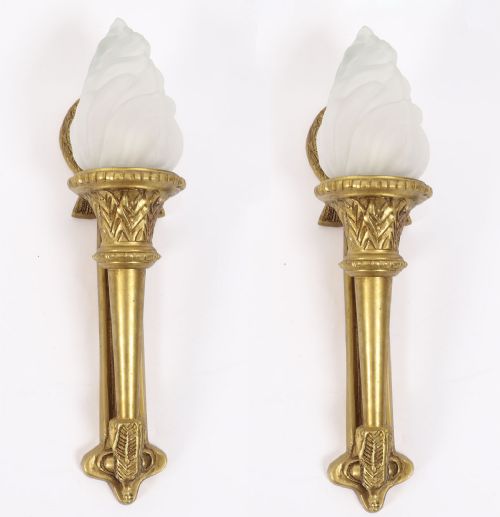
The selections span from the late nineteenth century through the mid-twentieth century, with French workshops providing the majority of the examples. Makers drew heavily on historical idioms, producing pieces in French Rococo, Empire and Louis XVI styles.
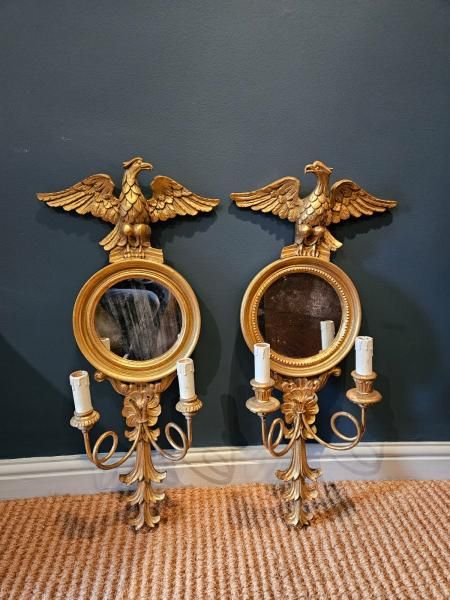
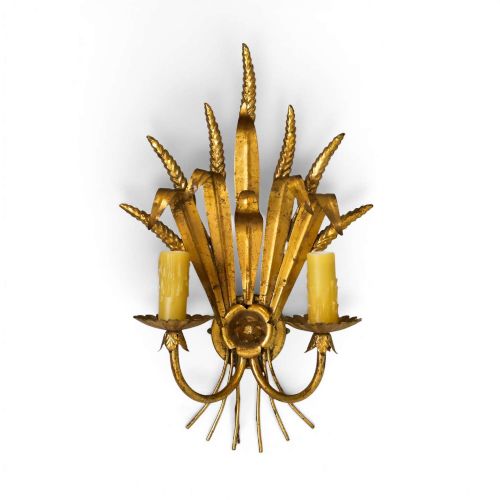
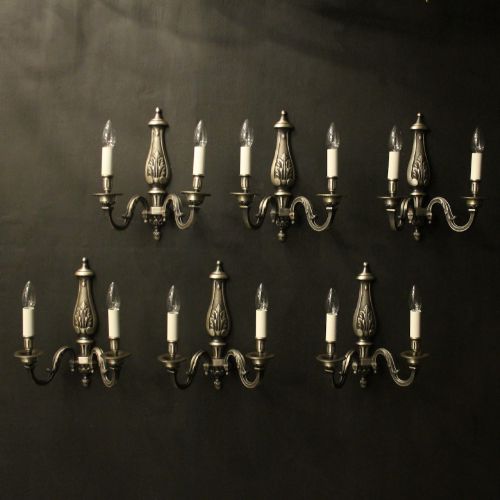
Beyond standard two-arm and three-arm configurations, the listings include variants featuring mirrored backs, crystal drops and toleware floral elements. Metal frames finished in gold leaf, ormolu or silver gilt dominate the available forms.
Materials and Construction
Artisans built these fixtures using cast bronze, brass and iron, frequently applying a layer of gold leaf or mercury gilding to achieve a lustrous metallic surface. Ormolu components provided sharp cast detail on high-status frames, while simpler items relied on pressed sheet brass or painted toleware.
Glass and crystal elements, including drops and mirrored backing plates, were integrated to multiply the flickering light from candles or early electric bulbs. Frames were joined using threaded pins, screws and brazed joints hidden behind decorative scrollwork and acanthus leaves.
Materials across the selection range from cast gilt bronze and ormolu to painted toleware, crystal drops and mirrored glass backing plates.
Evaluating Quality and Craft
The quality of a gilded metal wall sconce rests upon the crispness of the metal casting and the depth of the surface finish. Superior pieces exhibit hand-chased details on bronze and ormolu mounts, where artisans have sharpened foliage, fluting and figural motifs after casting.
Lighter pieces formed from pressed brass or simpler alloys display softer definition and rely entirely on uniform plating rather than layered gilding. The structural integrity of the arms and the weight of the backplate dictate how securely the fixture hangs against the wall under the load of multiple candleholders.
The Gilded Metal Wall Sconce Glossary
- Ormolu
- High-quality gilt bronze produced by applying a mercury and gold amalgam to cast bronze before heating. This technique creates a durable, deep golden surface characteristic of fine French lighting.
- Girandole
- An ornamental branched wall light or sconce featuring a mirrored backplate. The glass mirror reflects the candle flames to increase ambient illumination.
- Toleware
- Painted or lacquered sheet metal used to form decorative floral and foliage elements on lighting fixtures. It offers vibrant colour and organic shaping.
- Giltwood
- Carved wood treated with a thin layer of gold leaf over a prepared gesso ground. It appears on frames designed to match metallic wall fixtures.
- Rococo
- A decorative style characterised by asymmetrical scrollwork, C-scrolls and naturalistic plant motifs. It heavily influenced European metalwork and furniture design.
Gilded Metal Wall Sconce: Frequently Asked Questions
How do I hang a heavy bronze wall sconce?
Heavy cast bronze and brass fixtures require direct attachment to wall studs or the use of appropriate hollow-wall anchors rated for the specific weight. Because many of these pieces project outward on multiple arms, secure mounting prevents the fixture from tilting or pulling away from the plaster.
Electrical connections should be handled by a qualified professional to ensure the internal wiring matches modern safety standards. Many vintage sconces have been rewired for contemporary wall supplies while retaining their original exterior components.
Are these sconces wired for electricity?
The listings include both historical candle-holding fixtures and pieces adapted for electrical operation over the course of the twentieth century. Buyers should inspect the specific description to determine whether a piece requires conversion or arrives ready for wired installation.
Original sockets and wiring are frequently replaced during restoration to comply with current electrical codes. This updating preserves the exterior appearance while ensuring safe daily use in a domestic setting.
How do I clean gilded metal safely?
Dust accumulated on intricate scrollwork and cast foliage should be removed gently using a soft-bristled brush or dry microfiber cloth. Harsh commercial metal cleaners will strip away thin gold leaf or historic gilt surfaces permanently.
Moisture and abrasive chemicals must be kept away from gilded areas to prevent flaking and oxidation of the underlying base metal. Gentle dusting preserves the aged patina that collectors value on nineteenth and twentieth-century pieces.
How can I date an antique wall light?
Dating relies on stylistic markers, manufacturing techniques and the physical evidence of construction methods like cast seams and screw types. Pieces referencing French Empire or Louis XVI styles were often produced in revival periods around nineteen-twenty alongside contemporary designs.
Examining the backplate and mounting hardware reveals whether the piece originates from the nineteenth century or later revival workshops. Maker marks or stamps, when present, provide additional verification of origin and production era.