





Gilded Meiji Pottery
Gilded Meiji pottery brings together intricate ceramic forms and delicate gold leaf ornamentation from late nineteenth and early twentieth century Japan.
Gilded Meiji Pottery
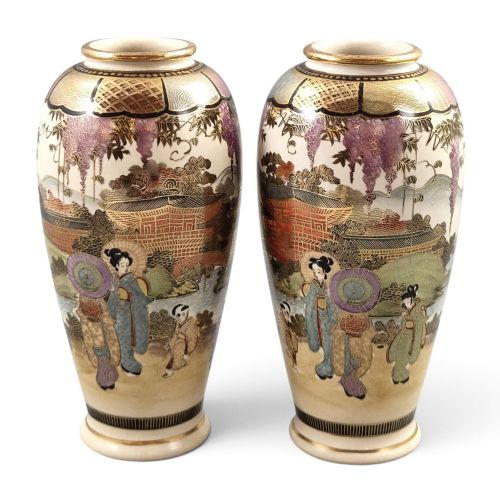
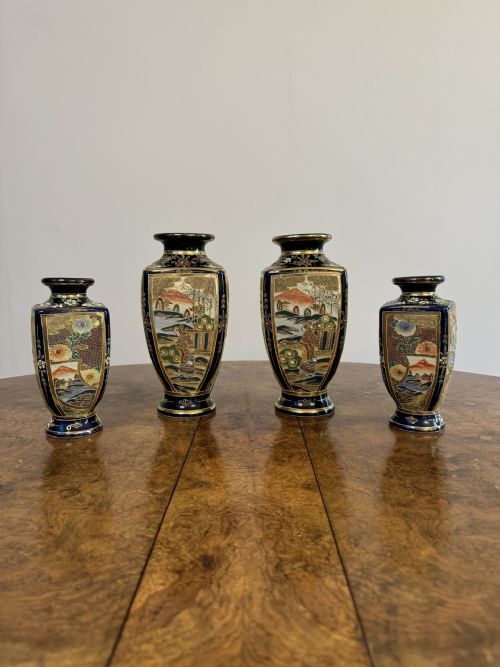
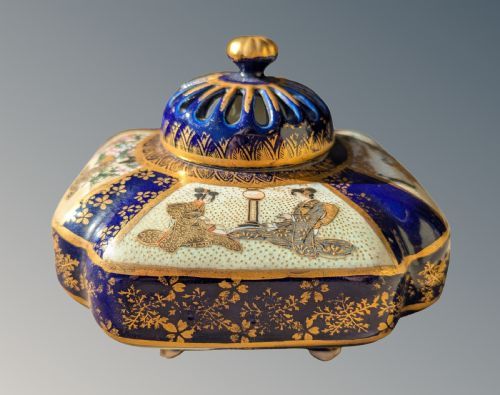
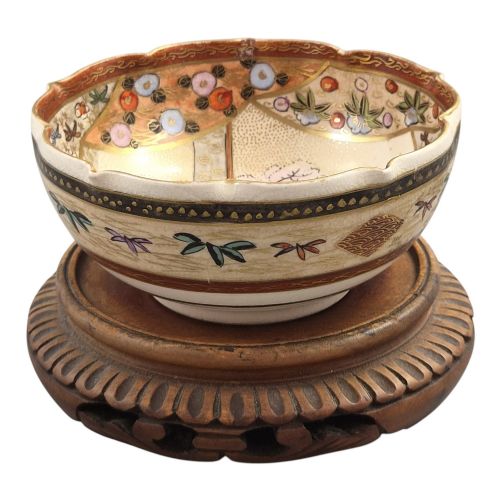
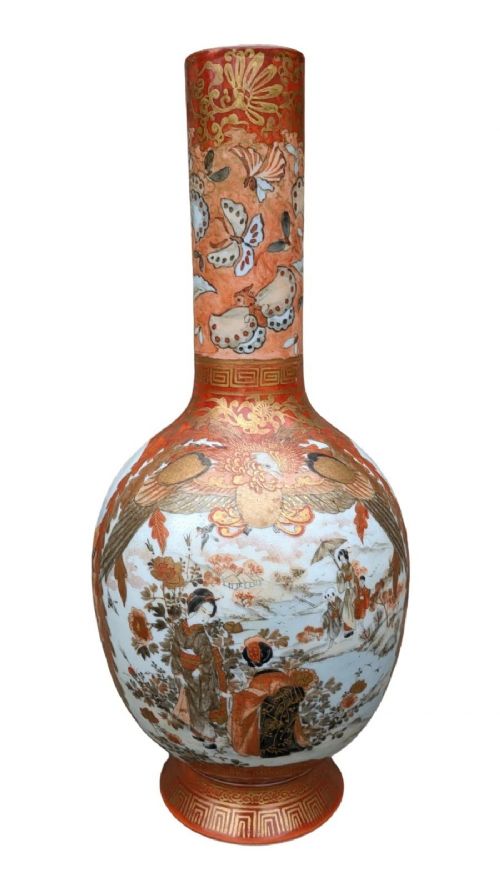
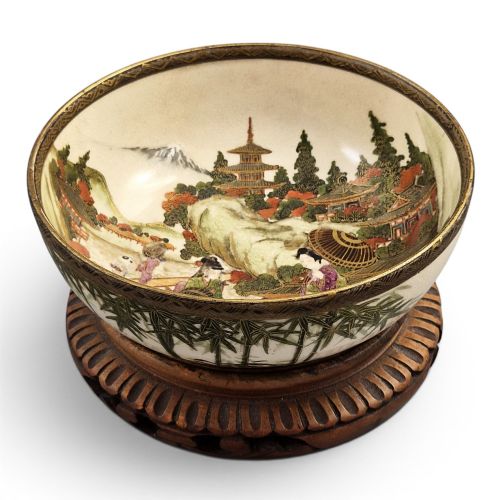
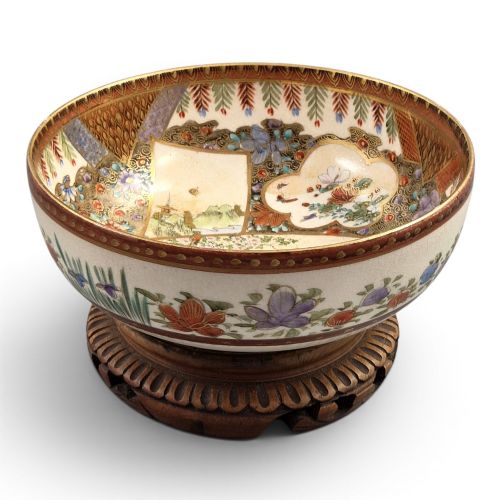
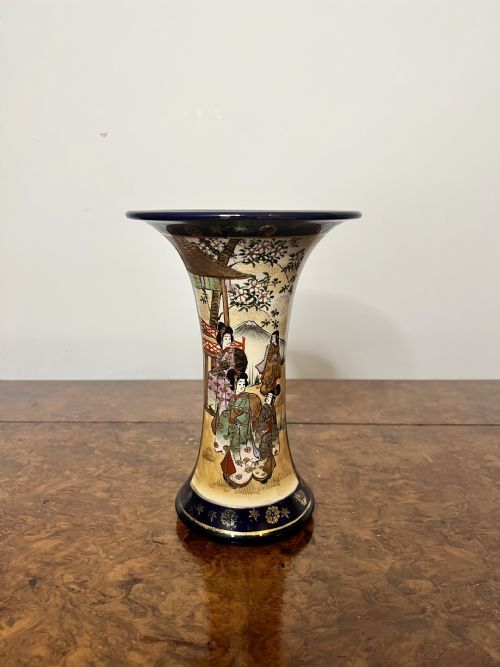
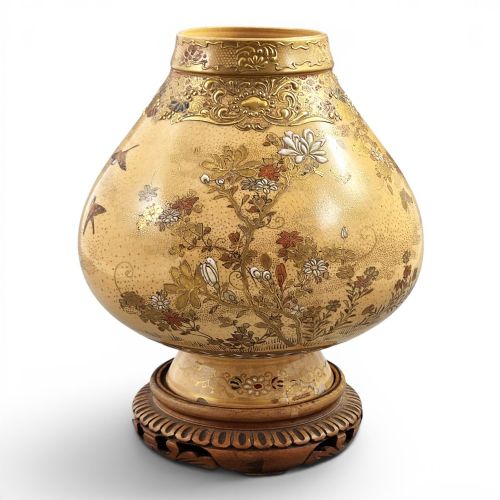
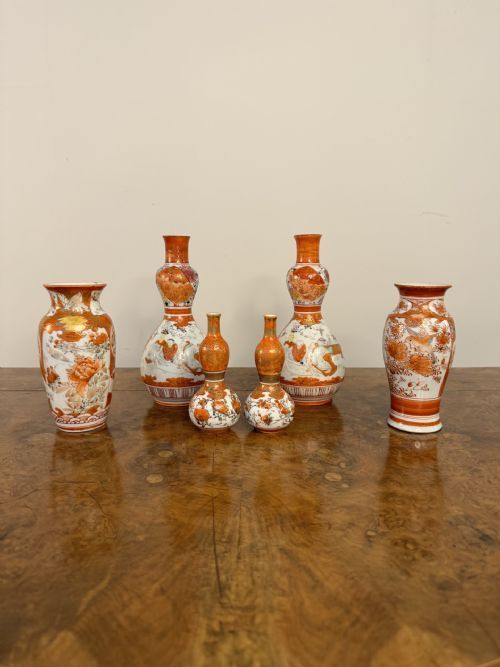
Gilded Meiji pottery encompasses decorative vessels and figures produced during the Meiji period and adjacent transitional years, predominantly taking the form of Satsuma earthenware alongside Kutani and Imari wares. The pieces on this page appear as vases, bowls, tea caddies, incense burners, and table lamps originating from workshops in Kyoto and other centres.
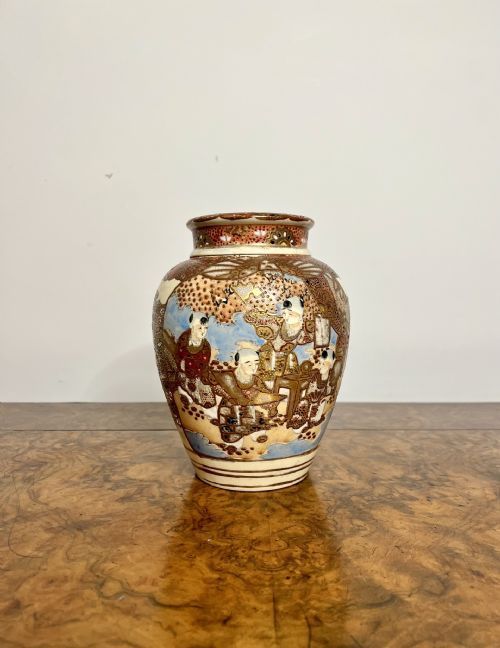
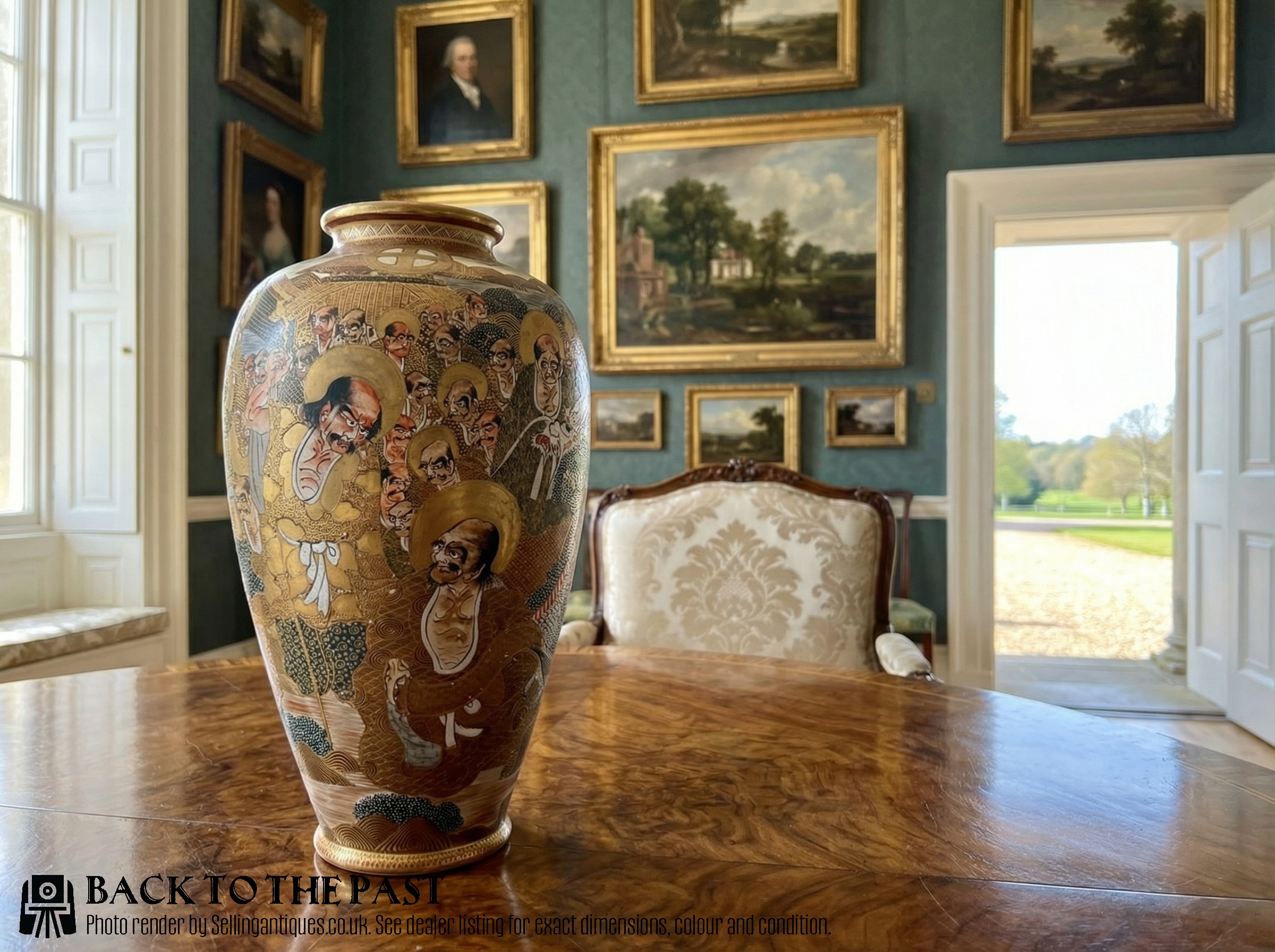
A buyer seeking this phrase encounters earthenware and porcelain bodies richly embellished with enamel, glaze, and gold leaf. Common motifs include court figures, arhats, dragons, and thousand butterfly designs painted onto individual bowls, ginger jars, and garnitures.
Materials and construction
Potters shaped earthenware and porcelain bodies before applying colourful enamel paints and extensive gold leaf or gilt detailing. Many surfaces incorporate raised moriage decoration that adds tactile depth beneath the gilded highlights.
Workshops utilised wood for certain accessory elements while finishing ceramic forms with intricate hand-painted scenes. Signed pieces often bear the marks of notable Kyoto makers and studios pressed or brushed onto the base.
Listings feature items spanning the 1860s through the 1920s, with a strong concentration of pieces from the Meiji period.
Distinguishing craftsmanship
The division between standard production and masterwork output rests upon the precision of the brushwork and the density of the gilding. Finely detailed facial expressions on figures and disciplined spatial composition separate ambitious workshop pieces from simpler decorative items.
The clarity of the kiln glaze and the restraint shown in combining gold leaf with enamel pigments indicate the level of care taken by the maker. Signed pieces from established Kyoto names generally display greater ambition in scale and figurative complexity.
Koshida·Shozan·Kizan·Kinkozan·Kozan·Kinzan·Hotoda·Toshozan·Makuzu Kozan II·Ryuzan·Chosei·Shuzan·Seiko-en Chokei
The Gilded Meiji Pottery Glossary
- Satsuma
- A type of Japanese earthenware featuring a crackled ivory glaze and detailed polychrome enamel and gilt decoration. It originated in Satsuma Province before production spread widely to Kyoto and other regions.
- Kutani
- A style of Japanese porcelain and pottery known for bold enamel palettes and extensive gilt work. Kutani pieces often depict natural scenes and traditional figures.
- Imari
- A traditional style of Japanese porcelain decorated in underglaze blue and overglaze red, green, and gold. These pieces frequently feature complex geometric and floral patterns.
- Moriage
- A ceramic technique using piped slip to create raised, three-dimensional decorative patterns beneath glazes and gilding. This method adds a distinct textured feel to the vessel surface.
- Koro
- A traditional Japanese incense burner typically supported on three legs and fitted with a pierced cover. They appear frequently in Satsuma and porcelain bodies.
- Okimono
- A standalone Japanese display carving or sculptural figure intended for interior decoration. These pieces depict deities, animals, and figures from folklore.
Gilded Meiji Pottery: Frequently Asked Questions
What is Satsuma ware?
Satsuma ware is a specific type of earthenware distinguished by its fine crackled cream-coloured glaze. Artisans painted these surfaces with elaborate enamel scenes enhanced by gold leaf.
Production centres shifted significantly to Kyoto during the Meiji period, where prominent workshops created highly detailed vases, bowls, and okimono for export.
How do I spot a maker mark?
Maker marks on these ceramics typically appear painted or impressed on the underside of the base. They record the name of the artist, studio, or workshop responsible for the piece.
Interpreting these signatures requires consulting specialised reference guides for Meiji period signatures and Kyoto kiln marks.
Where were these pieces made?
Many of the finest examples originated in Kyoto workshops associated with master decorators like Kinkozan. Other pieces emerged from Kutani kilns and various regional production centres across Japan.
Export demand during the late nineteenth century drove workshops to adapt traditional forms for international collectors.
How should I display gilded ceramics?
Display these vessels in stable indoor environments away from direct sunlight to protect the delicate enamel and gold leaf. Placing them on secure surfaces prevents accidental knocks.
Dusting gently with a soft dry brush helps maintain the surface without disturbing the raised moriage details or gilt layers.