

Gilded Marble Top Table
When you search for a gilded marble top table, you are looking at grand console tables, side tables and centre pieces designed with stone surfaces and metallic finishes.
Gilded Marble Top Table
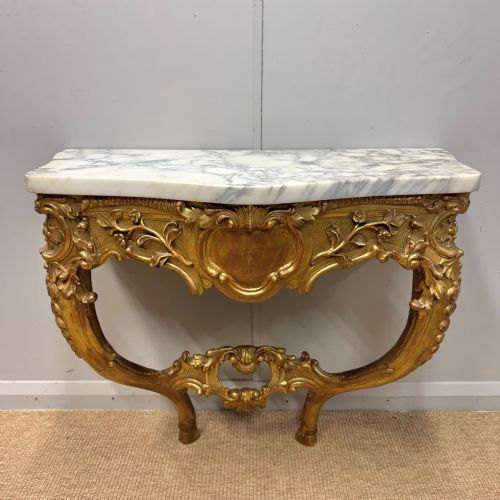
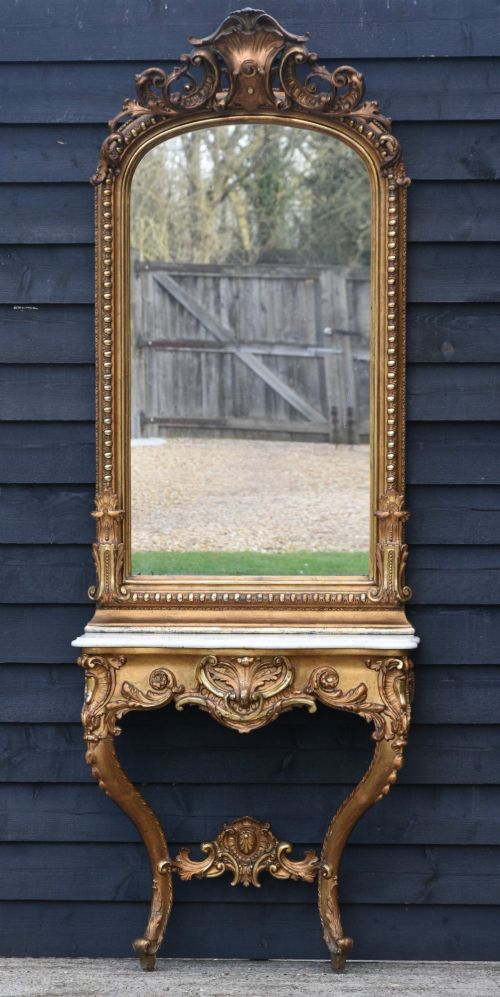
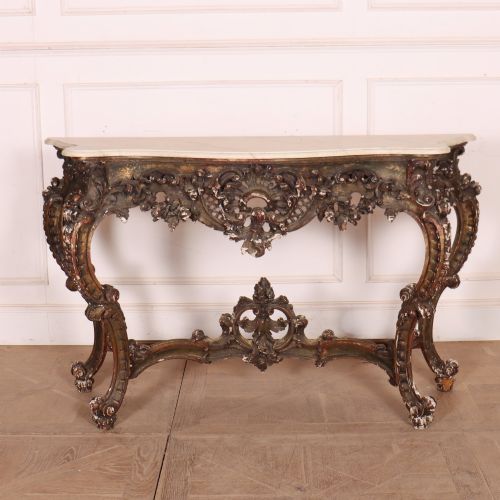
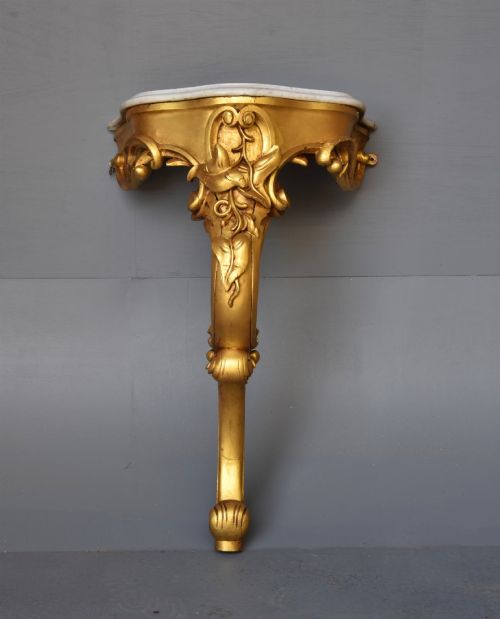
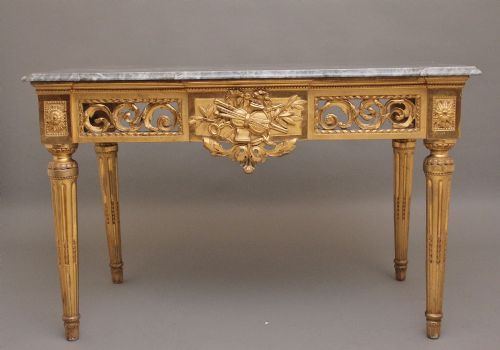
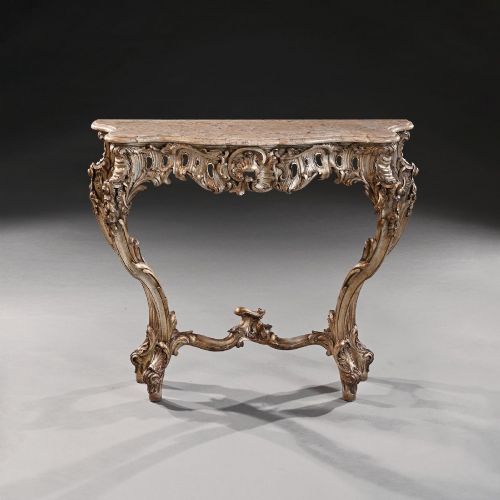
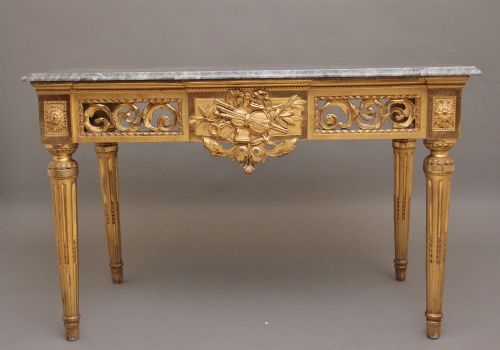
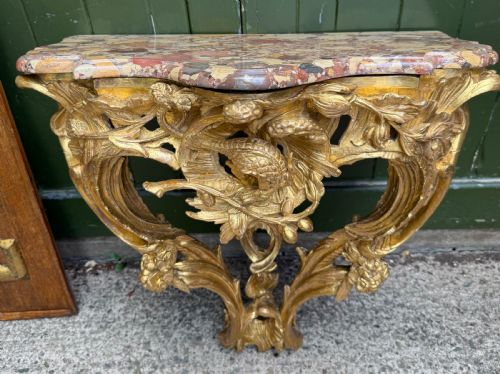
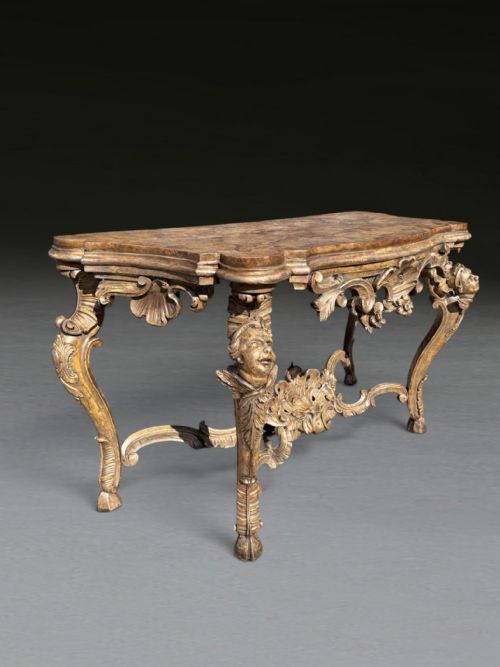
A gilded marble top table most frequently appears in the form of a console table designed to stand against a wall, often paired with a matching pier mirror. These pieces draw heavily on French Rococo Revival, Italian Neoclassical and Louis XVI styles, reflecting centuries of European interior design.
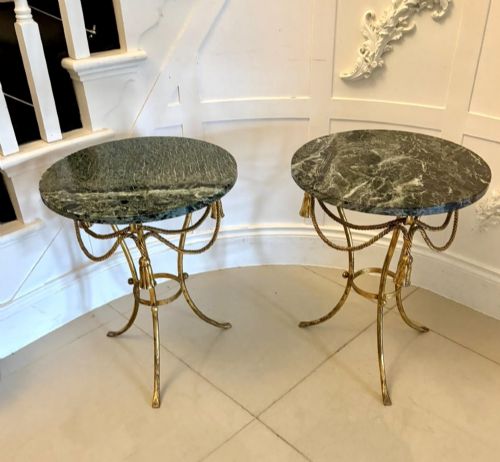
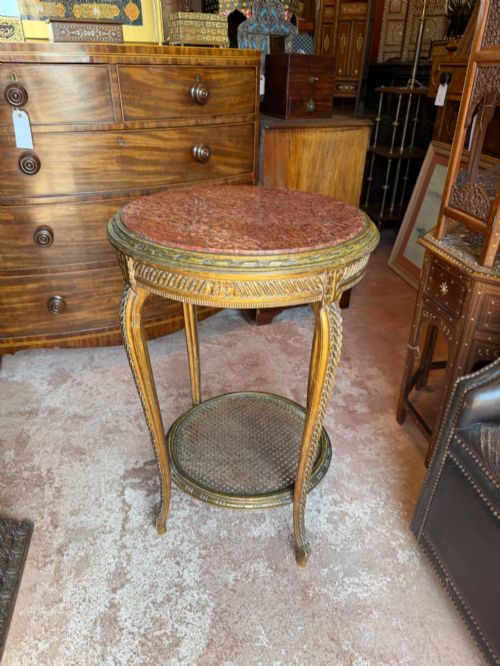
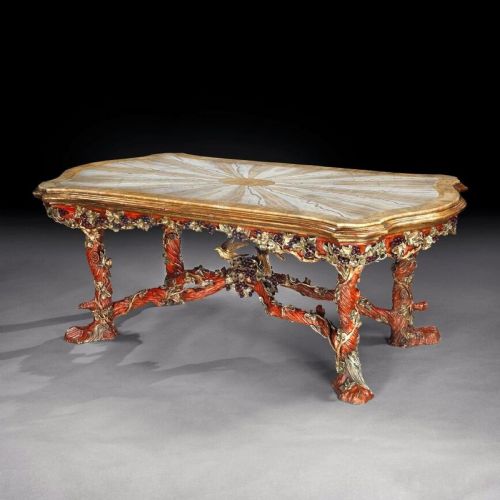
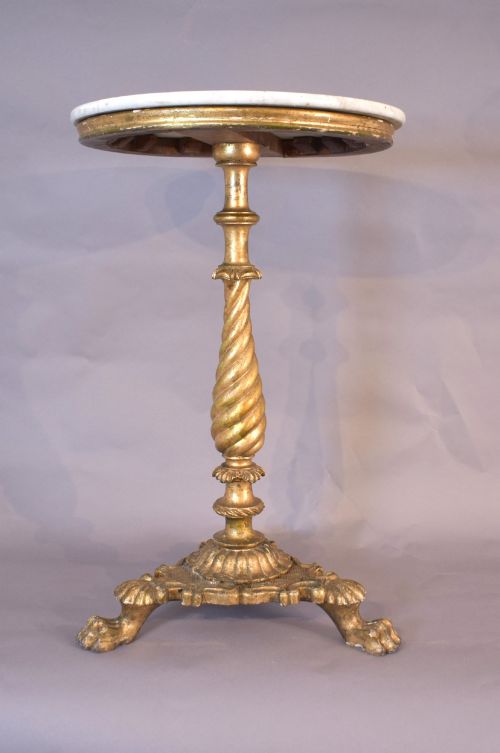
Beyond wall consoles, the selection includes compact side tables, occasional tables, coffee tables, and central gueridons resting on tripod bases or architectural supports. Originating primarily from French and Italian workshops across the eighteenth, nineteenth, and early twentieth centuries, these tables served formal reception rooms and parlours.
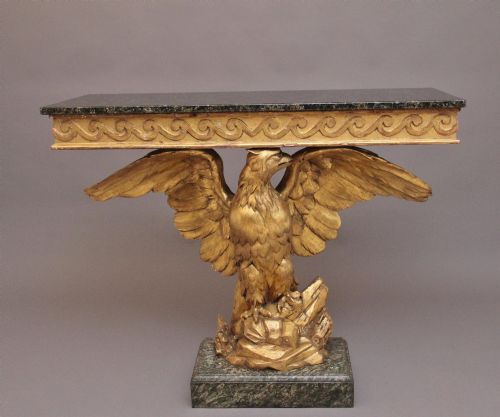
The stone surfaces vary widely in character, ranging from white Carrara and figured breche d'alep to deep green marble and multi-coloured specimen marble tops. Wooden structures beneath the gilding typically employ oak, lime wood, mahogany or carved gesso frameworks.
Materials and Construction
The structural framework relies on solid woods such as oak, lime wood and mahogany, shaped into serpentine fronts, cabriole legs or architectural pilasters. Artisans applied layers of gesso over carved wood to create smooth surfaces suitable for receiving metallic finishes.
Finishes were achieved through the application of gold leaf or silver gilt, sometimes combined with polychrome paint or ormolu mounts in brass and gilt bronze. Heavy stone slabs were then fitted precisely to the carved wooden frames, occasionally secured with brass or gilt metal mountings.
Several tables come with lion's paw supports, proving that historical interior decorators also had a soft spot for majestic feline feet.
Assessing the Craftsmanship
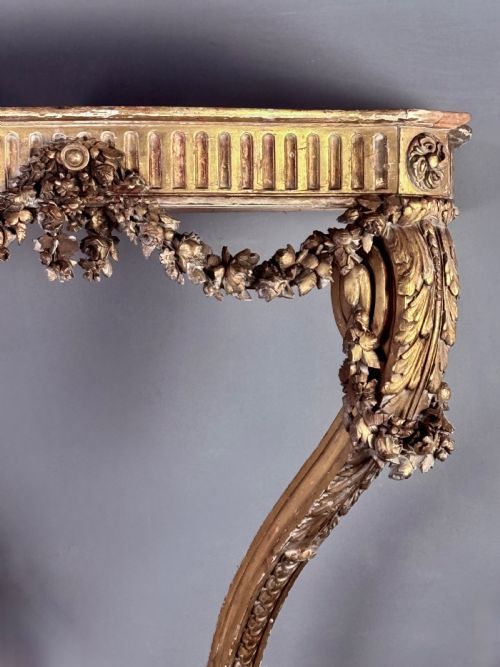
Quality rests primarily in the crispness and depth of the hand-carved wooden ornament beneath the gilding, where fluid acanthus leaves and scrolls separate standard production from master craftsmanship. Heavy, solid marble slabs with complex natural figuring or specialised specimen inlays also indicate higher workshop standards.
The application of the gold leaf and the preservation of the original gesso foundation dictate the visual harmony of the piece over time. Tables that retain their original stone tops paired with deeply carved, structurally sound giltwood frames represent the peak of the maker's art.
Felix-Alfred Ternisien·Amleto Bertoni·Dienst of Paris
The Gilded Marble Top Table Glossary
- Console table
- A table supported by wall brackets or legs, designed to stand flush against a vertical surface. These often feature elaborate carved aprons and heavy stone tops.
- Giltwood
- Timber that has been coated with a thin layer of gold leaf or gold dust over a prepared gesso ground. This technique creates a radiant metallic surface across carved wooden ornamentation.
- Gesso
- A plaster-like mixture applied to wood surfaces as a base for painting and gilding. It allows craftsmen to carve fine, crisp details before applying leaf.
- Gueridon
- A small circular table supported by a central column or tripod base, originating in seventeenth-century France. They frequently feature marble disks and decorative wooden pedestals.
- Ormolu
- Cast bronze mounted elements that have been gilded with gold amalgam. These decorative mounts accent the corners and legs of formal tables.
Gilded Marble Top Table: Frequently Asked Questions
Where should I place a console table?
Console tables are traditionally positioned in entrance halls, living rooms or beneath large wall mirrors to create a focal point. Their shallow depth allows them to sit comfortably against walls without obstructing walkways.
Because these tables were designed to anchor formal interior spaces, pairing them with a matching pier glass or placing them in a principal reception room highlights their architectural proportions.
How do I clean a marble top?
Marble requires gentle maintenance using a soft, damp cloth and neutral pH soap to preserve the polished surface. Acidic substances like citrus juice or vinegar should be kept away from the stone to prevent etching.
Regular dusting with a dry microfiber cloth maintains the natural lustre of the marble without risking abrasion to the surrounding giltwood frame.
Are these tables sturdy enough for daily use?
Most antique console tables rely on wall attachment for complete stability because their heavy stone tops rest upon decorative carved wooden frames. Freestanding variants like centre tables and coffee tables are built with robust multi-legged or pedestal bases to support the weight of the stone.
Placing these pieces away from high-traffic household paths ensures the delicate gilt surfaces remain protected from accidental bumps.
How can I tell the period of a giltwood table?
Dating relies on stylistic clues such as the symmetry of Rococo carvings, the straight tapered legs of Neoclassical pieces, or the revival motifs popular in the Victorian and Edwardian eras. Examining the tool marks on the underlying wood and the wear patterns on the gold leaf provides further clues to its age.
Different periods favoured distinct marble types and joinery techniques, helping to distinguish eighteenth-century originals from later nineteenth-century revivals.