




Gilded Marble Accent Table
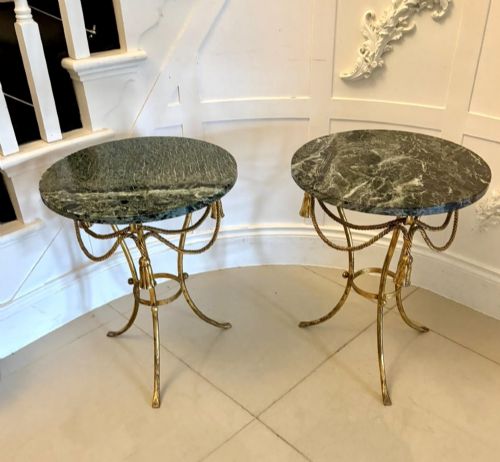
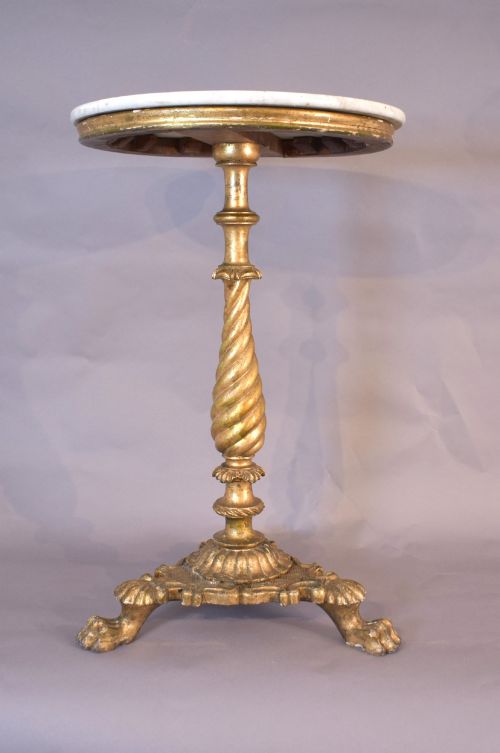
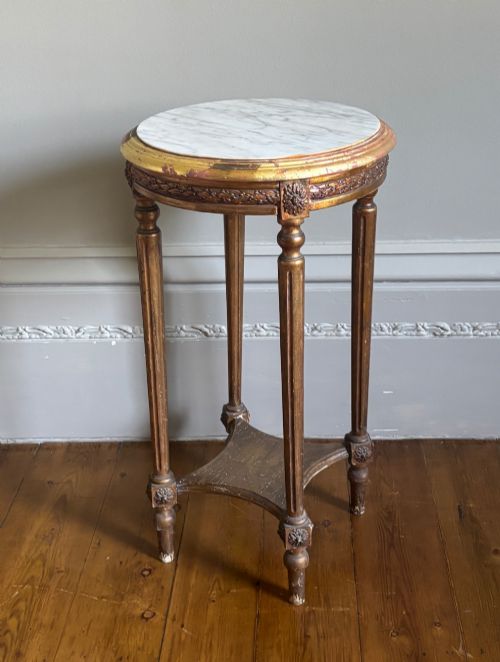
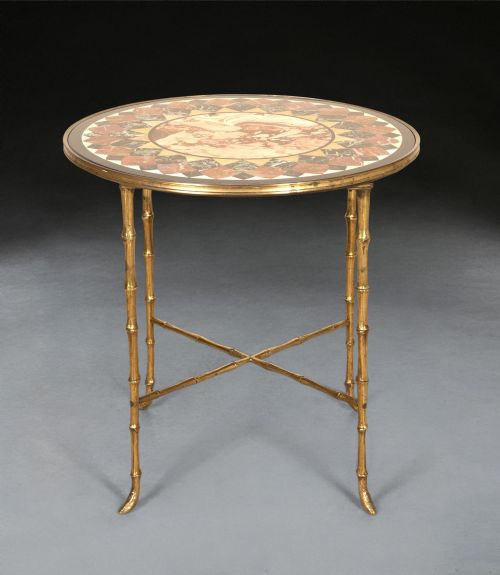
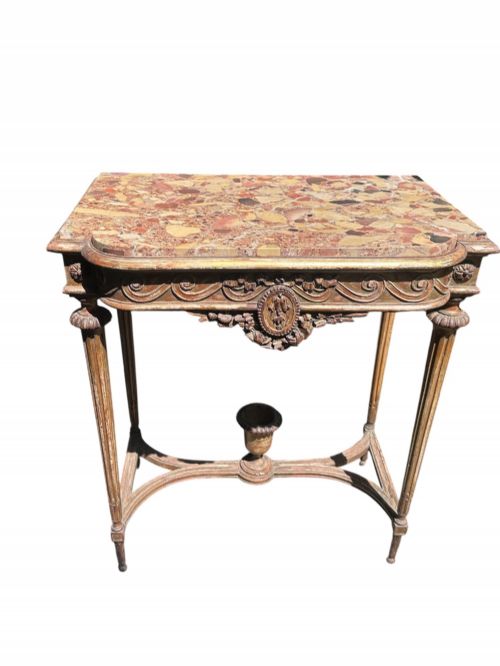
These gilded marble accent tables bring together carved giltwood and stone tops across French and Italian designs.
Gilded Marble Accent Table
A gilded marble accent table combines stone or onyx tops with gilded wooden or metal frames, serving as side tables, occasional tables, centre tables, and pedestals. When searching for a gilded marble accent table, buyers encounter pieces primarily originating from nineteenth-century France and Italy, alongside early twentieth-century interpretations.
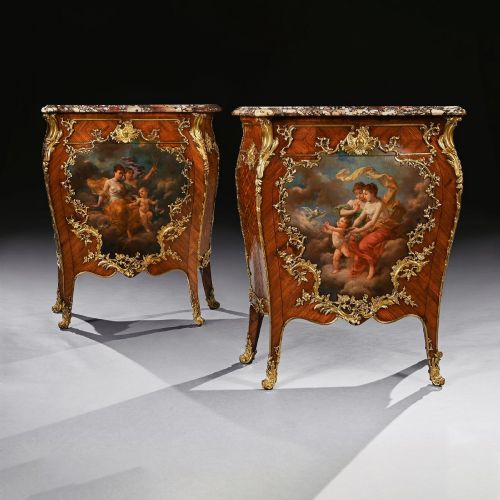
The forms span tripod tables, lamp tables, galleried occasional pieces, and small commodes or stands. French Neoclassical, Louis XVI style, and French Rococo designs predominate, featuring carved giltwood, parcel-gilt painted wood, and gilt bronze mounts.
Materials and Construction
Craftsmen built the structural frames from timbers such as mahogany, walnut, lime wood, and pine, applying gesso layers before adding gold leaf, giltwood, or painted and parcel-gilt finishes. Gilt metal and gilt bronze mounts provide structural reinforcement and decorative detail.
Tops consist of solid marble, verde marble, specimen marble, or onyx, fitted directly to the supporting column, tripod base, or four-legged frame. Decorative flower mouldings, carved swans, and tassel motifs appear carved into the wood or cast in metal.
Some nineteenth-century tables incorporate carved wooden swans alongside their marble tops to catch the eye.
Distinctions in Quality
Quality rests in the depth and crispness of the wood carving, the precision of the gilt application, and the selection of the stone top. Hand-carved giltwood frames with nuanced floral mouldings or figural elements demonstrate greater artisan skill than simpler moulded or painted substitutes.
The weight and type of the marble or onyx top also define the piece, particularly where specimen marbles or matched stone slabs are utilised. Integrated gilt-bronze mounts and signed maker details elevate the standing of individual tables.
Zwiener Jansen Sucesseur
The Gilded Marble Accent Table Glossary
- Giltwood
- Timber coated with gold leaf or gold paint over a prepared gesso ground. This finish creates the characteristic bright metallic surface seen on many historical frames.
- Gueridon
- A small French table, often circular, designed for holding lights, plants, or decorative objects. These tables frequently feature a single central column or a tripod base.
- Verde Marble
- A green-hued decorative stone utilised for table tops. Its mottled appearance incorporates various shades of green and white veining.
- Gesso
- A plaster mixture applied to wood surfaces to provide a smooth base for gilding or painting. It allows intricate carved details to remain sharp beneath metal leaf.
- Vernis Martin
- A type of simulated Japanese varnish developed in France during the eighteenth century. It appears on cabinet furniture and small tables alongside gilt mounts.
Gilded Marble Accent Table: Frequently Asked Questions
What periods do these tables represent?
The listings span from the mid-eighteenth century through the nineteenth century and into the early twentieth century. Styles range from Baroque and Rococo to Regency and Louis XVI.
French and Italian workshops created the majority of these pieces, employing traditional carving, gilding, and stone-fitting techniques characteristic of those eras.
How were these tables used historically?
These small tables functioned as lamp tables, wine tables, and plant stands in formal reception rooms and drawing rooms. Their decorative stone tops provided a durable surface for holding objects.
Occasional tables and centre tables also served as display surfaces for porcelain, bronzes, and other decorative arts within domestic interiors.
What is the difference between onyx and marble tops?
Marble is a metamorphic rock formed from limestone, featuring varied veining and opaque colouration. Onyx is a banded variety of chalcedony with a translucent quality.
Both materials were selected for decorative tables due to their polished surfaces and distinctive natural patterns.
How do I care for a gilded wooden frame?
Gilded surfaces require dusting with a soft, dry cloth to prevent accumulation without abrasive contact. Moisture and cleaning chemicals can damage delicate gold leaf and underlying gesso.
Keeping these tables away from direct sunlight and heat sources preserves the finish on both the wooden frame and the stone top.