
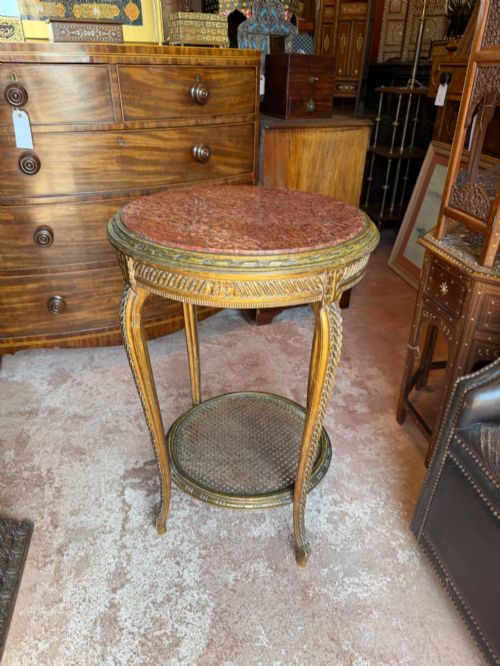
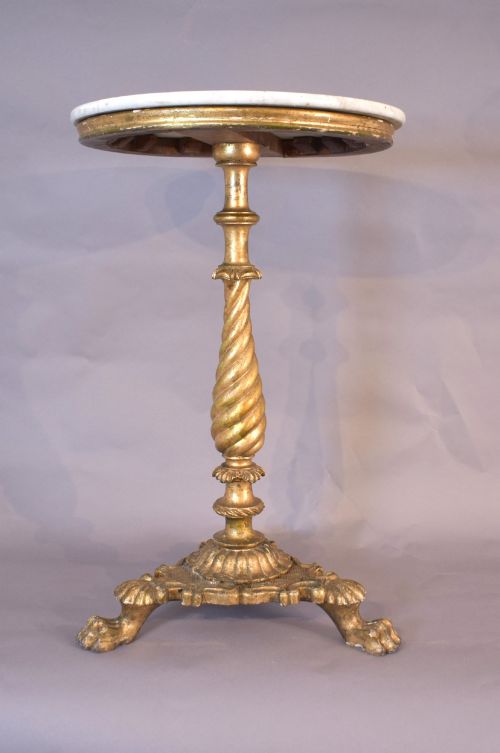
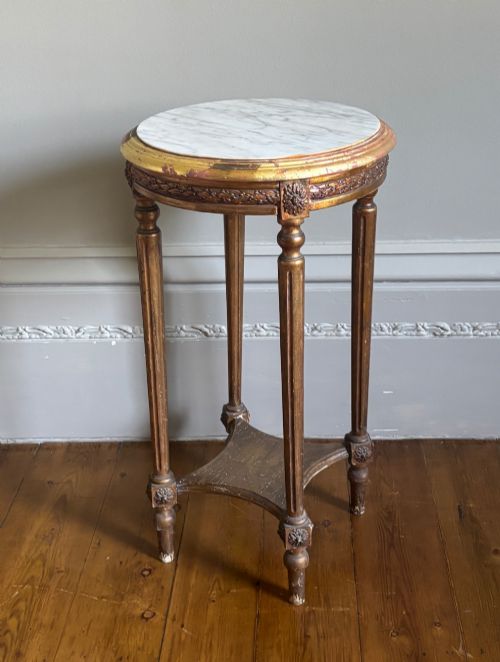


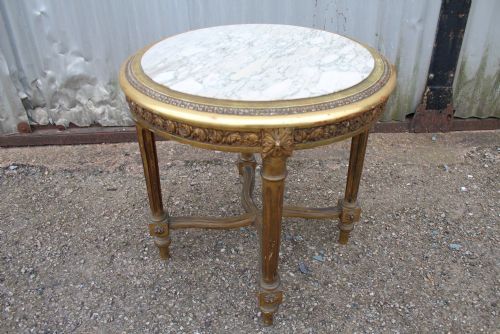

Giltwood Gueridon Table
These giltwood gueridon table pieces bring classical French and Italian presence to a room through carved timber and inset stone.
Giltwood Gueridon Table
A giltwood gueridon table stands as a decorative pedestal support piece, taking the form of a side, occasional, centre, wine, or plant stand table. When you search for a giltwood gueridon table, you encounter round occasional tables, tripod stands, and larger centre pieces originating from nineteenth century France and Italy.
The selections span distinct periods and aesthetics, including Regency, French Empire, Louis XVI style, and Italian Baroque. Examples range from modest nineteenth century tripod stands with marble or onyx tops to substantial Italian lime wood pieces dating back to seventeen fifty.
How they were made
Carvers shaped the primary structures from limewood, mahogany, and general timber before applying gold leaf and giltwood finishes. Many examples incorporate decorative flower mouldings and carved column supports to elevate the architectural silhouette.
Tops frequently feature heavy inset materials, utilising white or porphyry marble and onyx slabs fitted directly into the timber frame. Tripod bases provide stability for these dense stone surfaces while maintaining a slender profile.
Listings feature pieces spanning the eighteenth and nineteenth centuries, incorporating marble, onyx, limewood, and mahogany materials.
What varies in quality
Quality rests upon the crispness of the original wood carving and the depth of the gilding applied to the surface. Finer examples display sharp flower mouldings and well-defined column supports rather than soft, worn plaster preparations.
The selection of the top dictates the character of the piece, with solid onyx and fitted porphyry marble slabs marking a higher standard of production than simpler timber alternatives.
The Giltwood Gueridon Table Glossary
- Gueridon
- A small decorative table on a pillar or tripod support, originating in seventeenth century France. These tables frequently serve as plant stands or occasional display pieces.
- Giltwood
- Timber coated with gold leaf or a gold-coloured metallic finish. This surface treatment reflects light and creates a rich decorative effect.
- Tripod
- A three-legged support base commonly utilised on small round tables. This construction ensures the table remains stable on uneven floors.
- Porphyry
- An igneous rock with large crystals, highly prized for its purple or red decorative appearance. It appears frequently as a luxury tabletop material.
- Baroque
- An ornate artistic style characterised by dramatic ornamentation and vigorous carving. Italian examples from this era often feature limewood structures.
Giltwood Gueridon Table: Frequently Asked Questions
Where should I place a gueridon table?
These tables suit corners, entrance halls, or seating areas where they can function as plant stands or wine tables. Their compact footprints allow them to fit into spaces unsuited to larger furniture.
Because many feature marble or onyx tops, placing them away from heavy foot traffic protects the stone edges from accidental impacts while showcasing the gilt finish.
How do I clean a giltwood frame?
Dust giltwood surfaces gently with a dry, soft brush to prevent damage to the delicate gold leaf layer. Avoid liquid cleaners and chemical sprays, which can strip the historical finish.
For marble or onyx tabletops, use a damp cloth followed by immediate drying to remove marks without exposing the surrounding gilt wood to moisture.
Are these tables sturdy enough for daily use?
Tripod and pedestal tables provide stable platforms for lamps, plants, and decorative objects, though their slender legs require sensible placement. They function best as occasional or side tables rather than heavy-duty work surfaces.
Heavier centre tables with solid stone tops offer greater stability due to their increased mass and robust column supports.
How do I identify a French Empire style table?
French Empire pieces typically display classical architectural motifs, formal symmetry, and strong column supports reflecting neoclassical design. The influence of nineteenth century French workshops remains prominent in these silhouettes.
Details such as gilt wood finishes and decorative flower mouldings help distinguish Empire and Louis XVI revival pieces from earlier Italian Baroque works.