



Gilded Leg Footstool
These gilded leg footstool examples combine carved frames and plush textiles to offer decorative seating throughout 19th-century and Edwardian interiors.
Gilded Leg Footstool
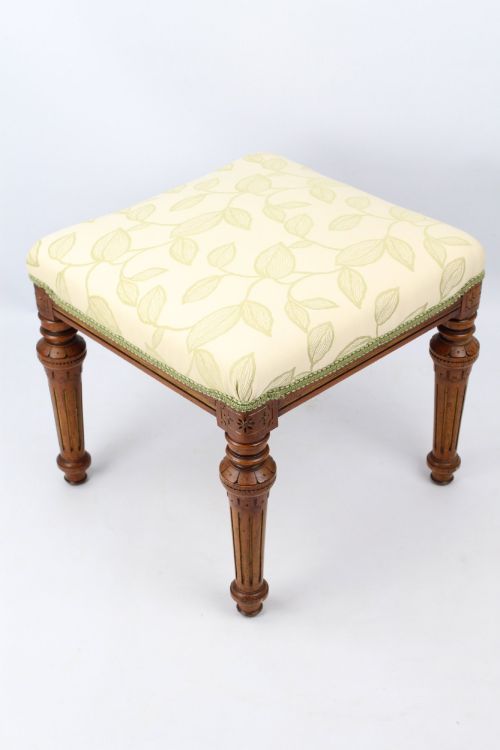
A gilded leg footstool is a low seat designed to support the feet or serve as a compact occasional stool, distinguished by metallic surface treatments on the base. You encounter pieces spanning the Regency period, the Victorian era, and the Edwardian epoch, taking forms from simple footstools to X-frame curule models.
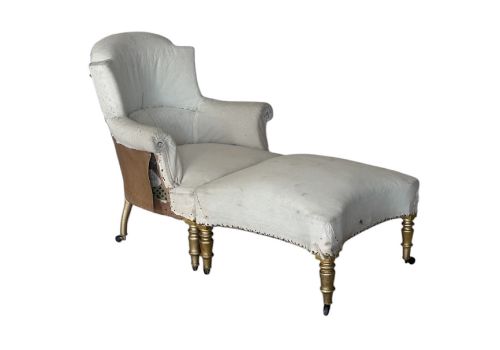
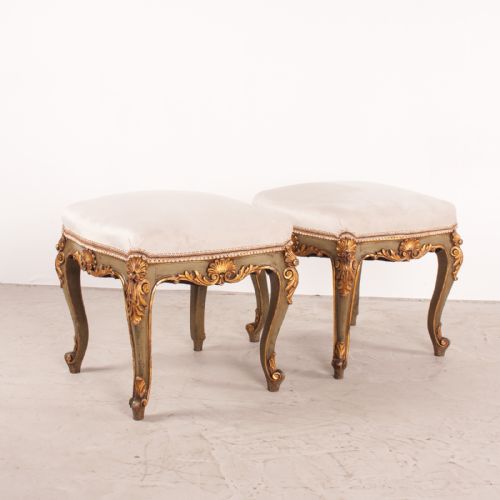
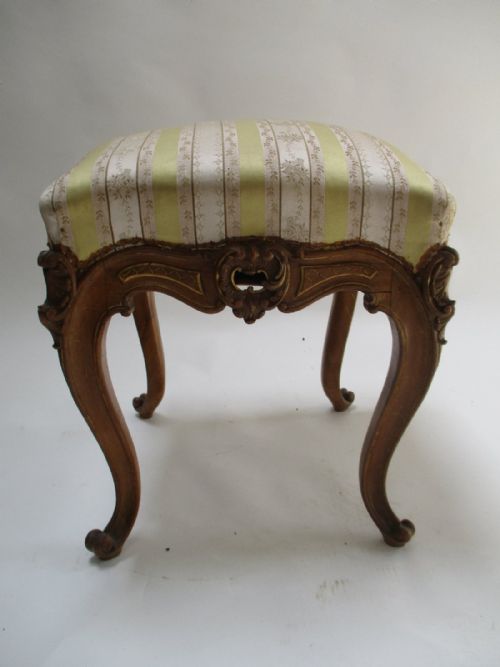
The selection includes matched pairs and individual stools, alongside related seating forms such as dressing table stools and larger companion pieces to armchairs. These items frequently display French styling, Continental Rococo curves, or Neoclassical symmetry.
Origins stretch across British and Continental workshops, reflecting regional preferences in upholstery and carving depth. The common thread remains the gilded wooden support beneath textile surfaces.
Materials and construction methods
Frames are constructed from solid timbers including oak, walnut, and general carved wood, shaped into cabriole legs, curved X-frames, or straight supports. Craftsmen applied gesso as a smooth base layer before adhering gold leaf or applying liquid gilt finishes.
Upholstery relies on traditional textiles, incorporating velvet, general fabric, and black lacquer finishes seen in specific Edwardian interpretations. Brass accents occasionally appear as structural highlights or hardware details on the wooden frames.
Gilded Leg Footstool Retail Price Guide 2026
Typical asking prices for gilded leg footstool among the pieces listed under this phrase on Sellingantiques today, from the lower quarter to the upper quarter. They describe what is for sale here now, not the wider market.
Judging quality and craftsmanship
Quality rests in the crispness of the wood carving and the depth of the gesso preparation beneath the gold leaf. Finer examples show hand-carved detail with sharp relief, whereas simpler pieces rely on plain turned or moulded wooden legs.
The integrity of the gilded surface and the authenticity of the period upholstery materials dictate desirability. Maker signatures or stamps on the wooden frame elevate the standing of a piece significantly.
LOIDRAULT FRERES PARIS·Miles & Edwards
The Gilded Leg Footstool Glossary
- Giltwood
- Wood that has been coated with gold leaf or powder over a prepared gesso ground. This technique creates a luminous metallic surface that defines the legs of these stools.
- Gesso
- A plaster mixture applied to wood frames to provide a smooth base for gilding. It allows carvers to achieve sharp decorative details before the gold leaf is laid.
- Curule stool
- An ancient Roman shape featuring intersecting curved legs forming an X-frame. This classic form appears in Regency and later 19th-century interpretations.
- Rococo Revival
- A 19th-century style marked by asymmetrical C-scrolls, naturalistic shell motifs, and exuberant curves. It heavily influences the carved wooden frames of many Continental stools.
- Chinoiserie
- European decorative style reflecting Chinese artistic motifs, often seen in black lacquered finishes on Edwardian furniture. It introduces exotic painted scenes to low stool designs.
Gilded Leg Footstool: Frequently Asked Questions
What is a gilded leg footstool?
A gilded leg footstool is a small seat featuring metallic gold leaf or painted gilt finishes on its wooden supports, paired with upholstered upper surfaces. These pieces function both as functional foot rests and decorative low seating.
The selections available span diverse historical periods including the Regency era, Victorian decades, and Edwardian times, offering various revival styles.
How do I date a footstool?
Dating relies on stylistic markers such as Regency X-frames, Victorian gilt oak construction, or Edwardian black lacquered finishes. Examining the underlying wood and carving techniques helps align the piece with its era.
Makers' stamps and paper labels provide definitive dates when present on the wooden frame.
Were these stools used daily?
Footstools served primarily in formal sitting rooms and dressing chambers to support the feet of seated occupants. They were also pulled out as casual extra seating when rooms were filled with guests.
Sturdier frames allowed them to endure regular domestic use alongside matching armchairs and duchesse brisée suites.
How do I care for giltwood?
Giltwood requires gentle dusting with a soft, dry cloth to prevent abrasion of the thin gold leaf layer. Moisture and chemical polishes must be avoided to protect the underlying gesso and metal.
Keeping the stool away from direct sunlight and excessive humidity preserves both the wooden structure and the fabric upholstery.