
Gilded Frame Wall Artwork
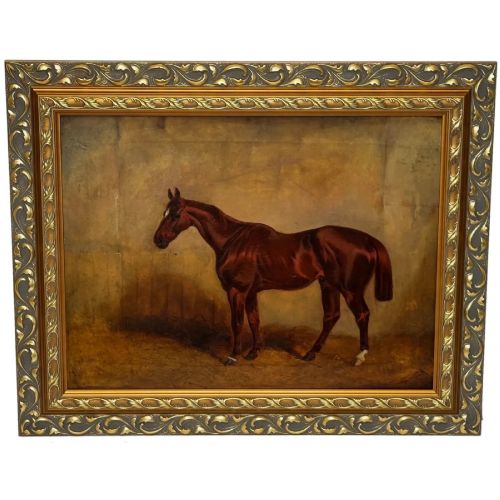
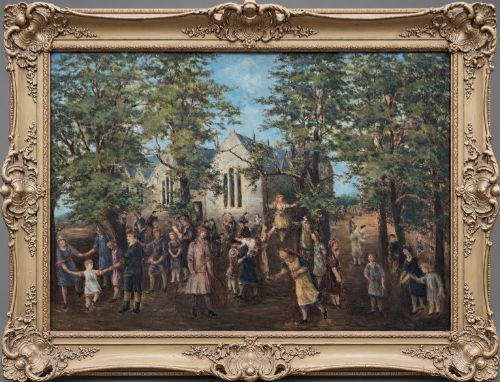
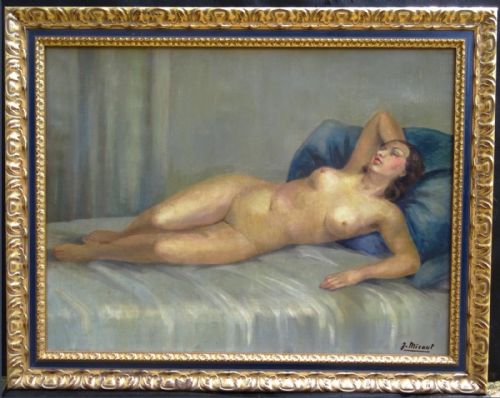
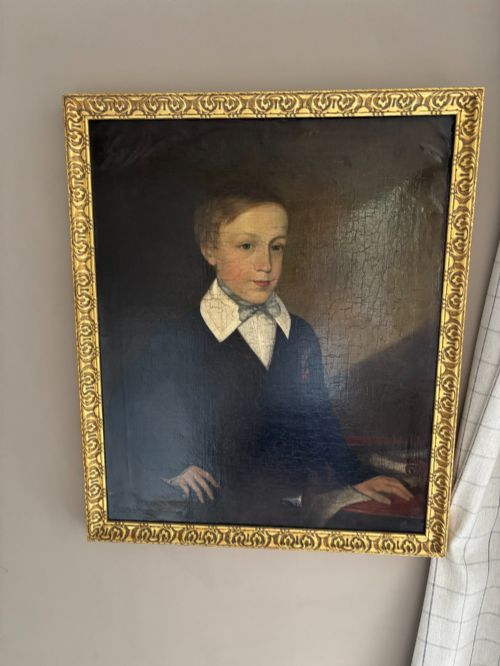
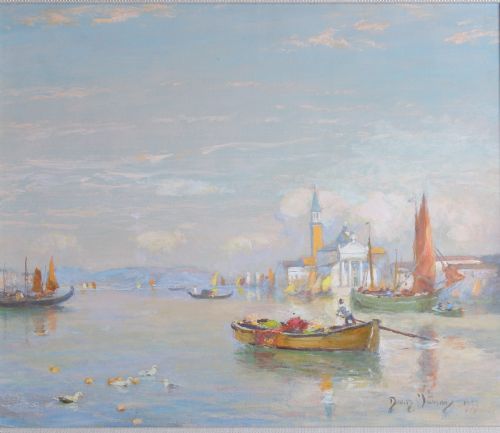
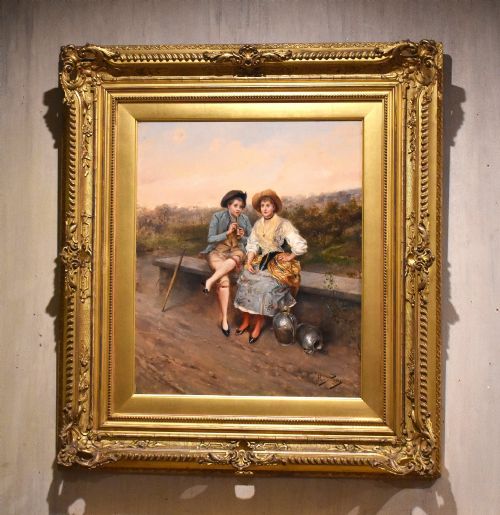
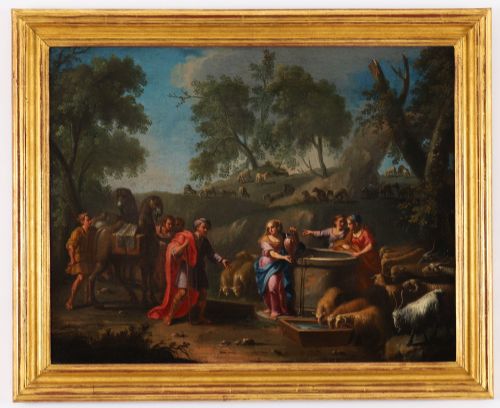
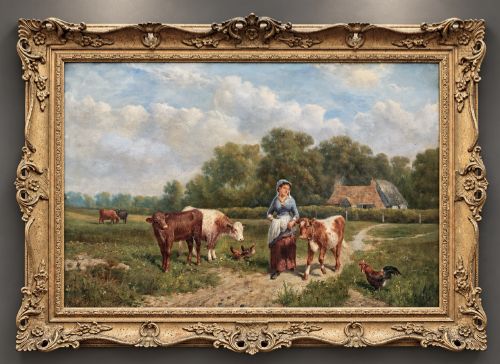
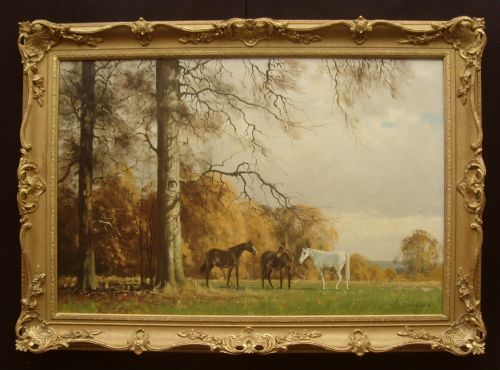
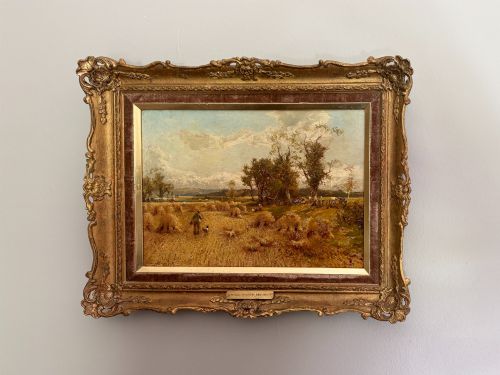
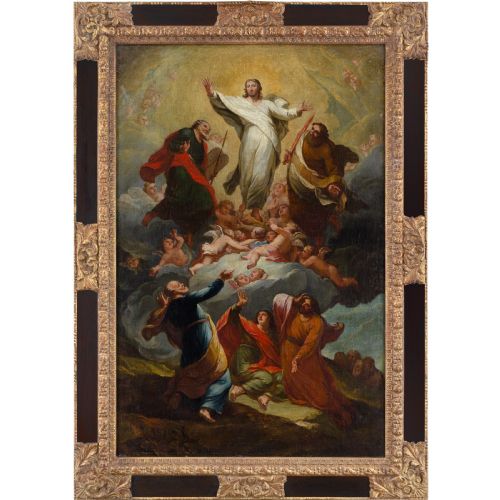
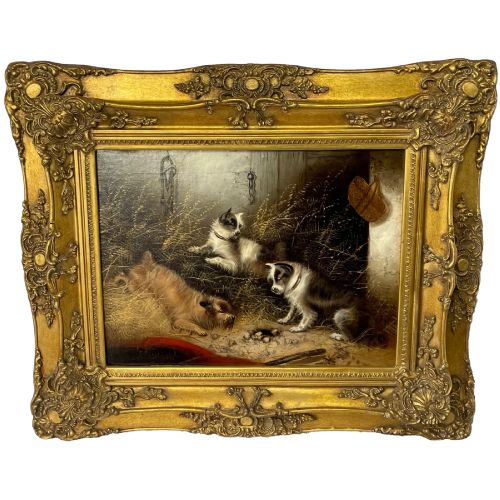
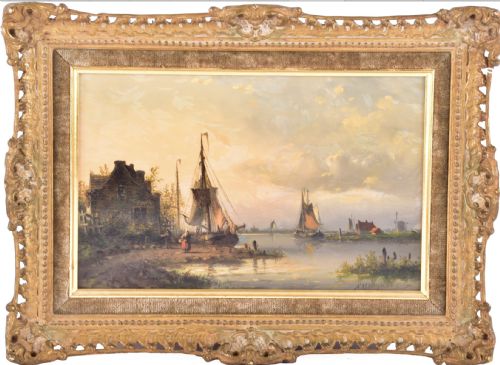
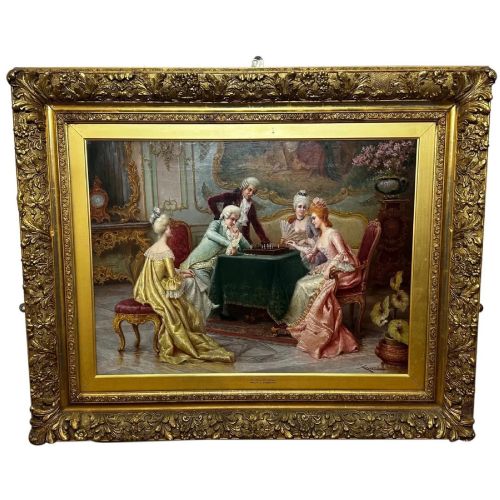
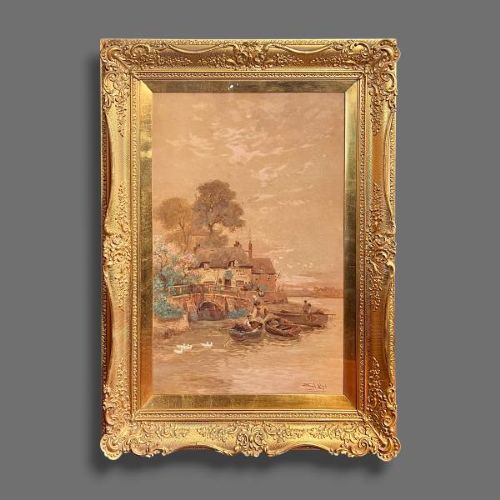
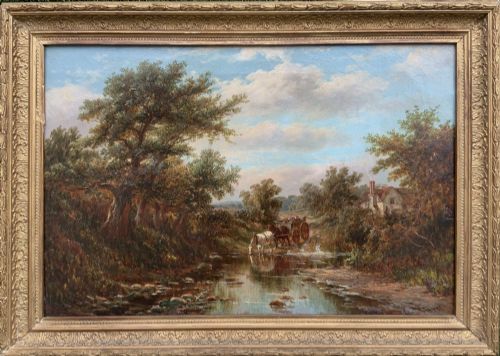
Gilded frame wall artwork brings together historic portraiture, landscape scenes and floral still lifes housed in luminous gold leaf and carved wood enclosures.
Gilded Frame Wall Artwork
Gilded frame wall artwork encompasses historical oil paintings, pastels, watercolours and engravings enclosed within ornate or understated metallic borders. When exploring gilded frame wall artwork, buyers encounter pieces spanning from the seventeenth century through to the mid-twentieth century, with nineteenth-century and eighteenth-century examples appearing frequently.
The subjects range from formal aristocratic portraits and classical mythological scenes to romantic landscapes, village harbours and botanical studies. These works reflect stylistic shifts from Baroque and French Rococo opulence to Georgian restraint, Victorian narrative and Dutch Golden Age floral traditions.
Materials and Construction
The physical objects rely on traditional supports such as canvas, wood panels, paper and board, rendered in oil paint, pastel or printing techniques. Canvases are stretched over wooden frames and secured within surrounds constructed from timber, which are subsequently coated in gesso and finished with gold leaf or metallic gilt.
Framing techniques often involve hand-carved wooden profiles or moulded gesso applied to a wooden base, creating deep cavetto sections and decorative corners that catch natural light. Pigments used in the artworks themselves, from foundational oil paints to delicate pastels, demonstrate period-specific colour palettes and binder formulations.
Listings incorporate works from the seventeenth century through to the 1960s, executed in oil paint, pastel, and print formats.
Evaluating Quality and Execution
Quality in these pieces rests upon the finesse of the brushwork, the anatomical accuracy of portraiture, and the depth achieved in landscape or still life compositions. Superior examples demonstrate confident draftsmanship and sophisticated handling of light and shadow, distinguishing professional studio output from more derivative works.
The integrity of the surrounding mount also dictates overall excellence, with hand-carved giltwood surrounds showing superior craftsmanship compared to later replacements or heavily restored mouldings. The harmony between the artwork and its enclosure remains an important indicator of period cohesion.
Charles Antoine Coypel·Sir Joshua Reynolds·Richard Sebastian Bond·Joseph Clover·Jean Mariette·Georges de La Tour·Sir Peter Lely·Emily Eyres·Anthony Van Dyck·Sir Godfrey Kneller·Constantyn Netscher·Pieter Borsseler·Thomas Barker of Bath·David Bates
The Gilded Frame Wall Artwork Glossary
- Giltwood
- Wood that has been coated with a thin layer of gold leaf or metallic powder over a prepared gesso base. This material gives decorative mouldings their characteristic warm, reflective metallic surface.
- Gesso
- A plaster-like mixture applied to wooden frames or panels to create a smooth surface for gilding or painting. It allows carvers to shape intricate relief details before applying gold leaf.
- Mezzotint
- A printmaking process of the intaglio family where the plate is roughened to produce rich dark tones and subtle gradations of light. It was widely utilised for translating oil paintings into popular portrait prints.
- Pastel
- A dry painting medium consisting of powdered pigment combined with a binder. Pastels are typically worked on paper to produce portraits and studies with a soft, matte texture.
Gilded Frame Wall Artwork: Frequently Asked Questions
How do I identify the period of a gilded frame?
Period identification relies on examining the construction methods of the wooden substrate and the profile of the mouldings. Earlier seventeenth and eighteenth-century frames typically feature hand-carved timber elements with layered gesso, while later nineteenth-century examples often employ more standardised cast ornamentation.
Matching the stylistic cues of the frame with the painting technique and stretcher construction helps confirm whether the pairing is original. Differences in corner joints and the composition of the underlying gesso provide further clues to the date of manufacture.
What subjects are most common in these artworks?
Portraits of nobility, clergy and gentlefolk dominate the earlier centuries, reflecting the patronage systems of the time. Landscapes, pastoral scenes and still lifes featuring flowers or fruit gained significant popularity during the nineteenth and early twentieth centuries.
Religious and classical mythological narratives also appear frequently among works originating from academic or continental European traditions. Each subject category reflects the prevailing aesthetic priorities of its specific era.
How should I care for an antique oil painting?
Antique oil paintings require stable environmental conditions away from direct sunlight, excessive heat sources and sudden humidity fluctuations. Keeping the hanging area well-ventilated prevents moisture accumulation behind the canvas or panel.
Dusting should be performed gently using a soft, dry brush without applying cleaning solutions or water to the painted surface. Professional conservation is recommended if structural stabilisation or surface cleaning becomes necessary.
Are these artworks supplied ready to hang?
Most pieces arrive equipped with appropriate hanging wire or brackets secured to the structural frame members. However, the weight of monumental canvases and dense giltwood surrounds requires heavy-duty wall fixings to ensure secure installation.
Checking the load-bearing capacity of the wall and the condition of the hanging cord before mounting is essential for safety. Some collectors prefer to consult professional installers for particularly large or heavy works.