

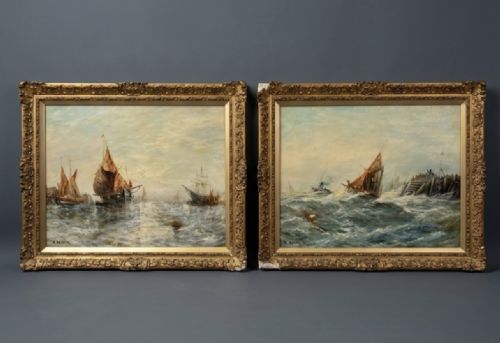
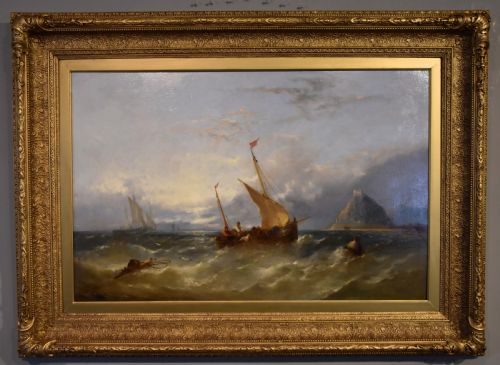
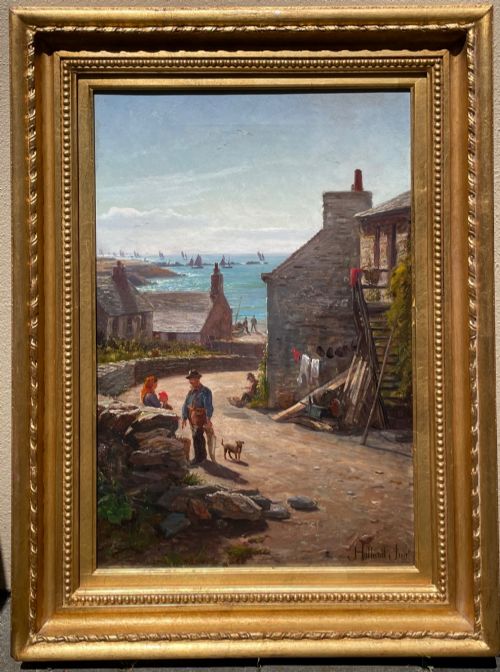
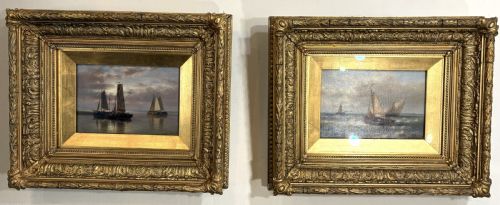


Gilded Frame Marine Painting
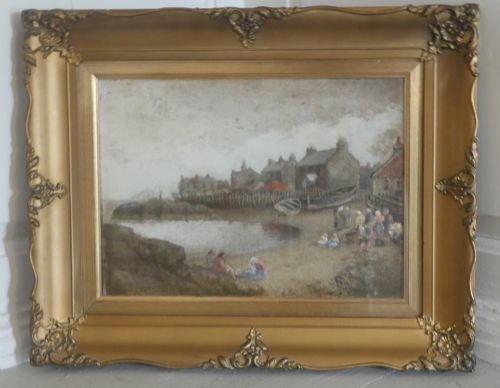
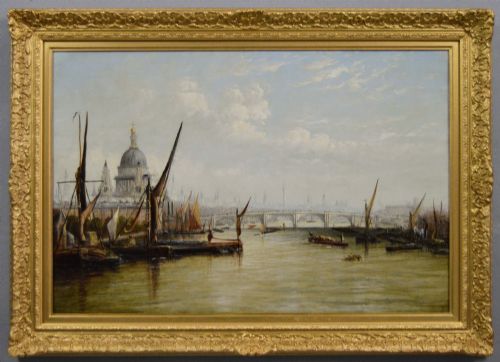
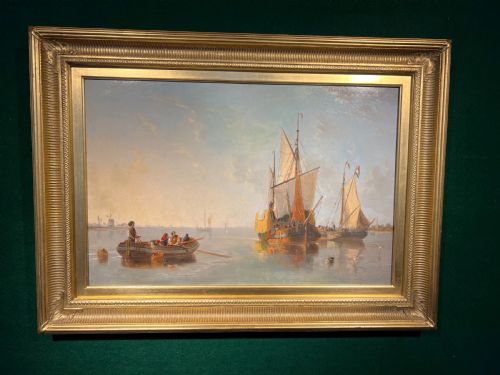
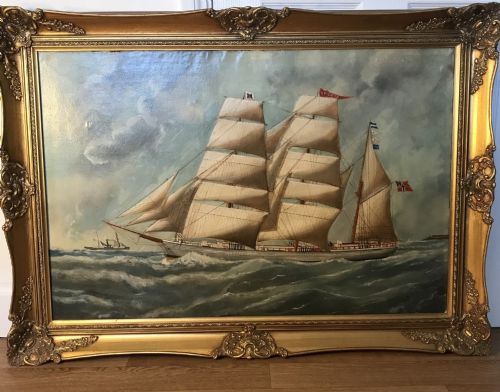
Gilded frame marine painting captures ships, harbours and coastal waters through nineteenth and early twentieth century brushwork set inside ornate wood and gesso borders.

Gilded Frame Marine Painting
A gilded frame marine painting portrays maritime scenes, river views and coastal landscapes originating primarily from the nineteenth century and the Victorian era. These artworks record sailing ships, fishing boats and harbours enclosed within decorative giltwood or gesso surrounds that complement the maritime subject matter.
The selections on this page feature oil on canvas, oil on board and watercolour paintings by listed artists and regional painters. Common subjects range from choppy seas and dramatic shipwrecks to serene coastal villages and bustling river traffic.
Buyers seeking a gilded frame marine painting will encounter works spanning the 1860s through to the 1930s. The forms vary from intimate watercolours to large oil paintings depicting named vessels and specific coastal locations.
How They Were Made
Artists applied oil paint to stretched canvas or wooden panels, whilst others worked in watercolour on paper, capturing light and water with layered brushstrokes. These paintings were subsequently housed in wooden frames finished with carved gesso and applied gold leaf.
The frames utilise wood as a core material, shaped and ornamented with gesso moulds before receiving layers of gilding to create the characteristic metallic lustre. This traditional framing technique protects the edge of the canvas or board while framing the painted scene.
Listings feature works spanning the 1860s to the 1930s, utilising oil on canvas, board, panel, and watercolour within giltwood and gesso frames.
What Varies in Quality
The distinction between average and exceptional pieces rests in the handling of light, movement and maritime detail by the artist. Master painters render the weight of heavy seas and the rigging of sailing vessels with precise observation, whereas lesser works rely on formulaic compositions.
Frame craftsmanship also dictates quality, as hand-carved gesso details and deep gilding elevate a piece far above simple painted wood mouldings. The synergy between the artwork and its specific gilt frame determines the overall visual presence.
John Wilson Carmichael·Abraham Hulk·Thomas Bush Hardy·James Webb·Gustave de Breanski
The Gilded Frame Marine Painting Glossary
- Giltwood
- Wood that has been coated with a thin layer of gold leaf. This material forms the golden border characteristic of traditional framing.
- Gesso
- A plaster mixture applied to wood frames and carved into decorative relief patterns before gilding. It provides the textured base for the gold leaf.
- Marine Painting
- An artwork depicting ships, oceans, harbours or coastal views. These pieces document naval history and maritime commerce.
- Oil on Canvas
- Pigment mixed with drying oil applied to a woven fabric support. This combination allows for rich blending and textured brushwork.
- Watercolour
- Paint made with water-soluble pigments applied to paper. This medium creates translucent washes ideal for capturing atmospheric skies and sea spray.
Gilded Frame Marine Painting: Frequently Asked Questions
What subjects appear in these paintings?
The artworks depict sailing ships, steam vessels, shipwrecks, and coastal harbours from various British and European shores. Scenes range from calm river estuaries to dramatic storms in open water.
Many pieces also capture daily maritime life, including fishing boats leaving port and vessels navigating named channels or coastal landmarks.
How should I hang a heavy gilt frame?
These substantial frames require secure fixings into wall studs or appropriate masonry anchors to support the combined weight of the wood, gesso and canvas. Professional mirror and picture hangers ensure the piece remains safe.
Position the artwork away from direct sunlight and heat sources to protect both the oil paint and the gilded wooden border from environmental damage.
Are the frames original to the paintings?
Many nineteenth and early twentieth century works retain their period giltwood frames, which were selected to complement the tone of the maritime scene. Some pieces may have been reframed during their history to suit changing decorative tastes.
Examining the corners and the fit at the back helps determine if the frame and painting have a long-standing association.
How do I care for gilded wooden frames?
Dust the ornate gesso and gilt surfaces gently with a soft, dry brush to prevent accumulation without disturbing the delicate gold leaf. Avoid liquid cleaners and damp cloths, as moisture can lift the gilding.
Maintaining stable room humidity prevents the wood core from expanding or contracting, which protects the gesso mouldings from cracking over time.