


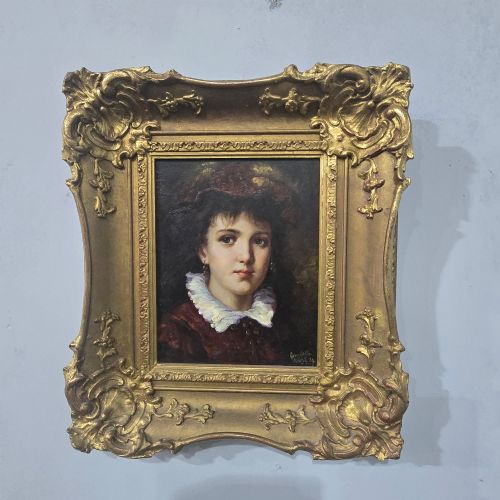
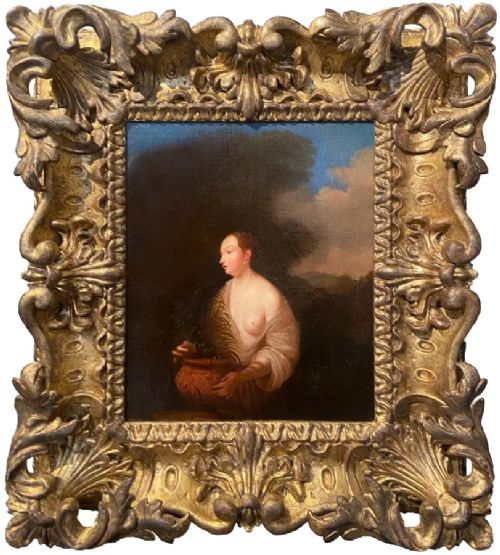
Gilded Frame Female Art
Gilded frame female art brings together centuries of portraiture, presenting women from the seventeenth century onwards bound in gold.
Gilded Frame Female Art
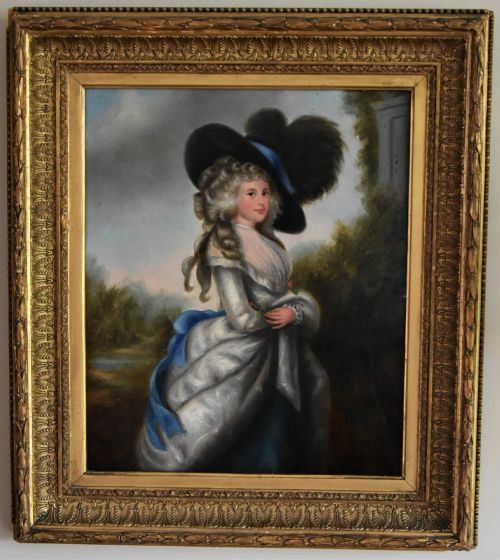
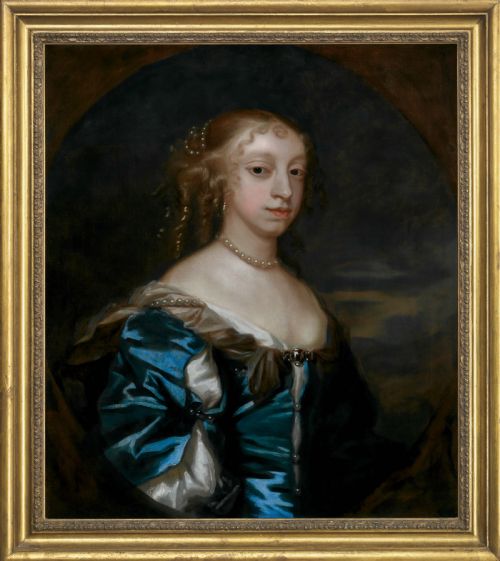
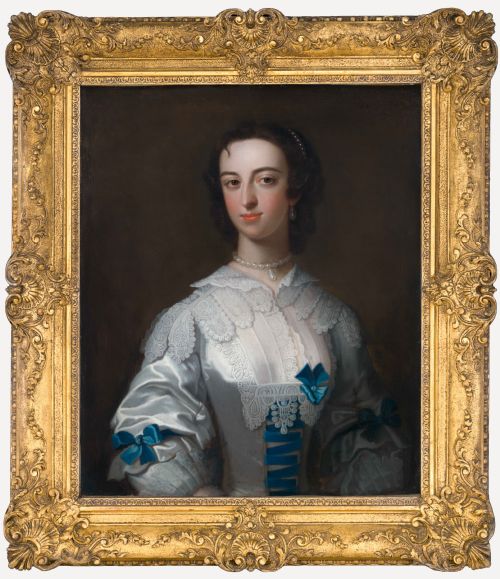
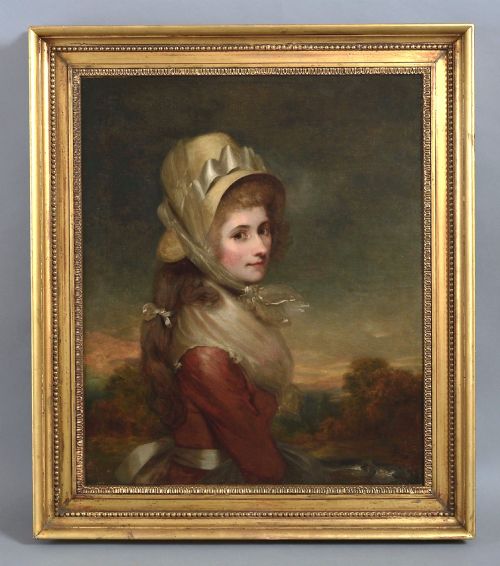
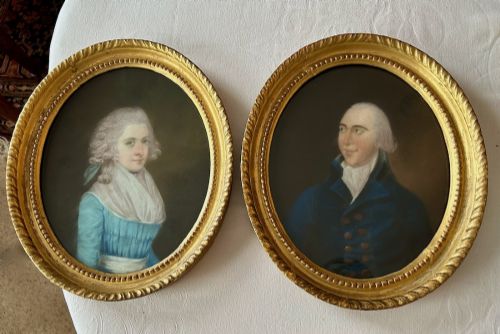
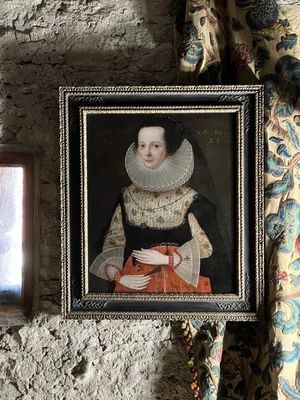
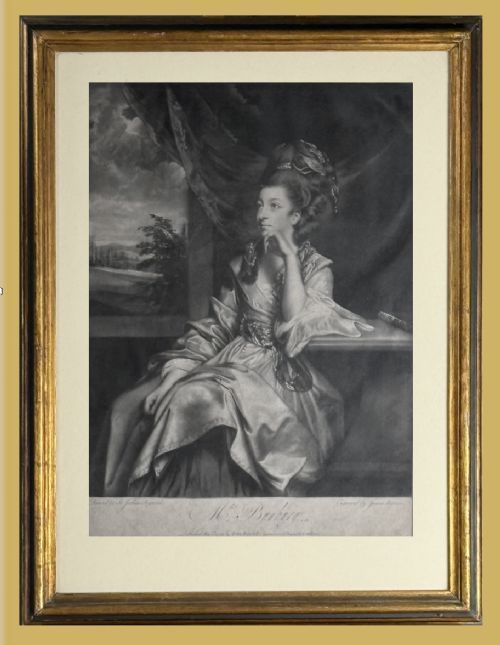
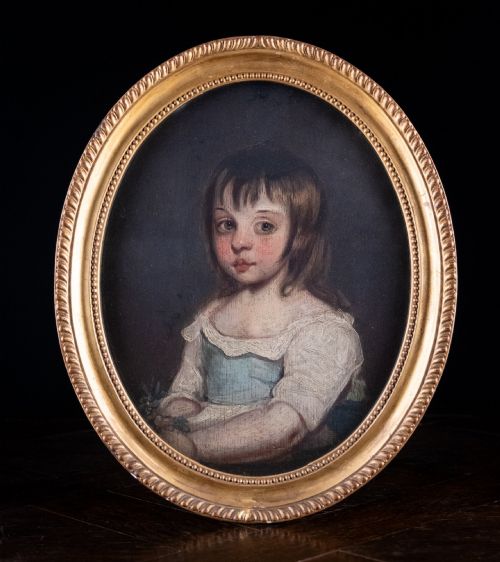
When searching for gilded frame female art, a buyer encounters painted and printed representations of women ranging from the seventeenth century through to the mid-twentieth century. The selection spans grand oil paintings on canvas and oak panels, delicate pastels, watercolours, silhouettes, and mezzotints. Seventeenth-century examples depict noblewomen and ladies in elaborate costume, while eighteenth and nineteenth-century pieces capture country girls, society figures, and fashion subjects.
The versions most commonly met on this page are nineteenth-century oil paintings and eighteenth-century portraits, often framed in period giltwood or wood. Works frequently follow academic traditions or reflect the manners of Georgian and Victorian society. Object types vary from fine art oil paintings to framed prints and portrait miniatures, all sharing a focus on female subjects.
Canvas, paint, and gold leaf
The physical objects combine traditional painting supports with elaborate wooden surrounds finished in gold leaf. Artists utilised oil paint on canvas, board, and oak panels, alongside pastel and watercolours on paper and glass. Canvases were stretched over wooden frames before receiving layers of pigment and varnish.
The surrounding mouldings consist of wood and giltwood, carved and gilded to complement the status of the portrait within. Glazing appears on works on paper, silhouettes, and prints to protect fragile surfaces from atmospheric damage.
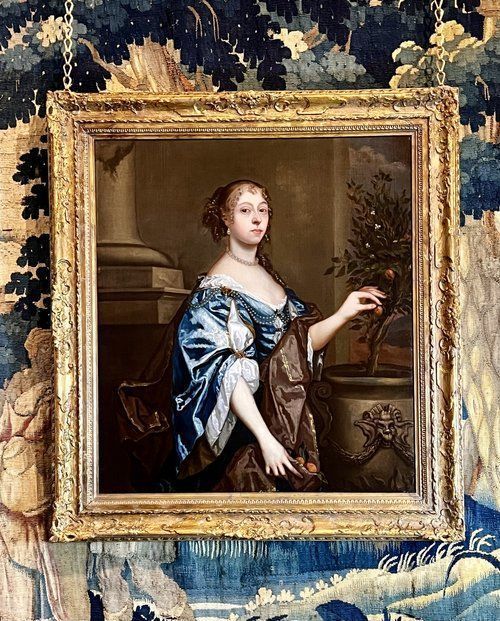
Several ladies gaze out past the viewer while clutching seasonal props, from fresh oranges to summer meadow flowers.
Execution and material preservation
The distinction between standard works and exceptional examples lies in the skill of the brushwork and the handling of light, fabric, and facial expression. Finer portraits display subtle tonal gradations in skin and costume, whereas lesser pieces rely on formulaic execution and stiffer posture.
Condition and originality also separate pieces at different levels of the market. Surviving works retain their original giltwood frames and unlined canvases, while others have undergone extensive restoration or replacement of the surrounding gold leaf over time.
Sir Martin Archer Shee·Sir Joshua Reynolds·Pieter Borsseler·Francisco Jose de Goya y Lucientes·Sir Peter Lely·Sir Anthony Van Dyck·Nicolaes Maes
The Gilded Frame Female Art Glossary
- Mezzotint
- A printmaking process of the tonal method, enabling smooth gradations of light and shade. This technique was frequently used in past centuries to reproduce famous painted portraits.
- Giltwood
- Timber that has been coated with a thin layer of gold leaf or powder. It provides the reflective, ornate boundary characteristic of traditional picture frames.
- Oil on canvas
- Pigment mixed with drying oil applied to a woven fabric support. This medium allowed artists to achieve rich colours and detailed textures.
- Portrait miniature
- A small, highly detailed painting depicting a specific person. These intimate works were often created on paper, vellum, or card.
- Pastel
- A medium consisting of powdered pigment and a binder rolled into sticks. It produces a velvety, matte surface requiring protection under glass.
Gilded Frame Female Art: Frequently Asked Questions
How do I identify the period of a portrait?
Dating relies primarily on the style of clothing, hair, and framing materials visible in the piece. Costume details such as ruffs, powdered hair, or Victorian bonnets offer the most reliable chronological markers.
Secondary clues include the type of canvas stretcher, the composition of the wood panel, and the method of gilding used on the frame. Comparing brushwork techniques to documented works from specific centuries helps confirm the era.
Were these paintings always framed in gold?
Gilt frames became the standard choice for formal portraiture to enhance the luminosity of the artwork and project social status. Many portraits retained their original frames for centuries.
Some pieces have been re-framed in later revival styles to suit contemporary tastes of subsequent owners. Examining the joinery and wear on the gold leaf helps determine whether frame and canvas were created together.
How should I care for an oil painting on canvas?
Oil paintings require stable indoor environments away from direct sunlight and severe fluctuations in temperature or humidity. Exposure to heat sources can cause the canvas to slacken and the paint layer to crack.
Dust should be removed gently with a soft, dry brush, avoiding any moisture or chemical cleaning agents. Professional conservators should handle structural repairs, varnish removal, or canvas relining.
What is the difference between a painting and a mezzotint?
Paintings are unique hand-created works featuring wet pigments applied directly to a support such as canvas, wood, or board. Each brushstroke is singular and executed by the hand of the artist.
Mezzotints are printed works produced from a metal plate that has been roughened and scraped to create tonal variations. They allowed popular painted portraits to be replicated and distributed in multiple impressions.