



Gilded Chinoiserie Wall Carving
A gilded chinoiserie wall carving brings theatrical Eastern-inspired relief and brilliant metallic light to a room.
Gilded Chinoiserie Wall Carving
A gilded chinoiserie wall carving encompasses elaborate decorative works and mirrors designed to catch the eye in a principal room. When buyers search for this phrase, they encounter pieces rendered in distinctive styles that borrow heavily from oriental motifs interpreted through European craftsmanship.
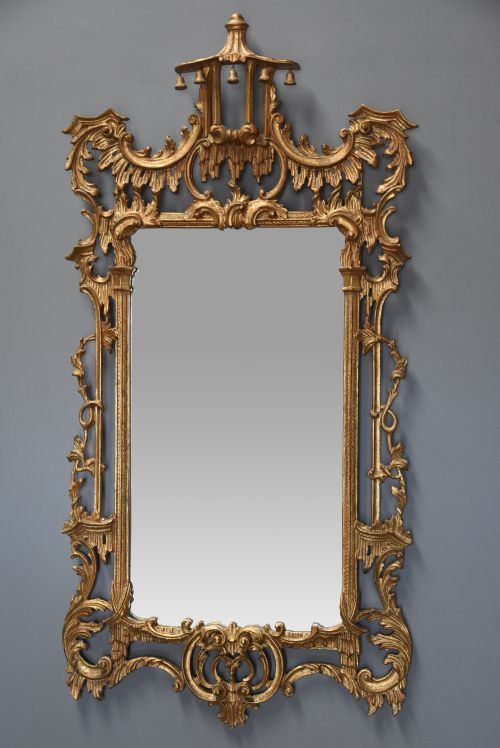
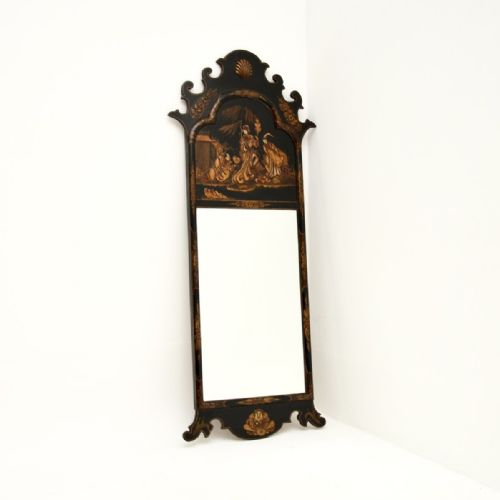
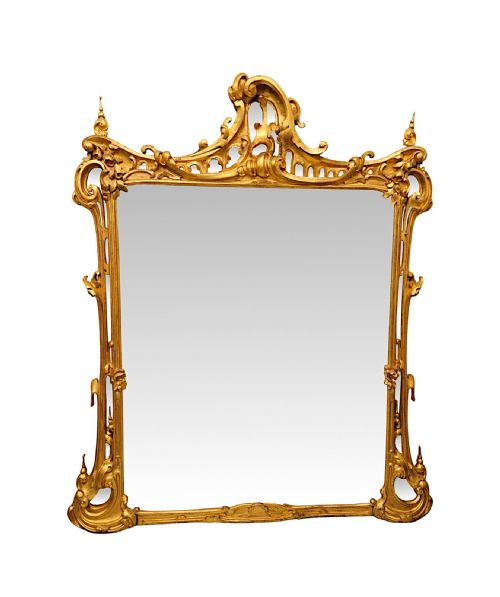
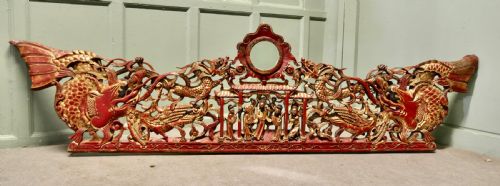
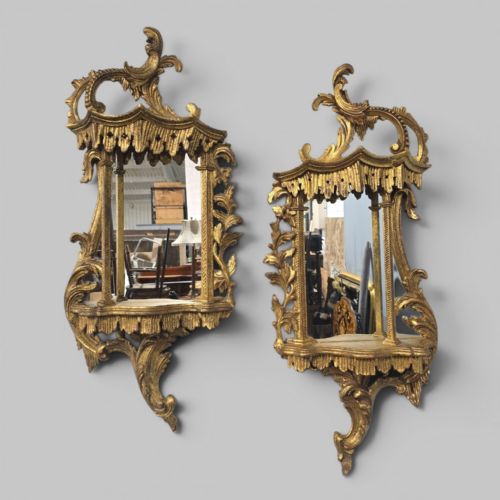
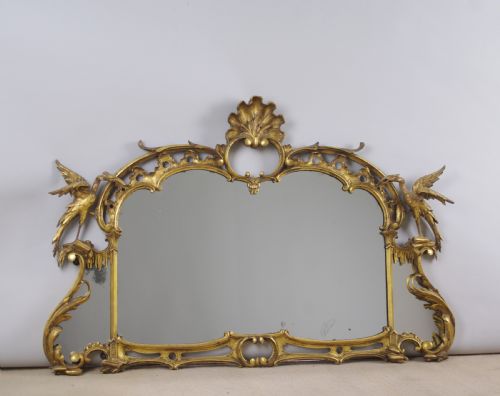
The versions most frequently met on this page include large overmantel mirrors, pier wall mirrors, and carved architectural pediments. These items typically date from the nineteenth century into the early twentieth century, spanning periods that favour ornate flourishes and gilt surfaces.
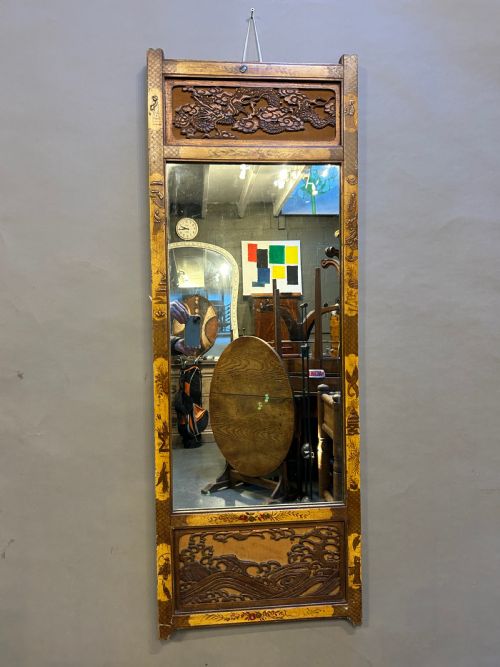
Makers drew upon established decorative repertoires, combining structural wood carving with lacquer and gold leaf. The resulting objects function simultaneously as wall art and mirrors, bringing structured asymmetry and figurative detail into domestic interiors.
How they were made
Gilded Chinoiserie Wall Carving Retail Price Guide 2026
Typical asking prices for gilded chinoiserie wall carving among the pieces listed under this phrase on Sellingantiques today, from the lower quarter to the upper quarter. They describe what is for sale here now, not the wider market.
Watch for mischievous Ho-ho birds peering down from carved crests, guarding the mirror glass below.
What varies in quality
Quality depends upon the depth and precision of the wood carving, where deeply undercut foliage and sharply defined avian forms distinguish finer examples from flatter, massed production. The crispness of the gesso layer beneath the gilding determines how well the reflective metallic surfaces hold their definition over generations.
The sophistication of the stylistic interpretation separates standard decorative items from masterworks. Pieces that successfully integrate asymmetrical rococo scrolls with coherent oriental architectural motifs command greater visual presence through balanced composition.
The Gilded Chinoiserie Wall Carving Glossary
- Chinoiserie
- European artistic style reflecting Chinese and East Asian artistic influences. It dominated interior decoration during periods of intense fascination with oriental motifs.
- Giltwood
- Timber coated with gold leaf or metallic powder applied over a prepared gesso ground. This technique creates a luminous surface that reflects interior candlelight and daylight.
- Gesso
- Plaster-based mixture applied to wood substrates to create a smooth surface for gilding. It provides the foundation for intricate relief details.
- Pediment
- Triangular or decorative architectural gable placed above a door, window, or mirror frame. In these pieces, they often take the form of ornate temple roofs.
- Overmantel mirror
- Large looking glass specifically designed to hang above a fireplace mantelpiece. These pieces frequently incorporate extensive carved frames and crestings.
Gilded Chinoiserie Wall Carving: Frequently Asked Questions
Where should I hang a wall carving?
These pieces suit principal reception rooms, hallways, or above fireplace mantels where their reflective surfaces and intricate carving draw the eye. They function effectively as focal points in rooms with high ceilings.
Ensure the wall structure can support the weight of timber and glass assemblies. Placing them opposite windows maximises the distribution of natural light.
How do I clean gilded surfaces?
Dust surfaces gently with a soft, dry brush to prevent abrasive particles from scratching the delicate gold leaf. Avoid liquid cleaners and chemical solvents entirely.
Moisture can penetrate the gesso ground beneath the gilding and cause flaking. Professional conservation is advised for deep cleaning.
What is Chinese Chippendale style?
Chinese Chippendale refers to eighteenth-century English furniture and decorative design incorporating pagoda roofs, lattice work, and motifs inspired by Chinese art. It experienced revivals during the nineteenth and early twentieth centuries.
This style embraces ornate asymmetry, fretwork, and figurative elements such as birds and dragons.
How do I identify nineteenth-century pieces?
Examine the construction methods, backing woods, and the composition of the gesso and gilt layers. Nineteenth-century pieces often display hand-carved tool marks and older fastening methods.
Stylistic revival cues, such as heavy rococo scrolls combined with oriental figures, point directly to nineteenth-century interpretations of earlier designs.