
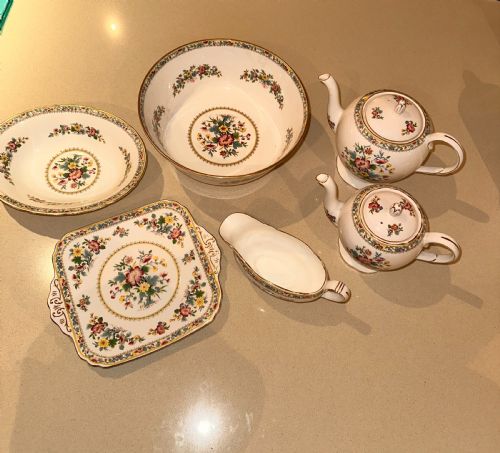
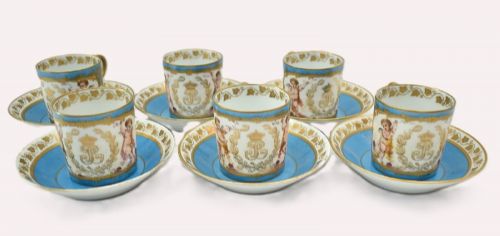


Gilded Ceramic Tea Set
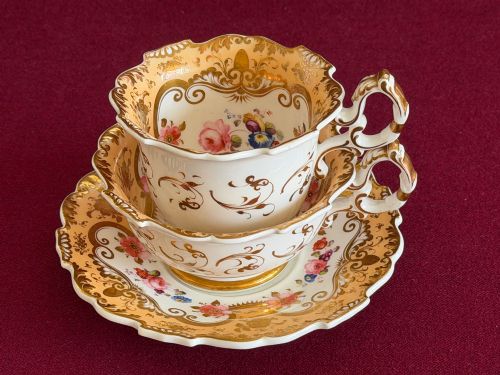
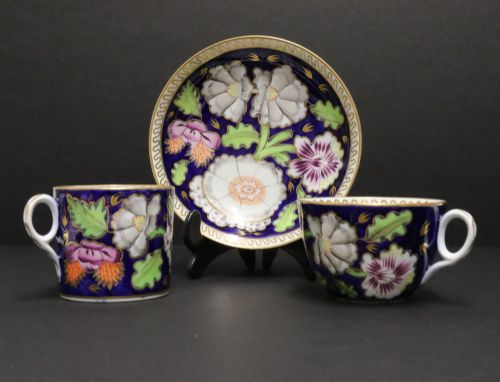
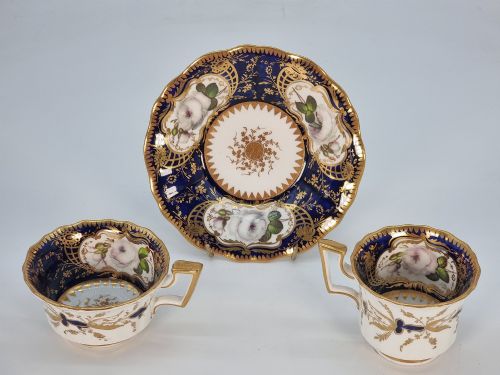
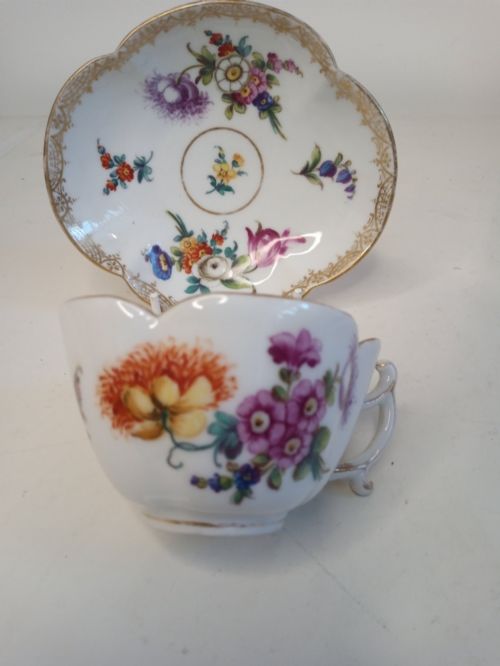
When you search for a gilded ceramic tea set, you seek the fine porcelain and earthenware painted with gold leaf that defined polite tables from the Regency to Art Deco periods.
Gilded Ceramic Tea Set
A gilded ceramic tea set comprises ceramic components designed for the service of tea, including teacups, saucers, trios, teapots, sugars, and larger multi-person services. The selection spans centuries of production, drawing heavily on British, French, German, and Japanese workshops.
The pieces you encounter range from single cabinet trios and miniature solitaire sets to expansive afternoon tea services and dinner services. Forms stretch across Regency shapes, Victorian patterns, and later twentieth-century iterations.
Makers and factories represented include Coalport, Royal Worcester, Spode, and Derby, alongside continental houses and export wares. These groupings offer both intimate settings for one and complete services intended for larger gatherings.
Materials and construction
Makers utilised fine porcelain, bone china, earthenware, and ironstone as the primary ceramic bodies for these vessels. These clay bases provided the stable white or tinted surfaces necessary for intricate painting and gilding.
Decoration relied on hand-painted enamels, transfer printing, and applied gold leaf or liquid gold gilding. Artisans fired the pieces multiple times to fuse the metallic lustre and coloured pigments to the ceramic glaze.
Listings feature porcelain, bone china, and earthenware bodies decorated with gold leaf, gilt, and enamel across the nineteenth and twentieth centuries.
Quality and execution
Distinction in these pieces rests upon the precision of the hand-painting and the weight and burnishing of the gold leaf. Superior examples display crisp brushwork, complex enamelling, and carefully finished handles and rims.
The refinement of the ceramic body itself, whether translucent bone china or delicate porcelain, dictates the calibre of the set. Well-preserved gilding without excessive rubbing or loss indicates careful historical handling.
Royal Worcester·Coalport John Rose·William Moorcroft·KPM Berlin·Moser
The Gilded Ceramic Tea Set Glossary
- Trio
- A matching ceramic grouping consisting of a teacup, a saucer, and a matching side or tea plate.
- Cabinet trio
- A decorative teacup, saucer, and plate intended for display in a cabinet rather than daily table use.
- Gilding
- The application of gold leaf, gold dust, or gold paint to ceramic surfaces for decorative accent.
- Enamel
- Opaque glass-like paint applied over the glaze and fired to achieve vivid, permanent colours.
- Ironstone
- A heavy, durable type of earthenware patented in the nineteenth century to imitate Chinese porcelain.
Gilded Ceramic Tea Set: Frequently Asked Questions
How do I date a set?
Dating relies on factory backstamps, ceramic bodies, and stylistic indicators such as Regency shapes or Art Deco motifs. Comparing pattern numbers and shape names to historical factory records yields precise periods.
Changes in glaze composition and gilding techniques across the nineteenth century also help narrow the production decade.
Can I use these for tea?
Many antique porcelain and bone china sets remain structurally sound for gentle use during special occasions. Hand washing is essential to protect delicate enamels and vulnerable gold leaf from detergent damage.
Sudden temperature changes should be avoided to prevent thermal shock in nineteenth-century ceramic bodies.
What is a solitaire set?
A solitaire set is a small, single-person tea service designed for an individual user, typically comprising a teapot, cup, saucer, and sometimes a small tray. These intimate sets were popular for private morning use in a bedroom or boudoir.
Miniature versions also served as cabinet display pieces or toys for older children.
How should I store them?
Store cups individually rather than stacking them precariously to prevent rim chipping and friction wear on the gilding. Saucers and plates benefit from padded dividers if stacked in a display cabinet.
Keep the ceramics away from direct, harsh sunlight to preserve the vibrancy of hand-painted enamel colours over time.