







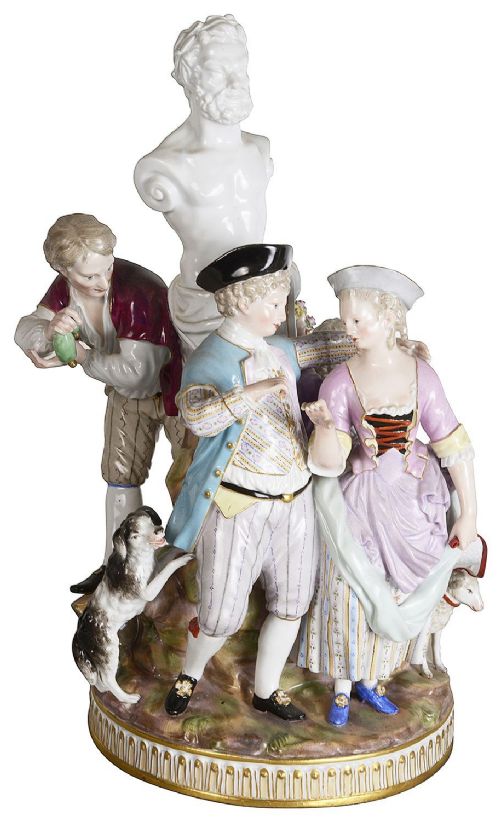

Gilded Ceramic Figure Group
These gilded ceramic figure groups bring together modelled porcelain, enamels and gold leaf in elaborate eighteenth and nineteenth-century compositions.
Gilded Ceramic Figure Group
A gilded ceramic figure group comprises modelled porcelain figures arranged in narrative, allegorical or pastoral scenes, enhanced with applied gold leaf and enamel painting. The pieces on this page span the eighteenth and nineteenth centuries, taking forms such as lovers, musicians, allegories of the seasons, and mythological subjects.
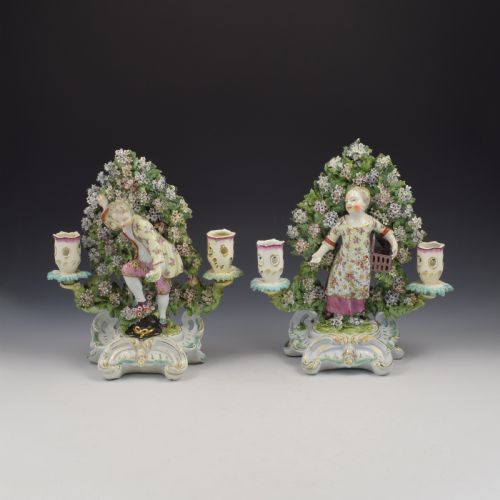
The dominant origin in the selection is Meissen, alongside Derby, Paris factories such as Bourdois and Bloch, and Dresden makers. These groups range from intimate cabinet sculptures to large candelabra bases incorporating naturalistic bocage foliage behind the human figures.
Collectors encounter both hard-paste porcelain and bisque bodies, finished with glaze and intricate hand-applied details. Many output forms function simultaneously as decorative figurines and functional candlestick holders.
Manufacturing methods and materials
Makers shaped hard-paste porcelain or terracotta bodies in multiple moulds before assembling the complex components by hand. Artisans applied delicate surface additions, including genuine lace dipped in slip before firing and intricate bocage foliage backgrounds.
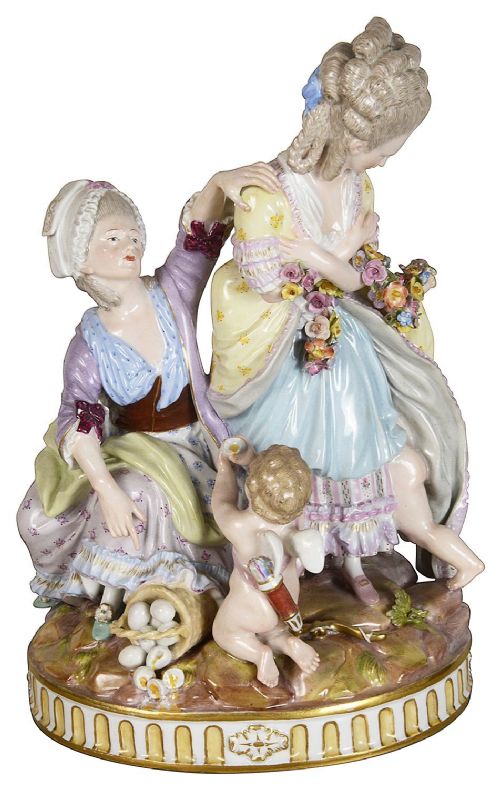
Coloured enamels and liquid gold leaf or gilding were applied over the fired glaze and subjected to a subsequent low-temperature kiln firing to fix the palette. Details such as facial expressions and drapery folds received careful hand-painting.
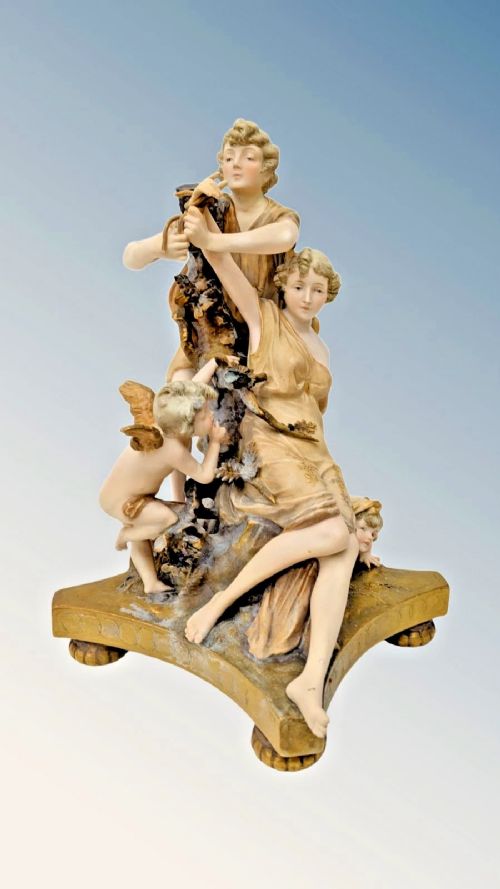
Certain French and German factories utilised specialised biscuit porcelain alongside glazed surfaces to create contrasting textures within a single figural composition.
Father Time pauses his relentless scythe just long enough to clip Cupid's wings in an eighteenth-century Derby group.
Factors determining quality
The application and preservation of the gilding and enamel painting govern visual impact. Master painters achieved subtle shading on flesh and garments, and the gold leaf retained its original brilliance rather than rubbing thin across high points.
Completeness of fragile peripheral elements, such as musical instruments, pastoral staffs, and applied porcelain leaves, separates pristine survivals from heavily restored pieces.
Meissen·Derby·Carl Thieme·Ernst Bohne Soehne·Bourdois and Bloch·Royal Worcester·Eugene Clauss
The Gilded Ceramic Figure Group Glossary
- Bocage
- An ornamental background of applied porcelain leaves and flowers that frames eighteenth-century figural groups. It mimics natural foliage and frequently surrounds candlestick figures.
- Bisque
- Unglazed fired porcelain or ceramic that presents a matte, tactile surface resembling marble. It is particularly common in nineteenth-century figural groups.
- Hard-paste porcelain
- A dense, vitrified ceramic compound composed of kaolin and petuntse, fired at very high temperatures. It forms the durable body of most German and English figures here.
- Marcolini period
- The phase of Meissen porcelain production between 1774 and 1814, marked by a star symbol beneath the crossed swords. Pieces from this era display refined neoclassical influence.
Gilded Ceramic Figure Group: Frequently Asked Questions
What are gilded ceramic figure groups?
These pieces are sculptural ceramic compositions depicting multiple human figures engaged in pastoral, mythological or domestic narratives. They are decorated with hand-painted enamels and gold leaf.
Most examples originate from European porcelain factories active during the eighteenth and nineteenth centuries, serving primarily as mantelpiece ornaments.
How were lace groups made?
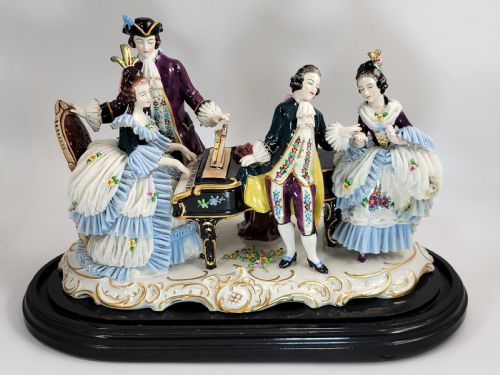
Makers dipped real lace fabric into liquid porcelain slip and draped it over the modelled figures before firing. The intense kiln heat burned away the organic thread, leaving a fragile ceramic replica of the lace.
This technique required immense skill to prevent the porcelain fabric from collapsing during the high-temperature kiln process.
How do I identify a Meissen figure?
Meissen pieces often feature the underglaze blue crossed swords mark on the underside, though the style of the mark varies by period. The modelling quality, fine facial painting, and specific form numbers assist in confirmation.
Eighty-century examples reflect rococo or neoclassical tastes, while nineteenth-century pieces adopt more elaborate romantic or allegorical themes.
How should I clean porcelain figures?
Dust the surface gently using a soft, dry artist's brush to protect fragile elements like lace and bocage leaves. Avoid using water or chemical cleaners, which can degrade the gilding and enamel paint.
Display the groups away from direct sunlight and high-traffic areas to prevent accidental damage to projecting ceramic components.