
Gilded Carved Pier Table
A gilded carved pier table brings architectural presence and reflective light to a hallway or reception room.
Gilded Carved Pier Table
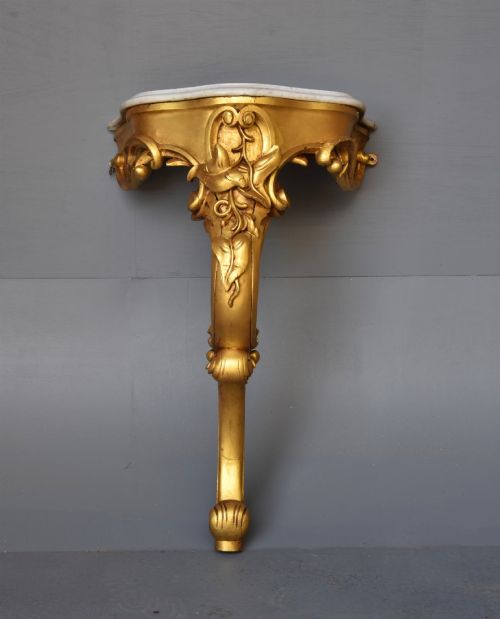
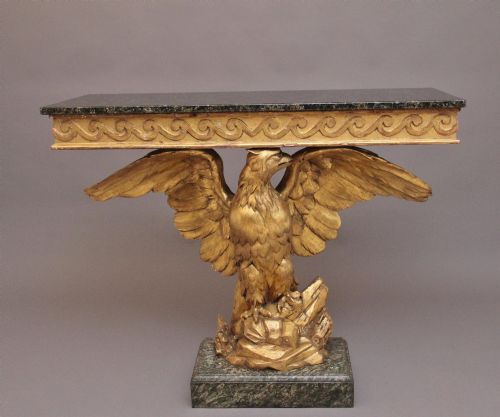
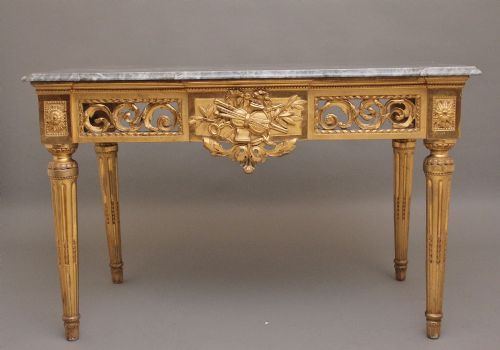
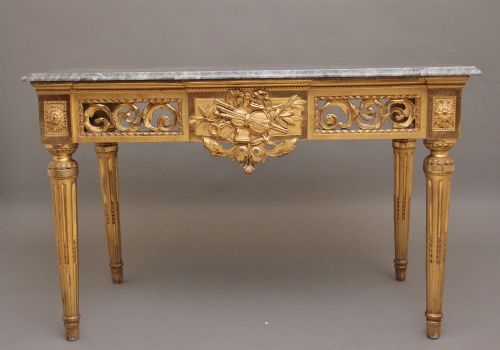
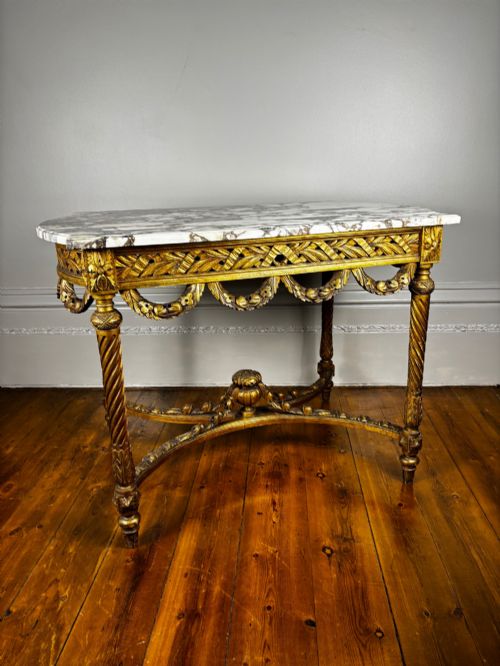
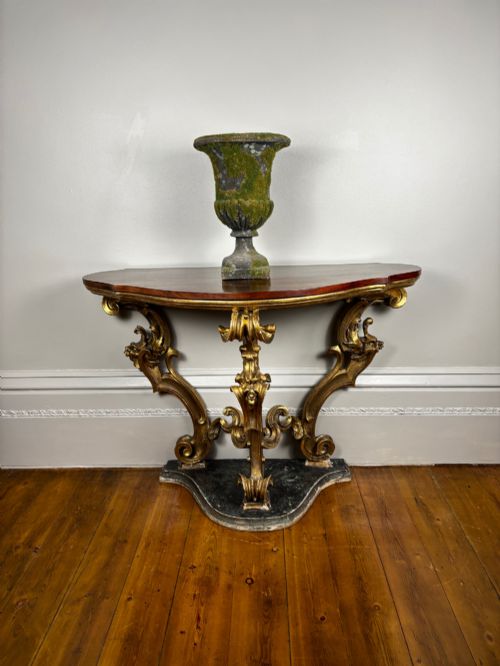
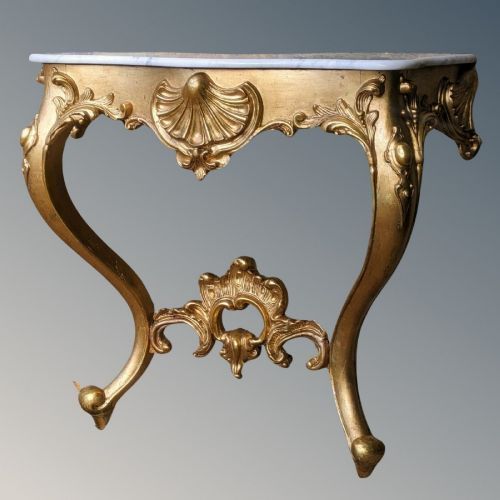
A gilded carved pier table is a console or side table designed to sit flat against a wall, frequently positioned beneath a mirror between two windows. These items appear across the eighteenth, nineteenth, and early twentieth centuries in French, Italian, Swedish, and English stylistic traditions.
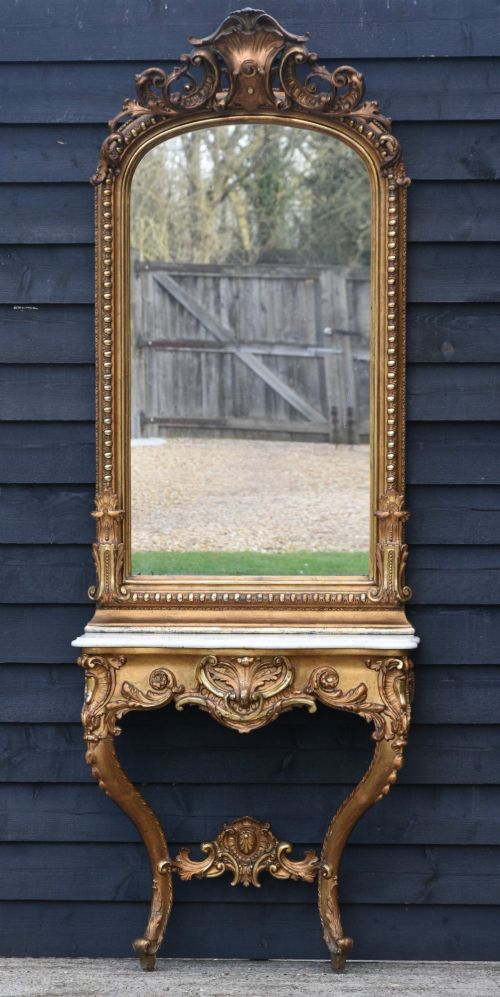
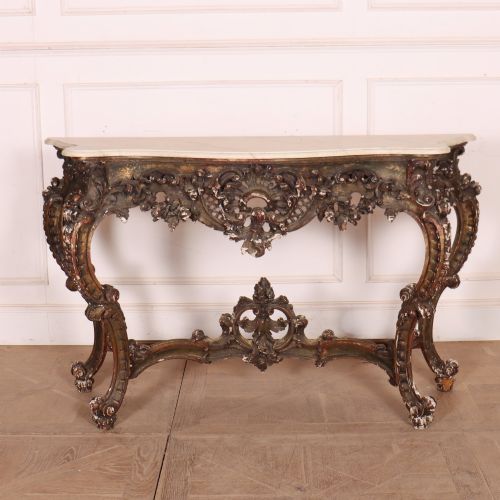
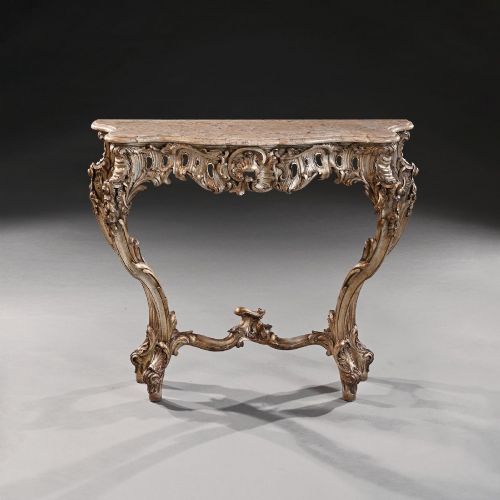
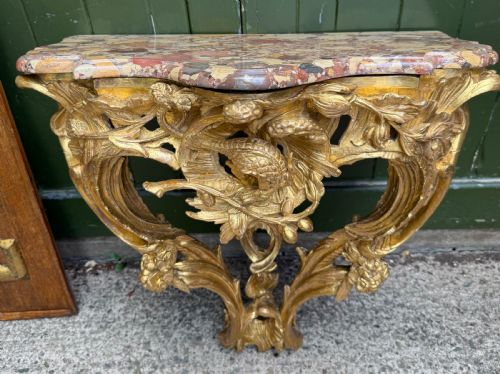
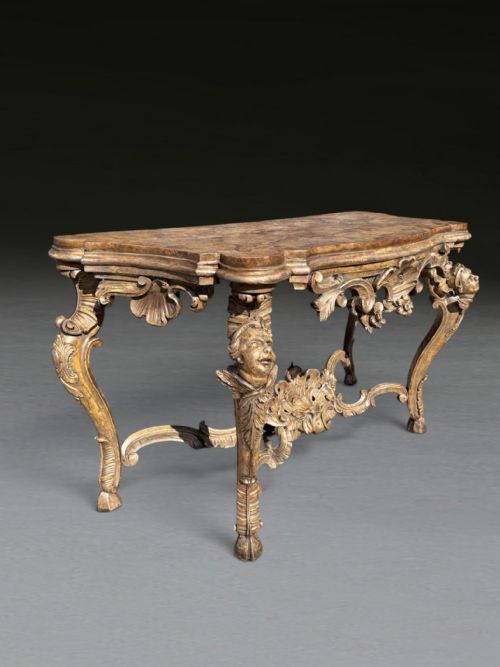
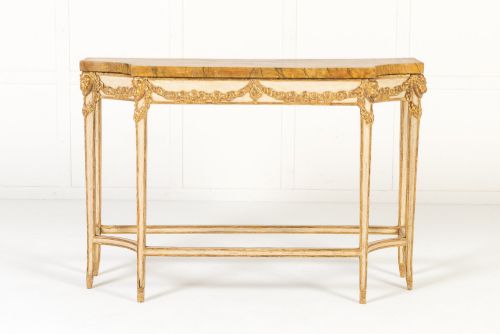
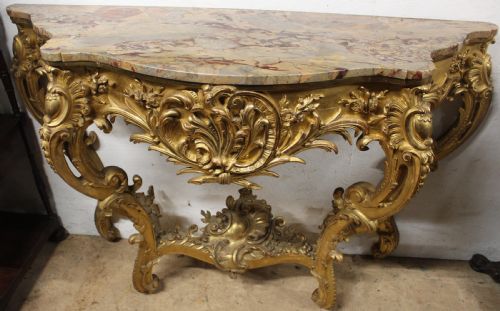
The standard form met on this page is a console table featuring a marble top supported by an ornate frame. Examples range from serpentine front profiles and smaller scaled pieces to monumental pairs with console table and mirror sets.
How they were made
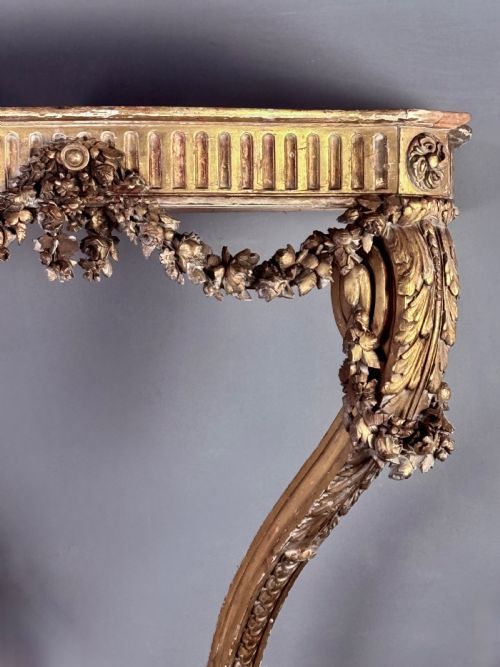
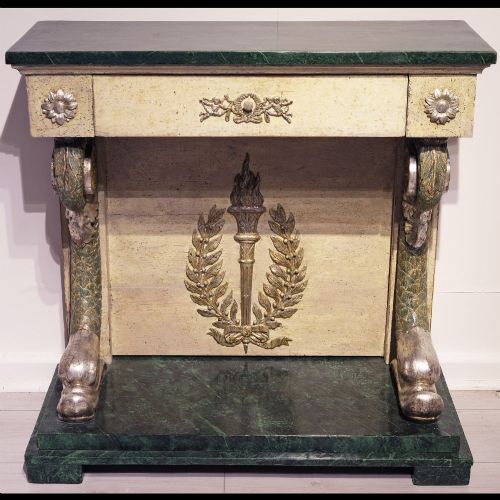
Makers shaped structural elements from wood, applying gesso layers to build up intricate relief before gilding surfaces with gold leaf or silver gilt. Paint and parcel gilt finishes also appear alongside carved wood components.
Heavy marble tops, including breccia and breche d'alep varieties, rest upon these carved wooden bases to provide a durable and weighty horizontal surface.
Tables occasionally feature carved wooden dolphins supporting heavy marble tops with nautical flair.
What varies in quality
Depth and crispness of the wood carving dictate the distinction between standard production and masterwork pieces. Sharp undercut foliage, scrolls, and figurative supports indicate superior craftsmanship from skilled workshops.
The choice of materials, particularly the figuring and thickness of the marble slab paired with genuine gold leaf application rather than standard metallic paint, separates finer examples from simpler decorative items.
Felix-Alfred Ternisien
The Gilded Carved Pier Table Glossary
- Giltwood
- Wood that has been coated with gold leaf or powder over a prepared gesso ground. This technique gives the carved surface a luminous metallic sheen.
- Console table
- A table supported by wall brackets or console legs rather than four independent vertical posts. These pieces are intended to stand flush against a wall.
- Gesso
- A plaster mixture applied to a wooden substrate to create a smooth surface for carving and gilding. It allows for crisp, detailed relief work.
- Breccia marble
- A composite stone made of broken rock fragments embedded in a fine-grained matrix. It yields a rich, multicolored patterned surface highly prized for table tops.
Gilded Carved Pier Table: Frequently Asked Questions
Where should I place a gilded carved pier table?
These tables fit naturally against a flat wall in a hallway, entrance hall, or principal reception room. They work well beneath a matching wall mirror or artwork due to their shallow profile.
Because the rear edge rests directly against the wall, they provide a stable surface for display without protruding too far into the floor space.
How do I identify French and Italian styles?
French examples often display refined Rococo Revival or Neoclassical symmetry with restrained foliate carving. Italian pieces frequently exhibit heavier Baroque or Venetian influence with dramatic sculptural elements.
Regional finishing techniques also help, as Italian workshops frequently utilised silver gilt and painted surfaces alongside traditional gilding.
Are the marble tops original to the tables?
Many tables retain their original fitted marble slabs, such as figured breche d'alep or breccia varieties. Close inspection of the underside and the seating rebate reveals how the stone rests on the frame.
Replacement marble tops appear occasionally, shaped to fit the specific serpentine or rectangular profile of the antique wooden base.
How do I care for giltwood and marble?
Giltwood requires gentle dusting with a soft, dry brush to protect the delicate gold leaf finish from abrasion. Moisture and chemical polishes damage the underlying gesso layers.
Marble surfaces benefit from regular wiping with a damp cloth and mild soap, avoiding acidic cleaners that etch the polished stone.