




Gilded Bronze Pendulum Clock
A gilded bronze pendulum clock brings French 19th-century metalwork and precision timekeeping together on a mantelpiece.
Gilded Bronze Pendulum Clock
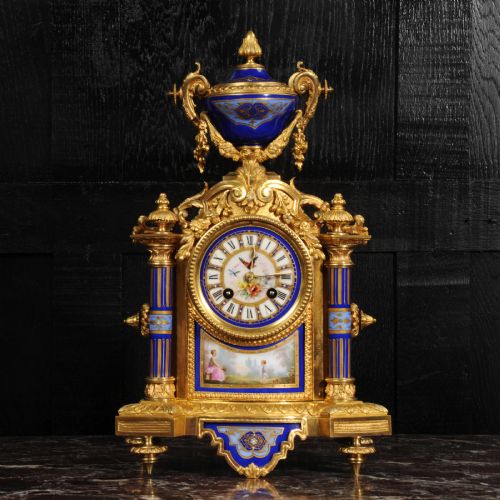
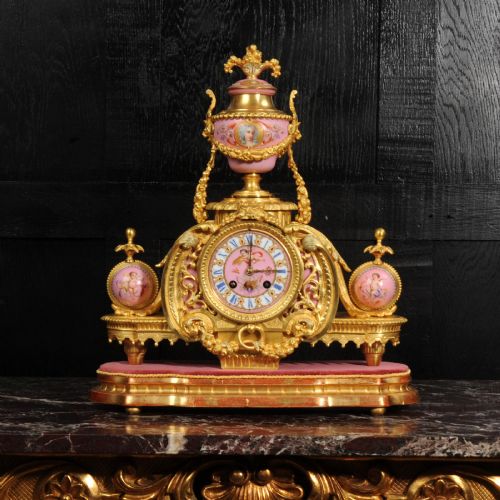
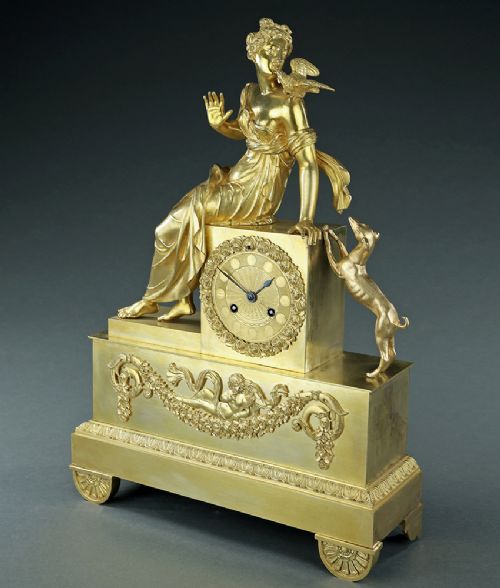
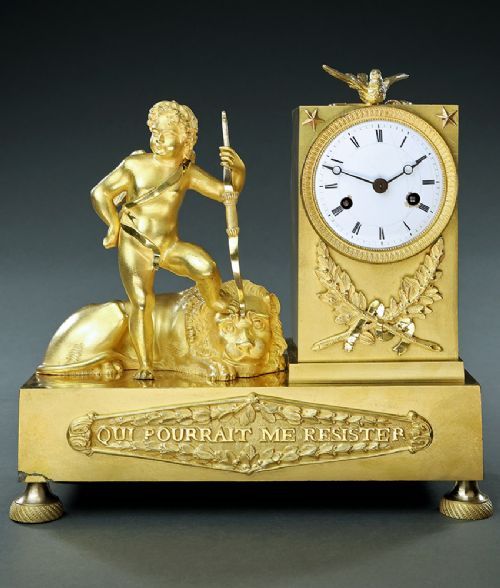
A gilded bronze pendulum clock is typically a French mechanical timepiece housing an eight-day movement behind an ornate cast metal case. Buyers seeking this phrase encounter mantel clocks, portico clocks, and four-glass crystal regulators dating from the nineteenth century. These objects combine cast bronze and ormolu mounts with enamel dials, marble bases, and Sevres porcelain panels.
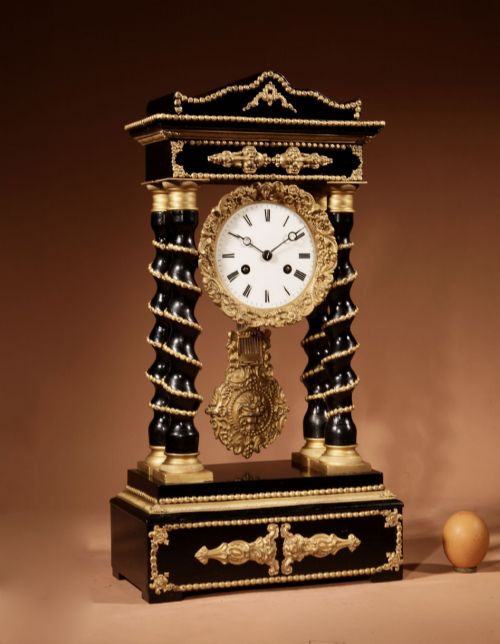
The prevailing styles on this page follow French Empire, Louis XVI revival, and Rococo designs, reflecting mid- to late-Victorian tastes. Architectural portico clocks and figural mantel pieces featuring allegorical subjects like love and fidelity appear frequently. Wall-hung cartel clocks also represent the category, sharing the same gilt bronze vocabulary.
Most pieces date between eighteen-fifty and nineteen-hundred, originating from Paris makers and retailers. The pendulum swings within glass-sided cases or behind decorated bezels, visible through open escapements. Collectors select these clocks for their decorative presence and the mechanical complexity of their striking movements.
Materials and Casting Techniques
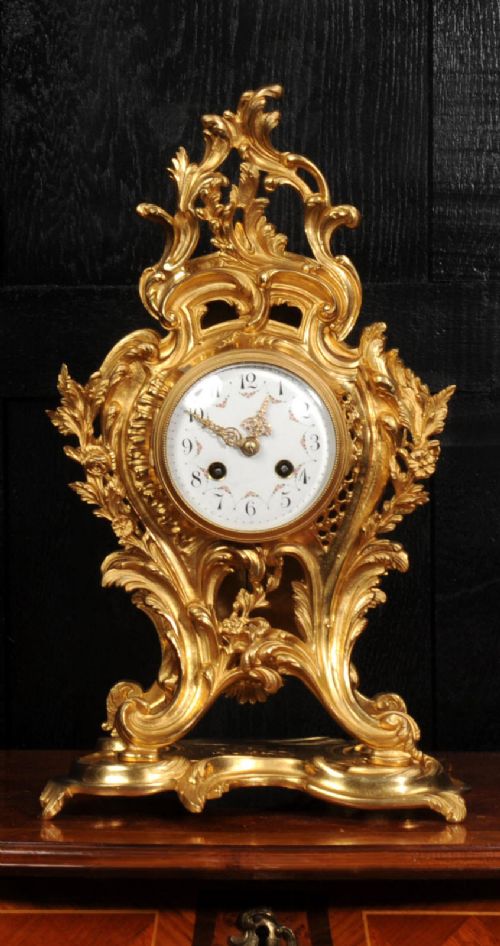
Clockmakers cast bronze and brass components before applying mercury gilding or electroplating to achieve the characteristic ormolu finish. The resulting gilt surfaces contrast with white enamel dials, painted porcelain plaques, and polished red or black marble bases. Glass panels enclose delicate mechanisms in four-glass and portico designs.
Movements relied on brass gear trains driven by coiled springs or suspended pendulums, often striking hours and halves on tuned bells or gongs. Cabinets incorporated turned wooden carcases veneered in ebonised finishes beneath heavy metal mounts. Skilled artisans chased the cast bronze details by hand to sharpen foliage, scrolls, and figural drapery.
Listings feature nineteen-century French horology, predominantly spanning the Victorian era with materials like ormolu, marble, porcelain, and glass.
Craftsmanship and Proportion
Quality separates the heavy, deeply chased ormolu castings from lighter, shallower pressings. The crispness of hand-chasing on foliage and figures distinguishes superior workshop output from standard commercial production.
Proportion and material integration define the better examples, where marble, porcelain, and gilt bronze balance harmoniously. Signed movements by known Parisian makers add distinction to the structural assembly.
Japy Freres·Achille Brocot·Le Roy Paris·Le Roy Et Fils·Henri Jacot
The Gilded Bronze Pendulum Clock Glossary
- Ormolu
- Gilded bronze produced by applying a mercury-gold amalgam to a cast bronze base and heating it. This technique creates a durable, warm golden finish seen on nineteenth-century French clock mounts.
- Portico clock
- A tall, architectural mantel clock featuring four supporting columns framing a central pendulum. They frequently utilise crystal or glass elements alongside gilt bronze details.
- Cartel clock
- A wall-mounted clock housed in an ornate, asymmetrical frame of gilt bronze or carved wood. These pieces emerged during the Rococo period and remained popular in nineteenth-century revivals.
- Crystal regulator
- A mantel clock enclosed entirely by bevelled glass panels on all four sides. The suspended pendulum remains visible from every angle.
- Sevres porcelain
- Fine ceramic panels painted with pastoral scenes or floral motifs and mounted into clock cases. They originated from the French royal porcelain factory.
Gilded Bronze Pendulum Clock: Frequently Asked Questions
How do I wind the clock?
A dedicated winding key turns the arbors on the enamel dial to tension the springs within the brass movement. Care must be taken not to overwind the mainspring.
Most movements require a weekly wind to maintain accurate timekeeping and power the striking train.
Are these clocks suitable for daily use?
Nineteenth-century mechanical clocks function well in domestic settings when properly set up and levelled on a stable surface. Regular servicing by a horologist keeps the gear trains operating smoothly.
Placement should avoid direct sunlight and draughty areas to protect the delicate enamel dials and gilt finishes.
How do I set the pendulum?
The suspension spring must be secured safely before moving the clock to prevent snapping the thin steel blade. Once the case rests level on the mantelpiece, the pendulum hangs back onto its crutch.
Swinging the pendulum gently to an even beat allows the escapement to regulate the mechanical tick.
How do I identify the period?
Stylistic cues like Rococo asymmetry, Louis XVI neoclassical symmetry, or Empire military motifs point to specific design revivals. Maker signatures stamped on the backplate provide direct chronological markers.
Materials such as heavy fire-gilt bronze and hand-painted porcelain panels align with nineteenth-century manufacturing methods.