


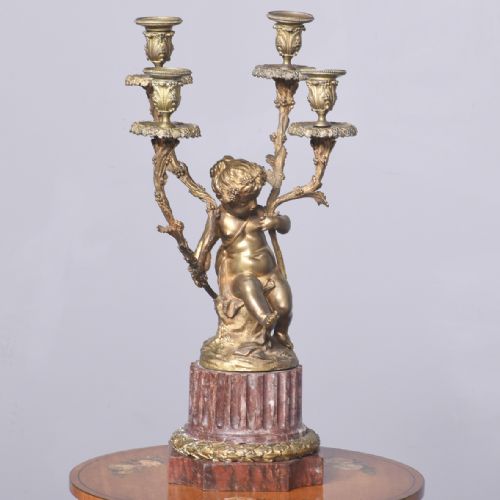


Gilded Brass Candle Stand
These gilded brass candle stand pieces offer refined illumination, combining brass and gilt bronze to bring historic elegance to any interior.
Gilded Brass Candle Stand
A gilded brass candle stand brings together various forms of historic lighting and auxiliary pieces, spanning candlesticks, multi-light candelabras, standard lamps, and candle screens. When searching for a gilded brass candle stand, buyers typically encounter Victorian and nineteenth-century examples alongside earlier eighteenth-century French items.
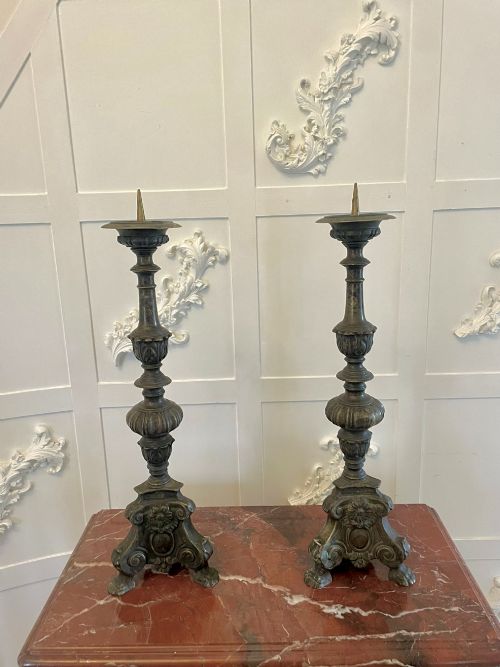
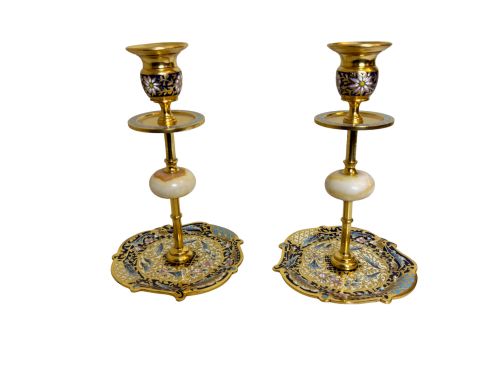
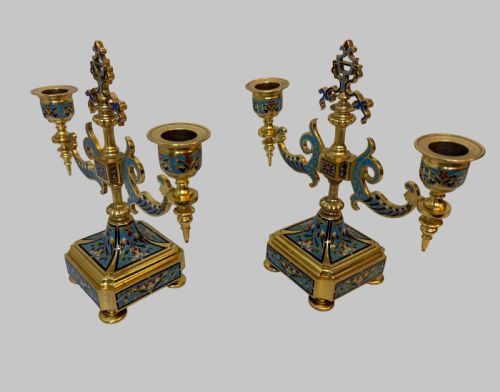
The selection ranges from tall pricket candlesticks and desk candlesticks to elaborate candelabras incorporating marble, onyx, and champleve enamel. French revival styles strongly influence the available selection, reflecting Louis XVI, Regence, and Rococo aesthetics.
Many items appear in matched pairs, offering symmetry for mantelpieces and tables. Single specialised pieces, such as adjustable stands and patented candle shields, also emerge within nineteenth-century groupings.
Materials and construction
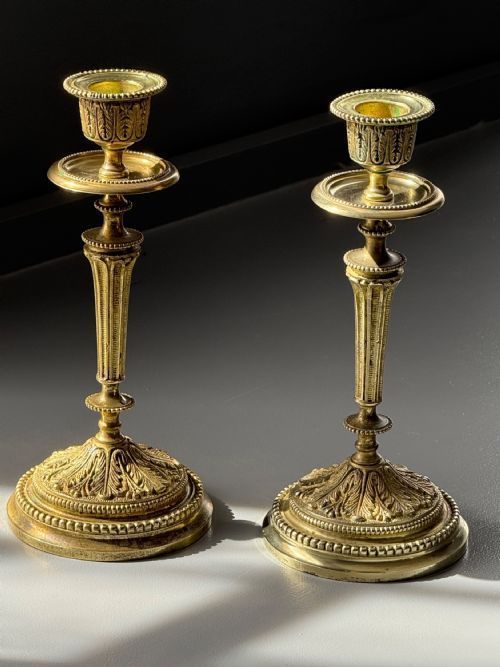
The construction relies heavily on cast brass, bronze, and gilt bronze, often enhanced through fire-gilding known as ormolu. These metallic foundations provide the structure for both small desk pieces and large standard lamps.
Makers integrated decorative stones such as marble, alabaster, and onyx into the bases and stems, contrasting with the polished metal surfaces. Champleve enamel adds coloured detail to several nineteenth-century pieces, creating vibrant surface patterns within recessed metal cells.
Listings feature materials including gilt bronze, brass, ormolu, marble, onyx, alabaster, and champleve enamel across various nineteenth-century styles.
Judging quality
Quality rests in the crispness of the metal casting and the depth of the subsequent chasing work. Superior examples exhibit sharp botanical or scroll details rather than soft, rounded edges resulting from worn moulds.
The application and preservation of the gilt surface dictate the visual richness of each piece. Heavier gauge metalwork and integrated secondary materials like natural marble or onyx indicate higher standards of production.
The Gilded Brass Candle Stand Glossary
- Ormolu
- Finely ground high-carat gold applied to a bronze or brass object using a mercury amalgamation technique. This historic process produces a durable, warm metallic finish found on many French and Victorian pieces.
- Pricket candlestick
- A candlestick featuring a sharp metal spike at the top designed to impale the base of a candle. This form appears frequently in ecclesiastical and heavy Gothic revival lighting.
- Candelabra
- A branched lighting fixture designed to hold multiple candles simultaneously. These pieces often feature removable arms to convert the stand into a single candlestick.
- Champleve enamel
- An enamelling technique where troughs or cells are dug into the surface of a metal object and filled with vitreous paste before firing. This method creates colourful decorative patterns across the brass or bronze body.
Gilded Brass Candle Stand: Frequently Asked Questions
What is a gilded brass candle stand?
A gilded brass candle stand encompasses historic lighting devices made from brass, bronze, or ormolu designed to support candles. These objects range from single tabletop candlesticks to tall standard lamps and multi-branched candelabras.
The category spans various periods, with nineteenth-century Victorian and French revival pieces forming a significant portion of the available selections alongside eighteenth-century examples.
How do I date these pieces?
Dating relies on examining the casting techniques, material combinations, and stylistic markers such as Louis XVI or Victorian revival motifs. Structural details and secondary materials like onyx or champleve enamel often point to specific decades in the nineteenth century.
Comparing the manufacturing methods against known period styles helps narrow down the origin and decade of production.
Where were these stands used?
Historically, these stands functioned as primary light sources in domestic drawing rooms, dining spaces, and studies. Desk candlesticks served personal writing areas, while larger candelabras decorated mantelpieces and formal reception rooms.
Standard lamps and candle screens provided adjustable illumination and protection from drafts in principal living spaces.
How do I care for gilt metal?
Maintaining gilt metal requires gentle dusting with a soft, dry brush to prevent the accumulation of abrasive particles. Avoid chemical polishes and abrasive cloths, as these substances can strip away the delicate gilt or ormolu surface.
Preserving the original finish depends on minimal intervention and careful handling during routine maintenance.