


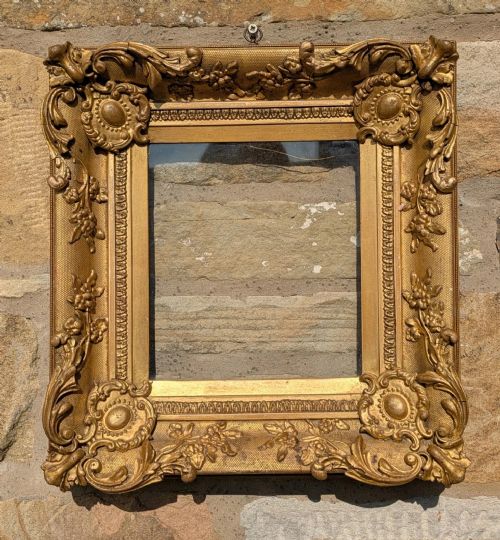


Gesso Decorative Frame
When you search for a gesso decorative frame, you are looking at moulded plaster-based ornament applied to timber foundations to create ornate borders for mirrors and art.
Gesso Decorative Frame
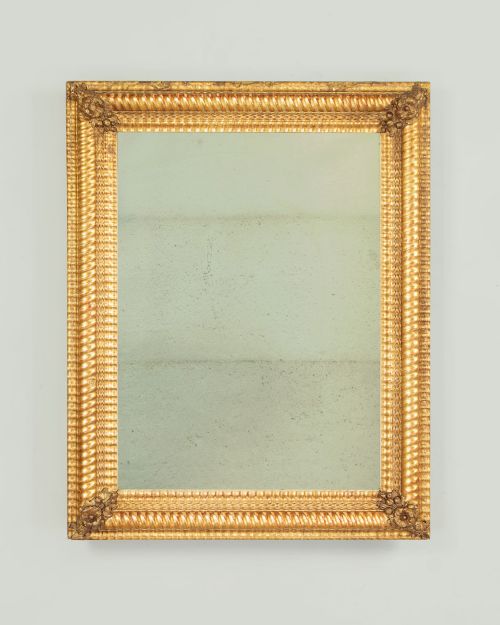
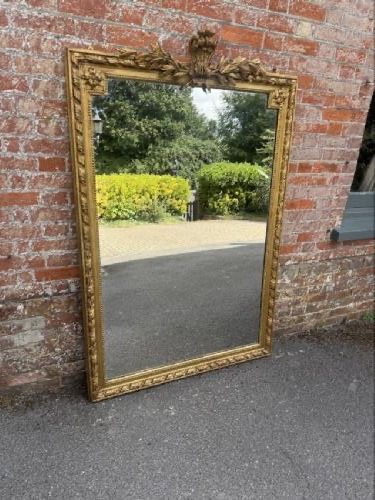
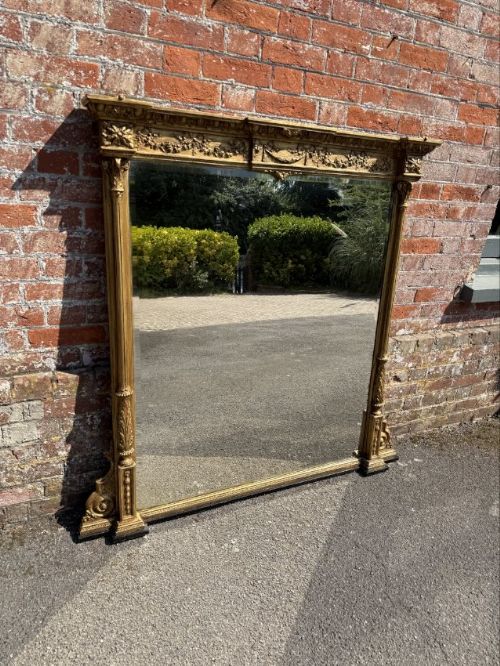
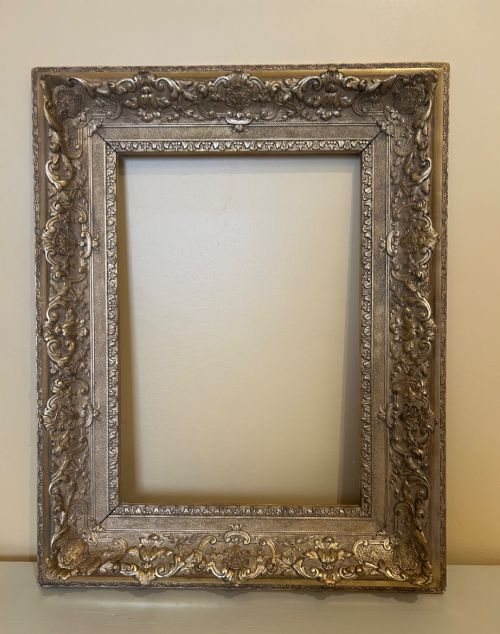
A gesso decorative frame serves as an ornate border primarily for wall mirrors, overmantels, picture frames and wall art. The selections span the nineteenth century into the Edwardian period and the nineteen-thirties, encompassing Victorian, Edwardian and revivalist tastes.
The dominant forms are large wall mirrors and overmantels shaped with arched or rope-twist tops, alongside oval panel mirrors and picture frames. Pieces emerge from English, French and Italian workshops, carrying ornamentation such as shell motifs, patera flower rosettes and lion heads.
Continental and domestic examples display the varied aesthetic movements of their decades, moving from dense Baroque and Rococo revivals down to simpler Edwardian profiles. Buyers encounter both grand overmantle centerpieces and smaller dressing or hallway mirrors.
How they were made
Craftsmen built the foundational structure using timber such as oak, carved into specific profiles like rope twists, columns or arched tops. Over this wooden base, they applied layers of gesso, a mixture of plaster of Paris or chalk with glue binder, which could be moulded or carved while pliable.
Surface finishing involved applying gold leaf, silver, or paint directly onto the gesso ground to achieve the desired metallic lustre or polychrome effect. Glass components were then fitted into the rebate, often secured behind bevelled edges or held by sectional frames.
One persistent lion head glowers from a nineteenth-century frame, keeping a silent watch over centuries of hallway traffic.
What varies in quality
The depth and crispness of the moulded ornament dictate the visual weight of the object, separating heavily detailed high-relief work from simpler profiles. Relief elements like laurel leaves, gadrooned edging and floral rosettes reveal the hand of the modeller through their definition.
The integrity of the underlying carved wood and the adherence of the gesso layer to that timber determine durability over the decades. Original gilt surfaces and undisturbed patination retain greater historical continuity than later repainted or heavily restored examples.
The Gesso Decorative Frame Glossary
- Gesso
- A mixture of chalk, gypsum and glue binder applied to timber frames to provide a smooth surface for gilding or painting. This material takes intricate relief moulding easily.
- Giltwood
- Timber carved and covered with thin sheets of gold leaf or gold paint. It provides a reflective, warm metallic finish common on formal mirrors.
- Overmantle
- A large mirror designed specifically to hang above a fireplace mantelpiece. These often feature extended horizontal proportions or arched tops.
- Patera
- A circular ornamental bas-relief resembling a classical libation dish, frequently used as a decorative motif on corners and friezes.
- Gadrooned
- An ornamental carved border consisting of convex curves or fluting. This edge treatment adds texture to the perimeter of a frame.
Gesso Decorative Frame: Frequently Asked Questions
How do I hang a heavy overmantle mirror?
Large overmantle frames require secure fixing directly into masonry or substantial wall studs using appropriate brackets to bear the considerable combined weight of the timber, gesso and glass.
Because these pieces often span significant widths, professional installation ensures the hanging wire or integrated D-rings distribute the load evenly across the wall structure.
Can I place these mirrors in a bathroom?
High humidity and fluctuating temperatures in bathrooms risk softening the traditional glue-based gesso and causing the metallic leaf to tarnish or flake away.
Dry interior spaces such as hallways, living rooms and bedrooms better preserve the delicate plaster ornament and original gilt finishes.
How do I identify a Victorian piece?
Victorian examples frequently incorporate revivalist motifs such as heavy Rococo scrollwork, rope twists and deep moulding profiles executed in plaster gesso over timber.
Examination of the reverse often reveals aged pine or oak boards, hand-cut joinery and period fixings that distinguish nineteenth-century production from later reproductions.