
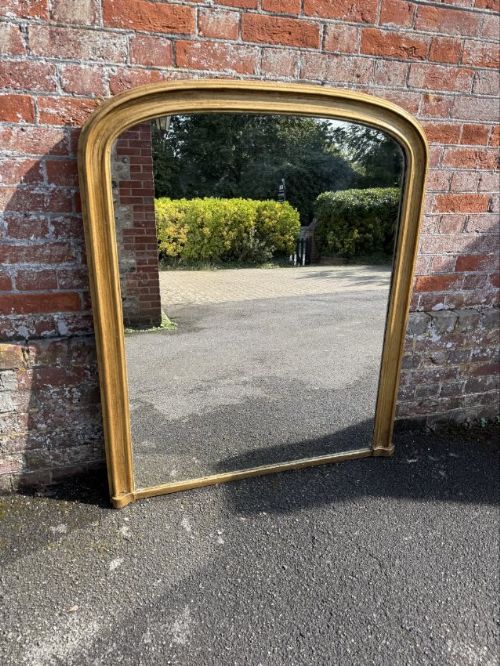
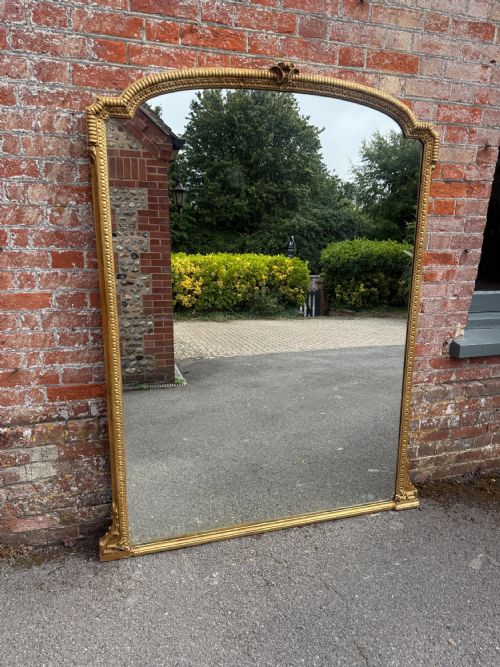
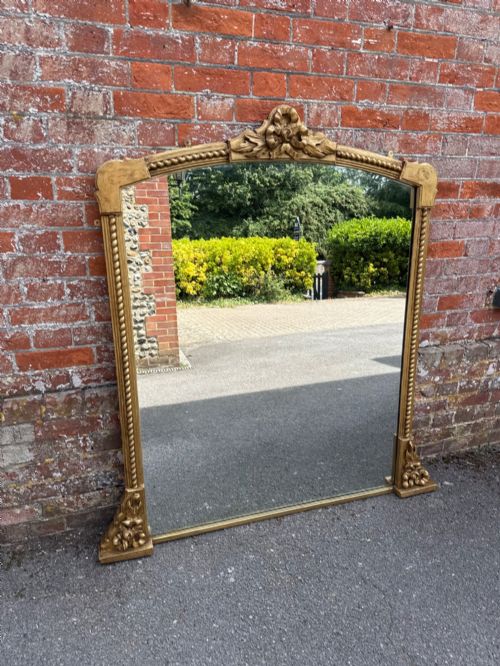
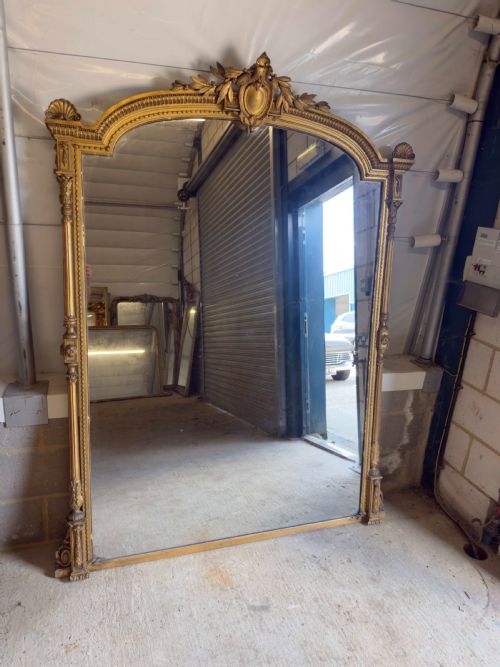

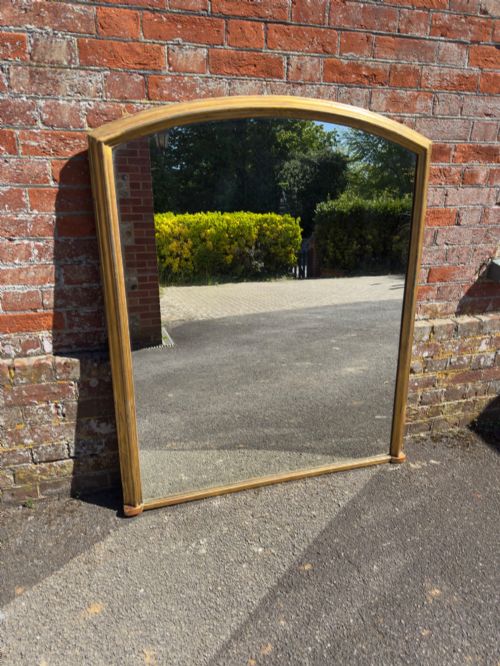


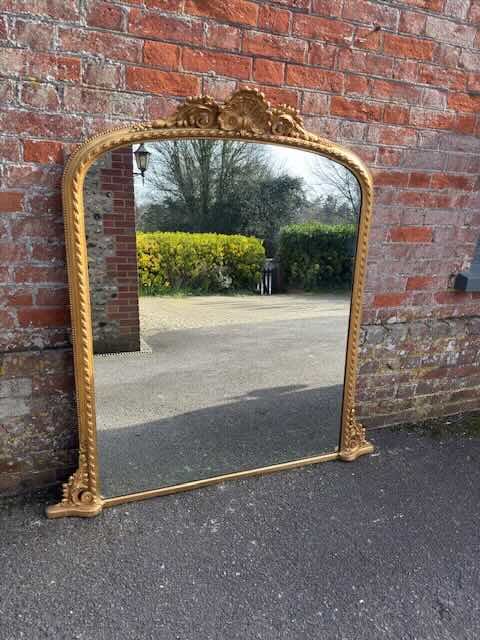
Gesso Arched Mantel Mirror
A gesso arched mantel mirror brings height and reflected light to a room, combining curved woodwork with moulded plaster surfaces.
Gesso Arched Mantel Mirror
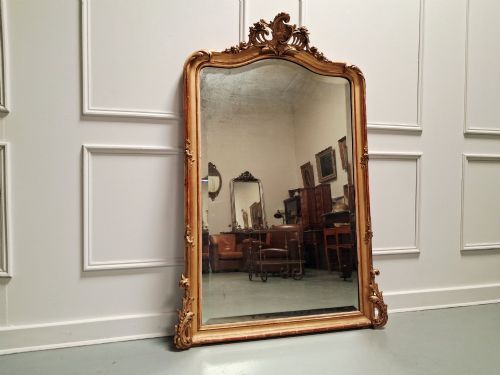
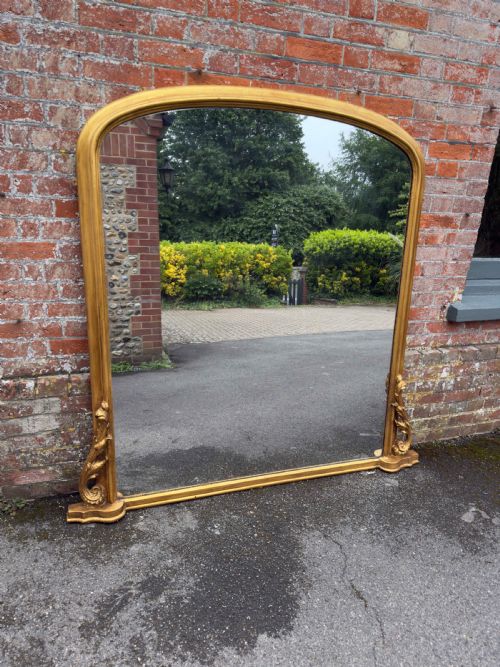
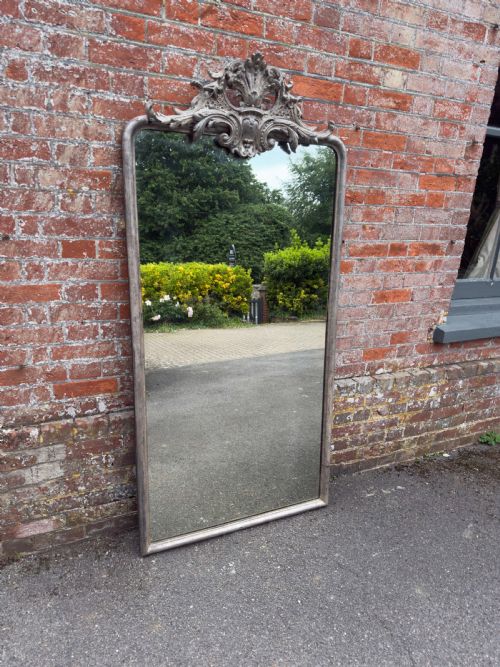
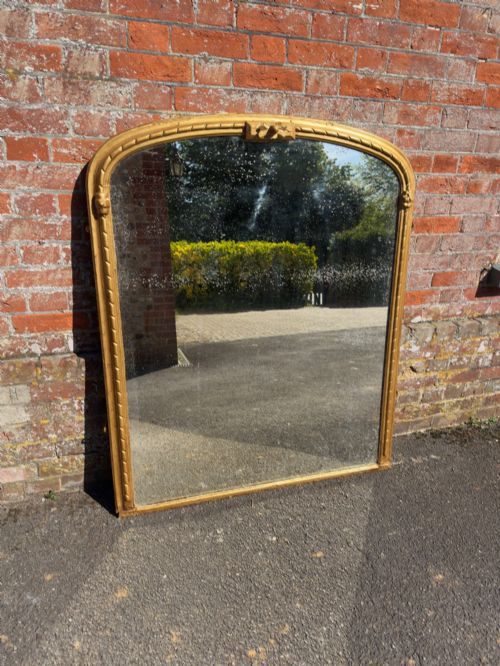
When you search for a gesso arched mantel mirror, you find large nineteenth-century wall pieces designed to sit above fireplace surrounds. The selection on this page consists predominantly of English and French overmantel mirrors spanning the 1860s through to 1900.
Most examples combine a carved wooden base structure with a shaped or arched top profile. They appear in both gilded finishes and painted surfaces, following styles from Victorian through to French Rococo and Louis Philippe revivals.
These items serve practical architectural functions by opening up wall space and reflecting daylight across interiors. The surviving pieces record diverse decorative treatments including rope twist borders, column frames, and tulip motifs.
How they were made
Makers constructed the primary frame from carved wood, providing a stable structural skeleton to support the heavy glass. Artisans then applied layers of gesso - a mixture of plaster of Paris or chalk bound with glue - onto the wood base to build up relief ornamentation and mouldings.
Workers finished these prepared surfaces with gold leaf, giltwood, or paint, creating reflective metallic sheens or solid coloured coatings. Mirror glass was then fitted into the rebate behind the decorated frame, secured to complete the overmantel construction.
Listings feature pieces dated 1860, 1870, 1880, and 1900, spanning Victorian and French Rococo styles.
What varies in quality
The precision and depth of the carved woodwork and moulded gesso detail separate standard items from finer works. Crispness in the relief ornaments and the preservation of original gilding or paint layers indicate superior workshop execution.
The integrity of the mirror glass and the harmony of the arched proportions relative to the frame size dictate the overall visual weight. Pieces maintaining their original surface treatments without heavy modern intervention retain greater historic character.
The Gesso Arched Mantel Mirror Glossary
- Gesso
- A plaster-based mixture applied to wooden frames to create smooth surfaces for gilding or intricate low-relief mouldings. It provides the crisp sculptural detail seen around the arched borders.
- Giltwood
- Timber that has been coated with gold leaf or metallic powder over a prepared ground. This finish delivers the bright reflective quality characteristic of nineteenth-century reception rooms.
- Overmantel Mirror
- A large wall glass specifically scaled to hang on the chimney breast above a fireplace mantelpiece. These pieces often feature wide horizontal or vertical formats designed to anchor the hearth area.
- Rope Twist
- A carved decorative moulding resembling the spiral strands of a rope. This pattern frequently borders the frame edges to add tactile texture.
- Louis Philippe
- A mid-nineteenth-century French style known for restrained classical curves and simple arched profiles. It balances neoclassical dignity with softer decorative restraint.
Gesso Arched Mantel Mirror: Frequently Asked Questions
Where should I hang an overmantel mirror?
These mirrors were originally scaled to sit directly above fireplace mantelpieces in principal rooms. Placing them on a chimney breast anchors the vertical space and reflects light from opposite windows.
You can also hang them on large blank walls in hallways or living areas to create the illusion of expanded depth. Ensure the wall fixings can support the substantial combined weight of the wood, gesso, and glass.
How do I clean a gesso frame?
Dust the ornate gesso and carved wooden surfaces gently using a soft, dry brush or feather duster. Avoid applying moisture or chemical cleaning sprays directly onto the plasterwork, as liquid can soften the historic gesso layer.
For the glass plate, apply a mild glass cleaner to a soft cloth rather than spraying the mirror directly. This prevents liquid from seeping behind the glass edges and damaging the silvered backing or the frame rebate.
Are these mirrors original to the nineteenth century?
The pieces recorded here date from the period between 1860 and 1900, encompassing Victorian and French revival styles. Their construction utilises period timber frames, traditional gesso application, and historic glass plates.
Examination of the backing boards, fixing methods, and the natural ageing of the gilt or painted surfaces confirms their nineteenth-century origin. Minor wear marks on the frame and glass provide further evidence of genuine age.
What is the difference between gilt and painted finishes?
Gilt finishes involve the application of thin gold leaf or metallic leaf over the gesso base to create a bright, reflective metallic appearance. Painted finishes use pigmented coatings, often in neutral tones or plain colours, offering a more subdued aesthetic.
Both treatments were common in nineteenth-century English and French workshops. The choice between them depended on the interior decoration scheme of the room the mirror was destined to occupy.