



German Porcelain Putti
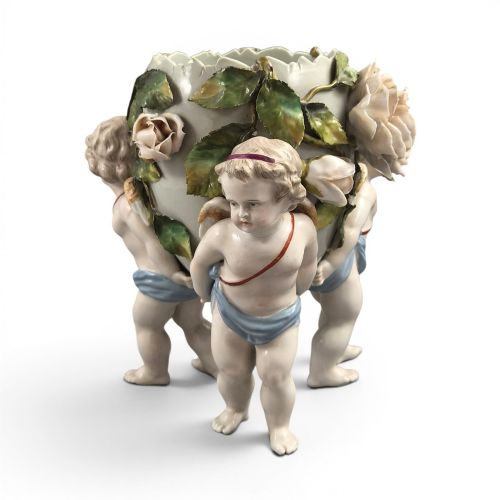
German porcelain putti are delightful figural works modelled as cherubs, bringing classical charm and ornate continental craftsmanship to period interiors.
German Porcelain Putti
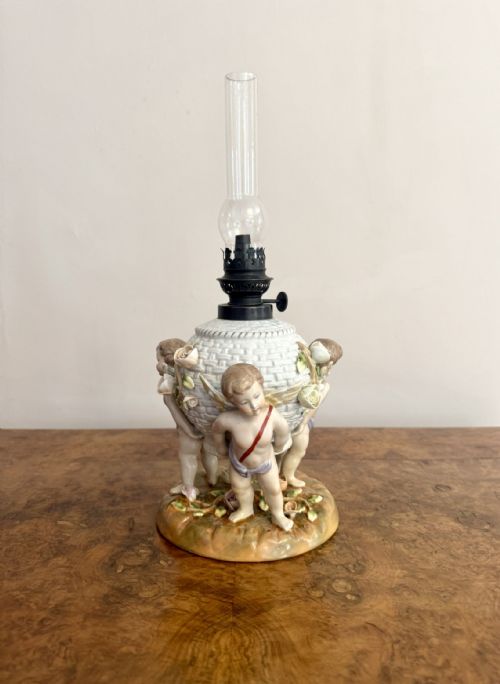
German porcelain putti appear across various decorative and functional forms, ranging from elaborate tables lamps and oil lamps to large centrepieces, candelabras, candlesticks, and sweetmeat dishes. Collectors frequently encounter figures and table ornaments dating from the nineteenth century into the early twentieth century, including the Edwardian period and the year nineteen thirty.
The objects incorporate distinct stylistic influences, moving through Victorian, Rococo Revival, Victorian Rococo Revival, and Art Deco designs. These pieces often serve as striking focal points in a room, combining sculptural cherubic figures with functional lighting or table service elements.
Materials and Techniques
Many items incorporate gilt, gold leaf, and brass accents to highlight raised decorative elements and structural mounts. Glass components also appear in specific functional lighting pieces alongside the ceramic body.
German Porcelain Putti Retail Price Guide 2026
Typical asking prices for german porcelain putti among the pieces listed under this phrase on Sellingantiques today, from the lower quarter to the upper quarter. They describe what is for sale here now, not the wider market.
Cherubs hold everything from fruit centrepieces to musical instruments, proving that putti take their ornamental duties very seriously.
Assessing Quality
Quality rests in the crispness of the modelling and the delicacy of applied details such as individual rose petals and facial expressions. Master modellers achieve a lifelike fluidity in the cherubs' limbs and drapery that lesser workshops miss.
The application of enamel work and the finesse of the gilding further separate standard production pieces from exceptional examples. Balance in large centrepieces and the integration of functional elements like lamp fittings or clock movements dictate the upper tier of the range.
Sitzendorf·Meissen·Paul Scheurich·Schierholz Plaue·Volkstedt·Triebner ENS and Eckert·Karl Tutter
The German Porcelain Putti Glossary
- Putti
- Plural of putto, representing plump, winged male infants derived from classical art. They populate many nineteenth-century German ceramic centerpieces and candelabras.
- Hard-paste porcelain
- A dense ceramic material fired at very high temperatures using kaolin and petuntse. It creates a durable, bright white body ideal for detailed figural sculpture.
- Blanc de Chine
- A French term for white porcelain without coloured glaze. This finish highlights the pure sculptural form of the cherubs and figures.
- Sweetmeat dish
- An ornamental bowl or stand designed for small confectioneries and sweetmeats. These often feature cherubs supporting the serving vessel.
- Gilt
- A thin layer of gold applied to the surface of porcelain or metal mounts. It provides rich decorative highlights across lamps and clocks.
German Porcelain Putti: Frequently Asked Questions
How were these objects used?
Owners utilised them primarily as decorative table centerpieces, mantel clocks, and functional lighting through oil lamps and candelabras.
They served as status symbols and decorative accents in formal dining rooms and parlours.
How do I date these pieces?
Dating relies on identifying factory marks, stylistic traits such as Rococo Revival or Art Deco elements, and materials like hard-paste porcelain.
Nineteenth-century items often display heavier ornamentation compared to later Edwardian or nineteen thirty examples.
How do I care for german porcelain putti?
Care requires gentle dusting with a soft brush to protect delicate applied elements like flowers and gilt work.
Keep them away from direct sunlight and moisture to preserve the enamel colours and gold leaf.