


German Porcelain Cherubs
German porcelain cherubs bring playful putti and winged figures into domestic spaces through 19th-century centrepieces, lamps, and delicate figurines.
German Porcelain Cherubs
German porcelain cherubs encompass a variety of decorative objects, from elaborate centrepieces and table lamps to salt cellars and individual figurines. When searching for german porcelain cherubs, collectors encounter numerous interpretations of putti and winged figures modelled in three dimensions.
The objects appearing here belong primarily to the nineteenth century, including Victorian and Edwardian periods, alongside eighteenth-century examples and early twentieth-century pieces. Forms range from simple candlesticks and egg vases to large musical putti centrepieces and clock garnitures.
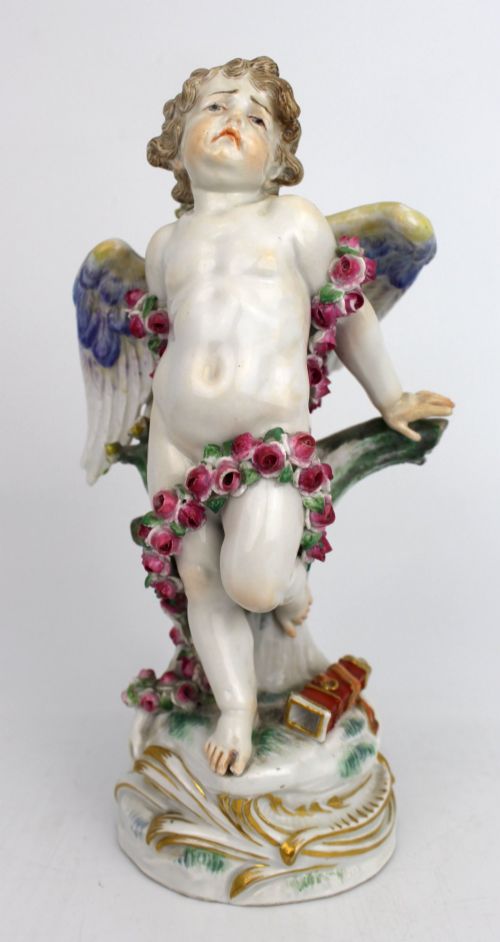
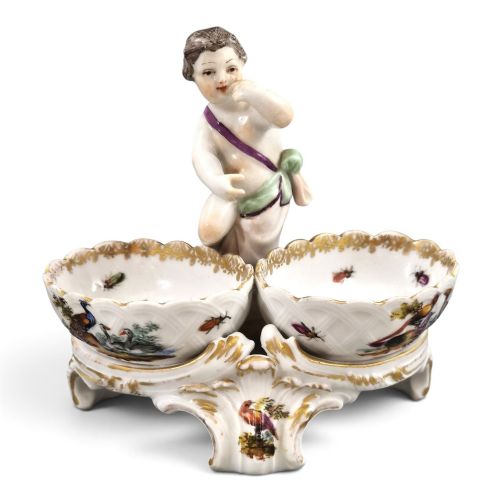
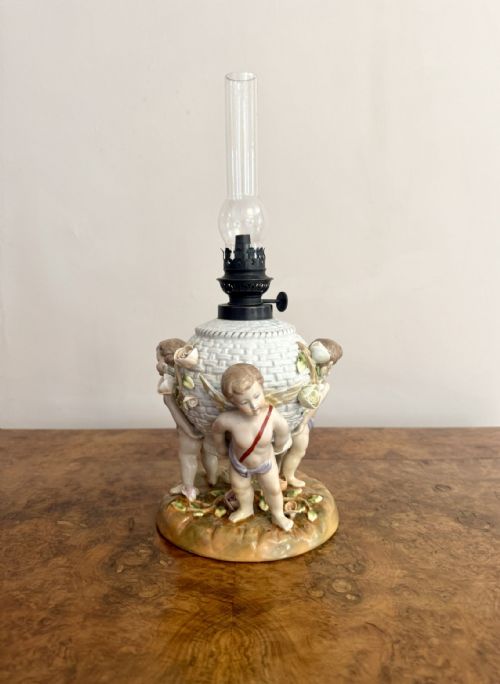
Figurines and decorative groups dominate the selection, often depicting cherubs, angels, and cupids engaged in various activities or allegorical scenes. These pieces frequently incorporate functional elements, operating as oil lamps, salt cellars, mirrors, and candelabra.
How they were made
Manufacture relies on hard-paste porcelain, shaped into complex figures and functional vessels before undergoing high-temperature firing. Artisans apply glaze to achieve smooth surfaces, frequently enhancing the white ceramic body with hand-painted details and enamel colours.
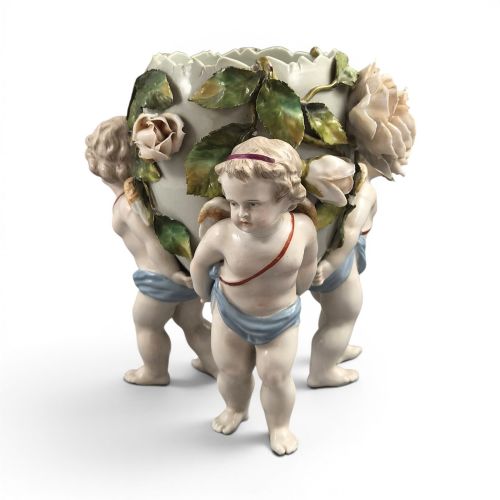
Many works incorporate applied elements such as porcelain roses, leaves, and intricate drapery modelled by hand and attached prior to firing. Gilding with gold leaf adds metallic highlights to rims, bases, and structural details on candelabra and lamps.
Additional materials appear in specific forms, including brass components on oil lamps, glass shades, and enamel work. Bases and structural supports sometimes combine these mixed media with the central porcelain body.
Listings feature hard-paste porcelain across Rococo Revival, Victorian, and Art Deco styles.
What varies in quality
Quality rests on the precision of the modelling and the delicacy of applied details like flowers, ribbons, and facial expressions. Superior pieces display crisp definition in the feathers of wings and the contours of limbs, whereas lesser items appear soft and generalized.
Hand-painted decoration creates a significant divergence across the range, with master painters achieving nuanced flesh tones and precise polychrome details. The application of gold leaf and the subtlety of glaze finishes also distinguish workshop output.
Completeness and structural complexity separate standard decorative wares from exceptional sculptural groups. Large centrepieces and multi-figure candelabra demand advanced technical skill to fire successfully without distortion.
KPM Berlin·Sitzendorf·Meissen·Schierholz·Volkstedt·Karl Tutter·Johann Joachim Kändler
The German Porcelain Cherubs Glossary
- Putto
- A plump, naked male child figure often depicted with wings in classical art and porcelain sculpture. This term represents the correct art-historical equivalent to many cherub figures.
- Hard-paste porcelain
- A durable ceramic composition fired at very high temperatures, utilising kaolin and petuntse. European factories developed this dense material to replicate Chinese porcelain.
- Blanc de chine
- A French term describing white porcelain without polychrome enamel decoration. This glaze style highlights the pure sculptural form of the modelled figure.
- Centrepiece
- A large decorative object placed in the middle of a dining table or sideboard. These elaborate porcelain compositions often feature cherubs supporting bowls or baskets.
- Sweetmeat
- A small confection or sweet served during formal meals from specialised porcelain dishes. Salt cellars and sweetmeat figures often share similar figural formats.
German Porcelain Cherubs: Frequently Asked Questions
What periods do these pieces date from?
The selection spans from the eighteenth century through the Victorian and Edwardian eras into the early twentieth century. Nineteenth-century production represents the largest share of available items.
Earlier eighteenth-century examples reflect neoclassical or rococo aesthetics, while later nineteenth-century objects often embrace revival styles. Twentieth-century pieces extend into Art Deco sensibilities.
How were these cherub figures used historically?
Many items served practical functions within wealthy households, operating as oil lamps, table salt cellars, candlesticks, and clocks. Centrepieces and sweetmeat figures decorated dining tables during formal meals.
Other items functioned purely as decorative ornaments, placed on mantelpieces, brackets, and console tables. Figural groups often conveyed allegorical meanings, such as the seasons.
How do I care for antique porcelain cherubs?
Delicate applied elements like flowers and fingers require gentle dusting with a soft, dry brush rather than wiping. Avoiding abrasive cleaners preserves the hand-painted enamels and gold leaf highlights.
Items wired for electricity or used as oil lamps need careful handling around brass and glass components. Keeping porcelain away from direct sunlight protects the painted surface colours.
How are different German porcelain factories identified?
Factories utilised specific underglaze blue marks, impressed numbers, and painted symbols stamped into the base of each piece. Researching these factory marks reveals the specific origin workshop.
Stylistic traits, such as modelling techniques and the choice of enamel palette, also assist in attributing pieces to specific German manufactories.