





Georgian Writing Slope Box
A georgian writing slope box provides a portable, hinged desk surface that organises correspondence and holds personal papers.
Georgian Writing Slope Box
A georgian writing slope box is a portable desk designed to fold open into a slanted writing surface, housing compartments for paper, ink and pens. These pieces originate primarily from the Georgian, Regency and Victorian periods, reflecting a time when personal correspondence required dedicated travel equipment.
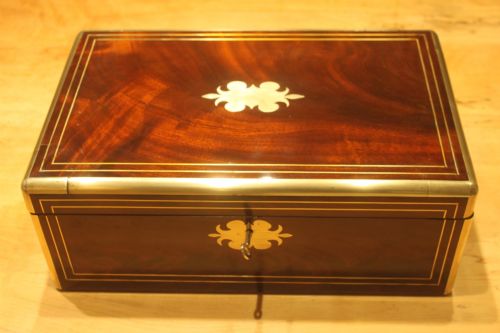
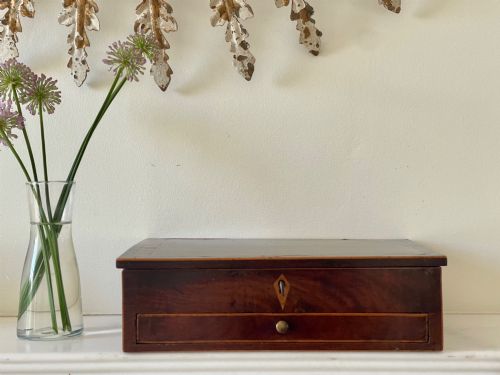
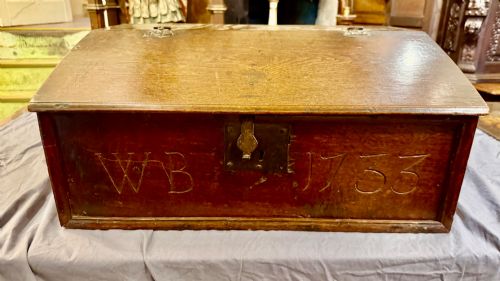
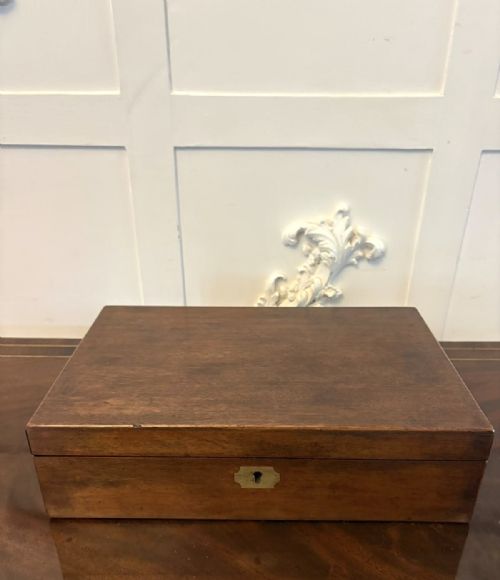
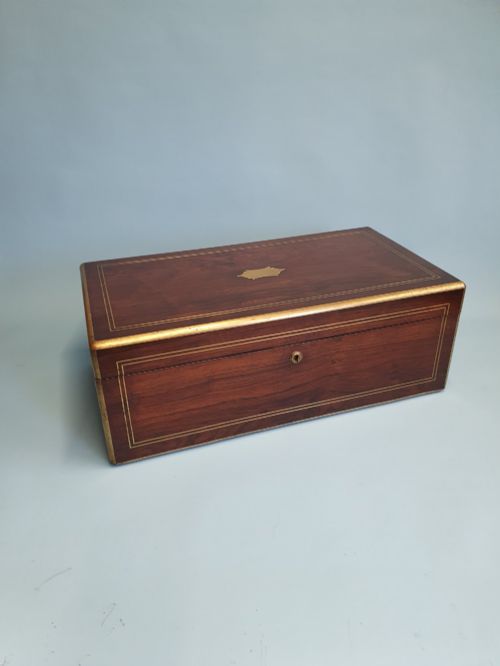
Mahogany and rosewood appear frequently among the listings, often decorated with brass mounts, inlay or secret drawers. Oak examples also surface, pointing to earlier vernacular traditions from the seventeenth and eighteenth centuries.
Buyers encounter variations ranging from compact travelling cases to substantial brass-bound campaign boxes made for officers on the move. Some configurations double as jewellery chests, stationery boxes or document repositories.
Materials and construction
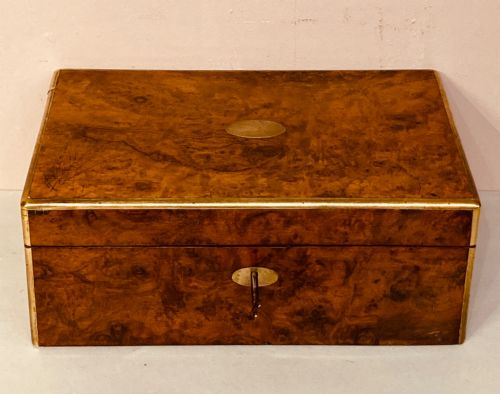
Cabinet makers utilised dense hardwoods like mahogany, walnut and rosewood, frequently selecting figured veneers such as flame mahogany or burr walnut for the exterior surfaces. Satinwood and elm appear in specific regional or period pieces.
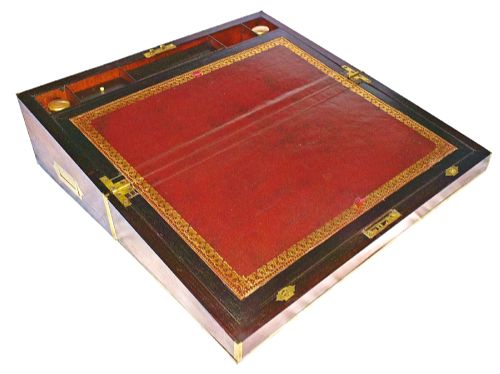
Brass fittings, including corner brackets, carrying handles and escutcheons, reinforced the timber construction for travel. Interior compartments often incorporate leather writing surfaces, secret drawers and subsidiary wells for glass inkwells and intaglio seals.
Georgian Writing Slope Box Retail Price Guide 2026
Typical asking prices for georgian writing slope box among the pieces listed under this phrase on Sellingantiques today, from the lower quarter to the upper quarter. They describe what is for sale here now, not the wider market.
One surviving box preserves ten intaglio coloured-glass seals, ready for stamping hot sealing wax onto private letters.
Judging quality
Quality rests on the selection of timber grain, the precision of brass inlay and the integrity of the fitted interior. Superior examples retain original working locks, secret drawer mechanisms and fitted velvet or leather skivers.
The sophistication of the internal layout distinguishes standard utility boxes from finer cabinet work. Hidden compartments, well-fitted stationery dividers and matched veneers demonstrate the maker's skill.
William Austin·George Austin
The Georgian Writing Slope Box Glossary
- Writing slope
- A portable desk box with a hinged lid that opens to form an angled writing plane. Inside, fitted compartments hold ink, pens and stationery.
- Campaign box
- A sturdy portable chest fitted with brass corners and recessed carrying handles, made for military officers or travellers. These pieces are built to withstand transit.
- Secret drawer
- A hidden compartment concealed behind false panels or accessed through a sequence of internal steps. Makers utilised these spaces to secure valuables.
- Tunbridge ware
- Small wooden objects decorated with mosaic patterns created from thousands of tiny coloured wood blocks. This technique originated in Kent during the nineteenth century.
- Escutcheon
- A protective plate surrounding a keyhole, usually cast in brass and countersunk into the timber lid.
Georgian Writing Slope Box: Frequently Asked Questions
How do I use a writing slope box today?
These boxes function well on modern desks as storage for stationery, letters and small keepsakes. The sloping lid offers a practical surface for writing notes or displaying cards.
Opening the fold-out panels reveals original compartments sized for modern pens and notebooks, keeping workspaces tidy while retaining period character.
Were these boxes used by the military?
Many examples are designated as campaign boxes, equipped with brass binding and flush handles for transport on campaigns. Officers required secure portable desks to manage correspondence and records in the field.
Sturdy timber construction and reinforced corners protected the contents during rough transit across land and sea.
How do I find secret drawers?
Secret compartments often require removing the pen tray or sliding a partition panel to release a spring mechanism. Makers designed these hidden spaces to safeguard jewellery and confidential papers.
Investigating the internal structure carefully usually reveals subtle finger slots or false bottoms built into the stationery wells.
What is the difference between an 18th and 19th century box?
Eighteenth-century boxes frequently utilise solid oak or simpler mahogany construction with plain brass fittings. They often lean towards utilitarian Bible boxes or simpler table desks.
Nineteenth-century pieces tend to feature elaborate rosewood veneers, intricate brass inlay, complex campaign mountings and highly sophisticated internal stationery arrangements.